
The Ultimate 2026 Guide to Reclaiming Your Smart TV Privacy: Four Revolutionary Apps That Transformed My Viewing Experience
In a world where every screen watches back, my smart TV had morphed into a relentless digital stalker, meticulously logging every show, movie, and casual video binge. It was profiting from my deepest viewing habits, turning my relaxation into a commodity. But I fought back, and the transformation was nothing short of spectacular. With just four ingenious applications, I reclaimed my digital sovereignty, banished invasive ads, and locked my data away from prying corporate eyes—all without sacrificing a single feature. This is the definitive blueprint for 2026, a testament that true privacy is not a privilege, but a right you can seize today.
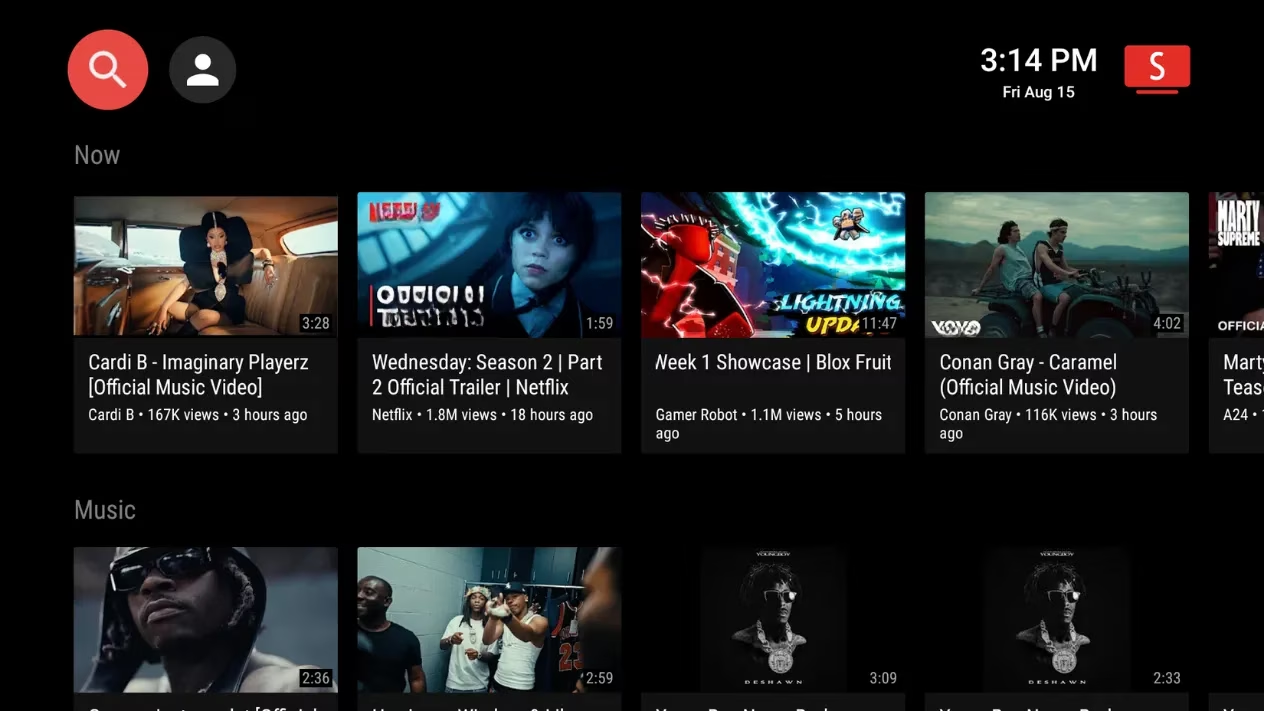
Let's begin with the absolute game-changer for the modern streamer. YouTube, that gargantuan entertainment behemoth, had become my primary digital haunt. Yet, every session felt like a violation, a parade of relentless ads and covert tracking algorithms. Enter SmartTube Next, the holy grail for the privacy-conscious viewer. Installing this marvel on my Google TV was an act of beautiful simplicity. A quick visit to its official website via the TV's browser, a tap to allow installations from unknown sources, and within minutes, my screen was reborn. The silence was golden—no pre-roll assaults, no mid-video interruptions, not even those insidious sponsored segments, thanks to its built-in SponsorBlock sorcery. 🤯
Here's the revolutionary part: I possess a YouTube Premium subscription, a service many believe is the pinnacle. Yet, I abandoned it without a second thought. Why? Premium merely removes the ads; it does nothing to stop the silent, omnipresent data harvest. SmartTube Next delivers a pristine, ad-free oasis while leaving Google completely in the dark about my late-night documentary marathons or my secret affinity for cat video compilations. It's the ultimate paradox: getting a superior, more private experience for the glorious price of absolutely nothing.
With YouTube sanctified, the next frontier was universal privacy. For this, I enlisted Proton VPN, the digital guardian angel. Unlike SmartTube Next, this titan is readily available on the Google Play Store, making installation a trivial affair. I opted for its robust free plan, which, while not an ad-blocker, performs one critical function: it encases all my streaming traffic in an impenetrable, encrypted tunnel. The moment I activate it, my Internet Service Provider is rendered blind. They can no longer log whether I'm watching a nature documentary or the latest geopolitical thriller.
But Proton VPN's magic extends far beyond mere encryption. It is my master key to the world's content vaults. Craving an anime exclusive to Japan? A simple server switch transports me there instantly. The first connection might have a minor hiccup, but thereafter, it's smooth sailing in glorious, unadulterated 4K. This app doesn't just protect; it liberates.
Now, for those who dream of total, network-wide dominion over ads and privacy, the path leads to your router. This is the advanced maneuver, the setup that transforms your entire home into a fortress. The strategy is twofold: deploy WireGuard for a personal VPN and configure AdGuard's free DNS for comprehensive ad-blocking.
The process is a symphony of technical empowerment:
-
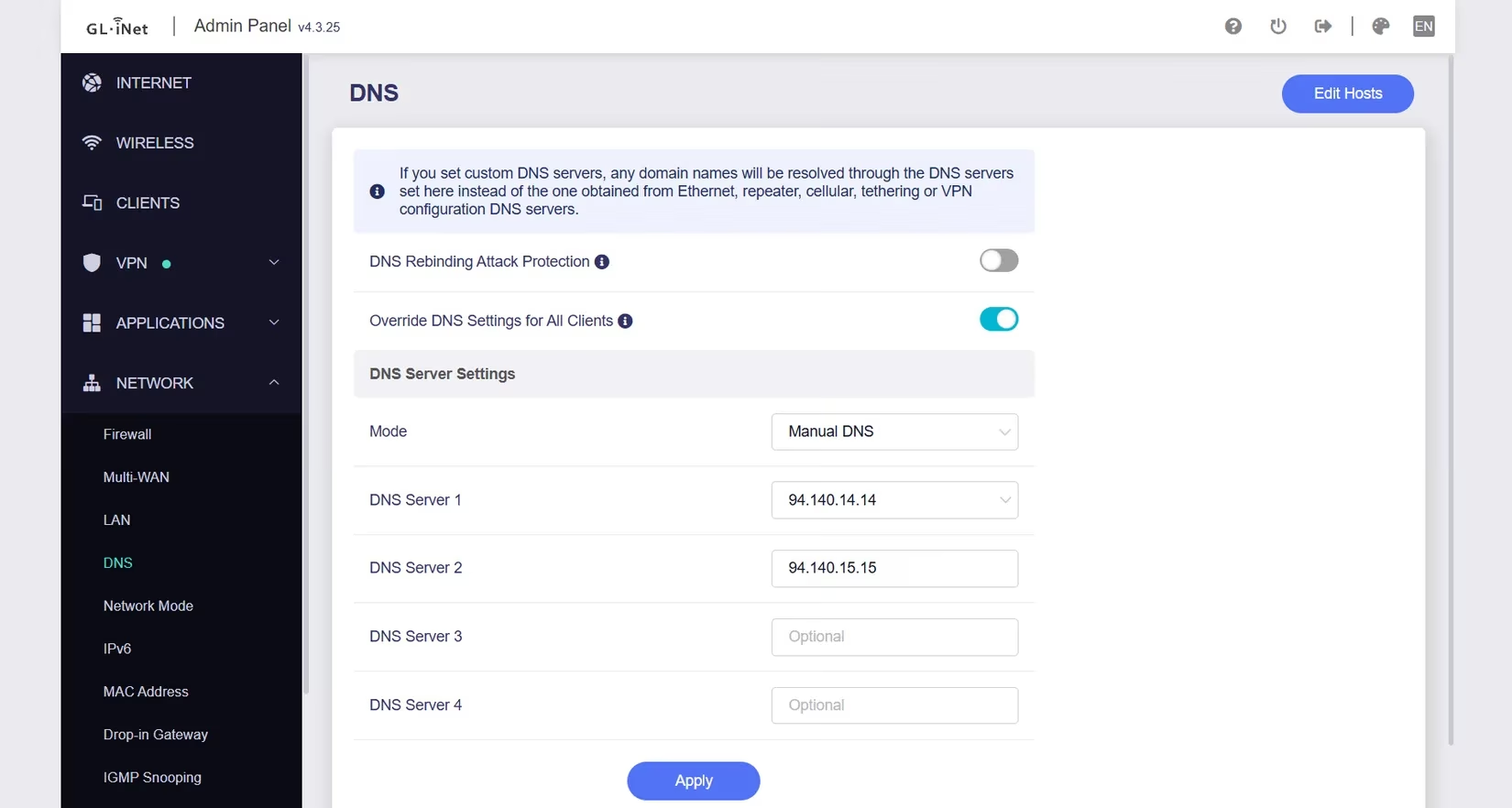
Activate the WireGuard server on your router (often at
192.168.8.1). If your router is stubborn, flashing it with OpenWRT unlocks this power. -
Input AdGuard's DNS addresses (
94.140.14.14and94.140.15.15) as your primary and secondary servers. -
Enable "Override DNS for All Clients."
The result is instantaneous and breathtaking. The moment my smart TV reconnected, the digital clutter vanished. Gone were the 30-second autoplay trailers that haunted every app switch. The interface became buttery smooth, and apps launched with startling speed. It was as if my TV had shed a heavy, ad-infested coat and learned to fly.
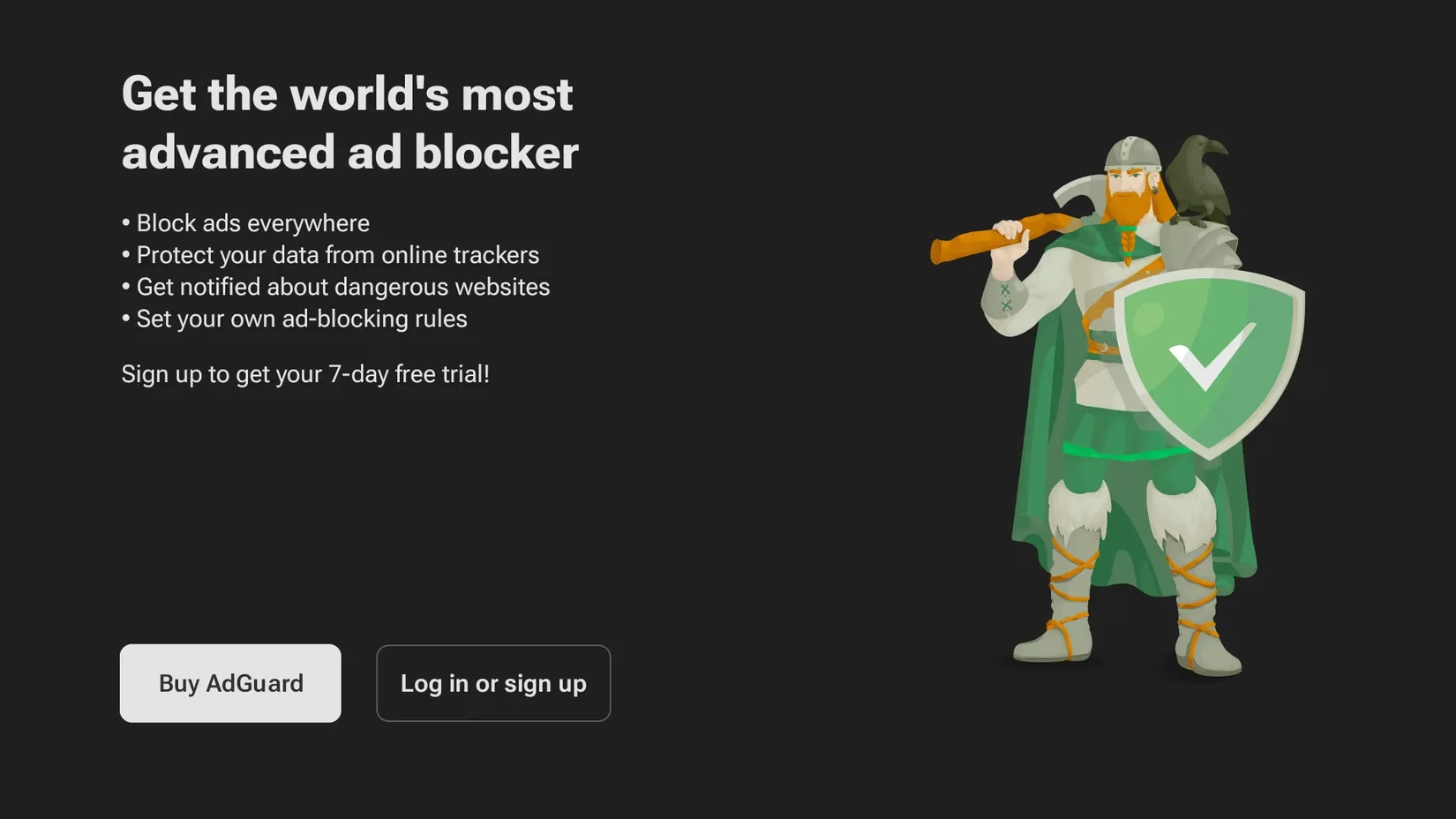
For those who prefer a simpler path, AdGuard offers a direct-to-TV subscription app that blocks ads system-wide without any router wizardry. But where's the fun in that? The router method is the ultimate, set-and-forget solution for every device on your network.
Finally, with my digital borders secured and ads annihilated, I turned to the crown jewel of media independence: JellyFin. This is where you transition from a consumer to a curator. Hosting your own media server is the final, glorious step in cutting the corporate cord. I resurrected an ancient laptop, installed JellyFin on it and my TV, and pointed one to the other. In moments, my personal library of owned movies and cherished home videos materialized in a sleek, intuitive interface.
The contrast to services like Plex—which have sadly drifted toward the very tracking we're escaping—is stark. JellyFin is fully open-source. It automatically fetches metadata from community databases, organizing everything by genre, year, or actor. The key? No algorithms are mining my habits. No third-party servers are involved. It's just me and my media, in perfect harmony.
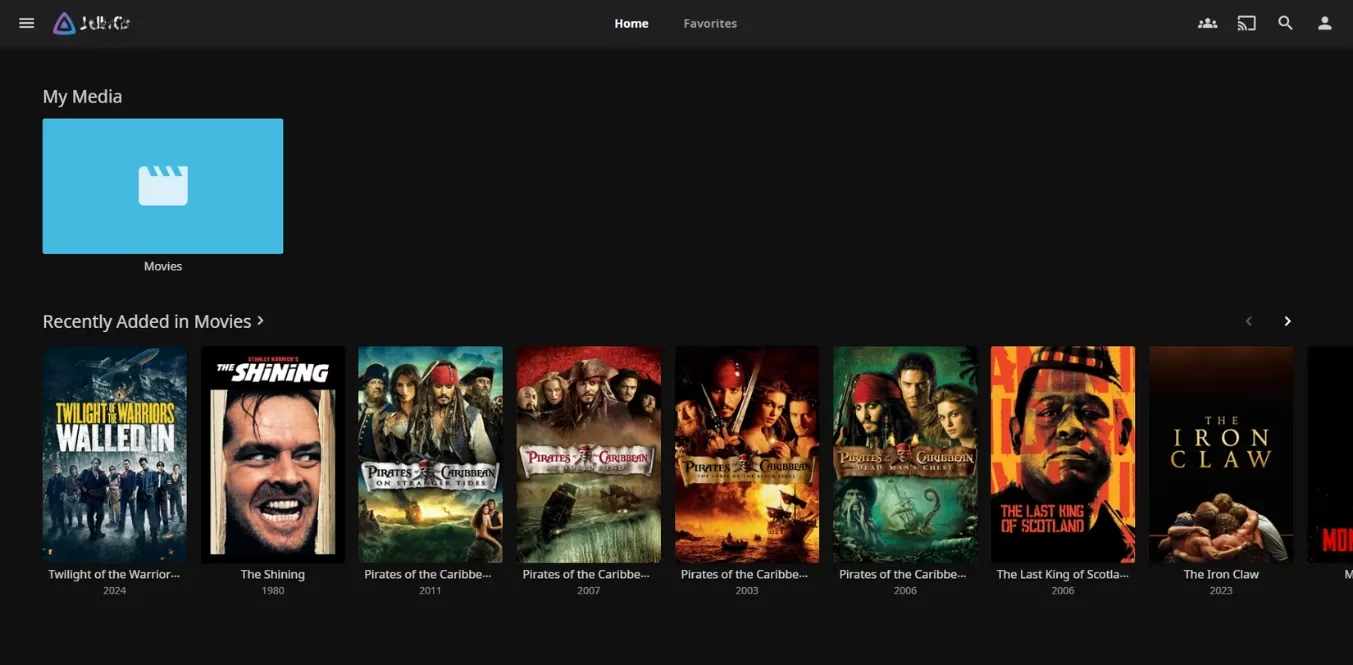
The payoff is most profound during family time. Movie nights are no longer a slog through algorithmically generated "recommended" lists designed to maximize engagement. We launch directly into our beloved classics or hilarious home videos. Transforming a forgotten laptop into a private, personal Netflix has been one of the most satisfying technological achievements of my life. Every viewing session is now infused with the profound satisfaction of complete control.
Let's break down this revolutionary quartet:
| App | Primary Function | Key Privacy Benefit | Setup Complexity |
|---|---|---|---|
| SmartTube Next | Ad-free, tracker-free YouTube | Decouples viewing from Google account | Low 🟢 |
| Proton VPN | Encrypts traffic & bypasses geo-blocks | Hides activity from ISP | Low 🟢 |
| WireGuard + AdGuard DNS | Network-wide VPN & ad-blocking | Protects ALL home devices | High 🔴 |
| JellyFin | Self-hosted media server | Zero corporate tracking of owned media | Medium 🟡 |
The journey from surveilled subject to empowered sovereign required no expert skills nor a king's ransom. It demanded only a willingness to look beyond the default settings. A modest server, a home router, and these readily available, powerful tools crafted my digital sanctuary. If you are weary of paying for your entertainment with your personal data every time you press play, let 2026 be the year you stop watching and start commanding. The revolution is just four apps away. 🛡️🎬
Insights are sourced from CNET - Gaming, whose coverage of how TVs, streaming platforms, and connected devices intersect with modern entertainment usefully frames why “smart” features can become privacy liabilities. In the same spirit as hardening a Google TV with ad-blocking DNS, VPN tunneling, and self-hosted media via Jellyfin, CNET’s tech-first perspective underscores a practical takeaway: the most reliable way to reduce tracking is to shift control from vendor defaults to user-managed networking and playback tools that minimize data sharing by design.