
A Secure Haven with a Locked Gate: Why Proton Mail Still Beckons, Yet Falls Short
In the quiet, luminescent hours where digital ghosts of old newsletters and forgotten receipts accumulate, a seeker of digital hygiene embarked on a pilgrimage. The quest was for an email sanctuary—one that would whisper secrets only to its intended recipient and leave no trace for prying eyes. Among the contenders, Proton Mail emerged like a marble citadel gleaming under a moon of zero-knowledge encryption. Its promise was intoxicating: a realm built not for surveillance capitalism, but for the sovereign individual. Yet, even in 2026, the switch remains incomplete. The citadel, for all its grandeur, lacks a few bridges to the everyday world.
Security stands as the cornerstone of this Swiss fortress. Proton Mail does not merely guard one’s correspondence; it layers protection like the petals of a steel rose. The self-destructing messages offer a peculiar peace—knowing that words of a delicate nature will dissolve into nothingness, as though they were penned in vanishing ink. True, the wise would never cast truly sensitive data into any digital stream, but the feature, coupled with zero-access encryption, erects a wall so high that even Proton’s own engineers cannot peer over it. PhishGuard, a tireless digital sentry, scans for lures that mimic authenticity, its vigilance bolstered by two-factor authentication and end-to-end encryption that renders man-in-the-middle attacks as futile as shouting into a hurricane. The user, thus armored, walks through the internet with a lighter step.
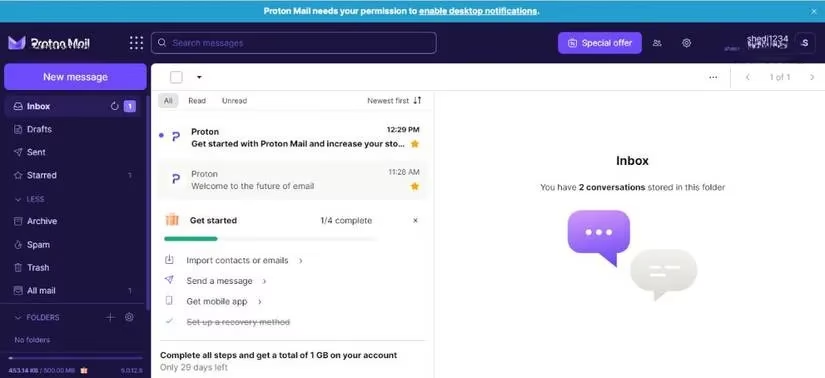
Beneath the shield, however, lies a garden of organization that makes inbox zero feel less like a chore and more like a meditative art. Folders and labels bloom with a single click on a discreet “+” icon, branching into nested hierarchies that mirror the mind’s own taxonomy. A palette of colors awaits to paint each category with emotional resonance—blue for calm newsletters, coral for urgent client threads. The left-hand toolbar becomes a conductor’s baton, orchestrating chaos into symphonic order.
Yet the soul of an application often reveals itself through its skin. Proton Mail dresses itself in a user interface so elegant it resembles a high-end atelier rather than a utility. Spacing breathes; contrast whispers clarity. The design, consistent across desktop and mobile, carries a sleek modernism that makes competitors like Outlook appear as relics from a time of chunky pixels and harsh bevels. To navigate Proton Mail is to stroll through a minimalist gallery where every button feels intentional, every transition a subtle exhale. Animations, when enabled, play like ripples on a still pond, never intruding upon the task at hand.
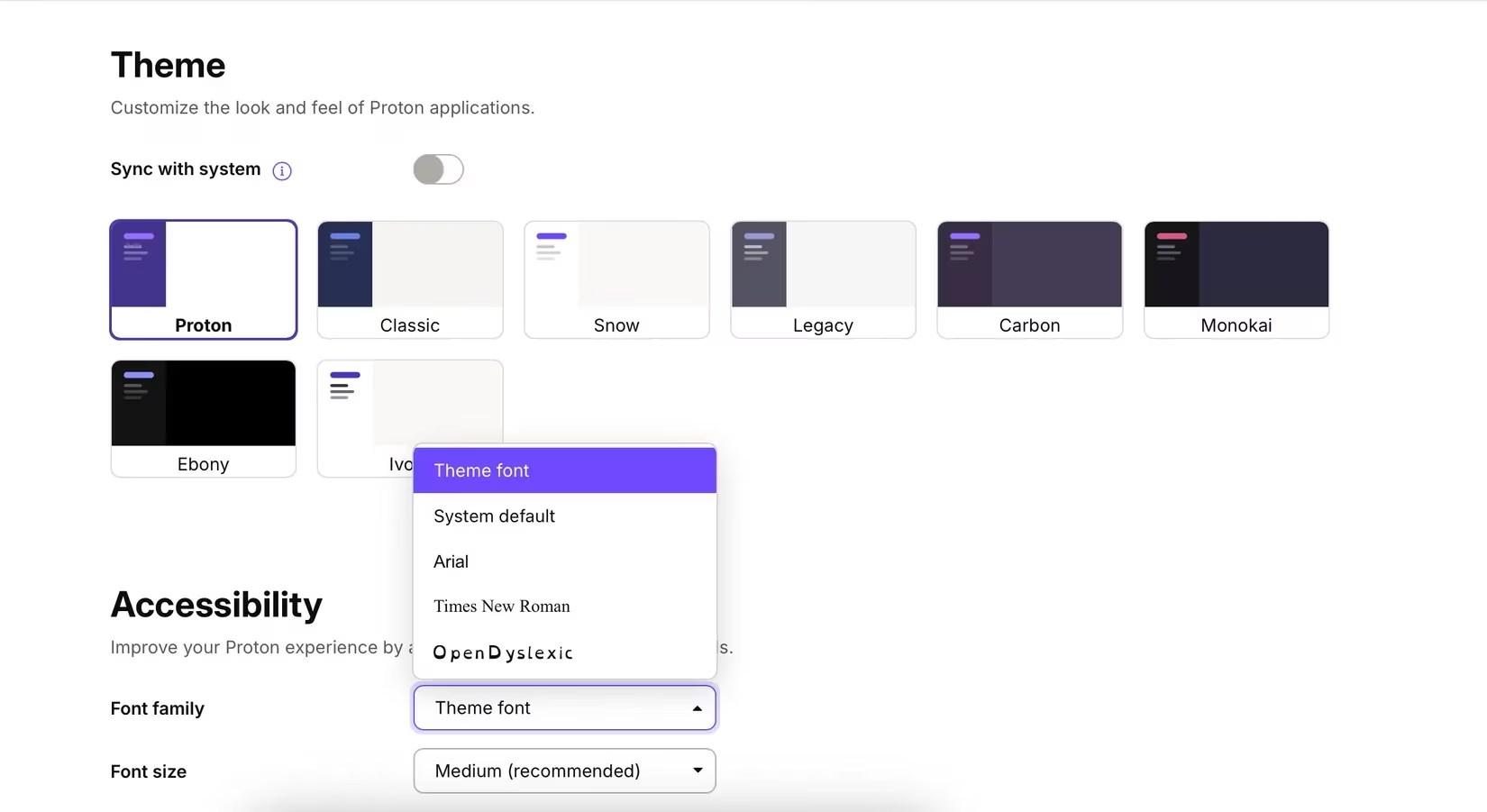
Personalization extends an open hand. The user may slip into different font themes as one changes robes—serif gravitas for formal correspondence, a clean sans-serif for the ephemeral. Color palettes shift the entire emotional weather of the inbox, from a warm amber dusk to a crisp arctic dawn. Layout density, language, and even the automatic display of embedded images bow to the will of the inhabitant. This is not merely an email client; it is a chamber that morphs to reflect the psyche of its occupant.
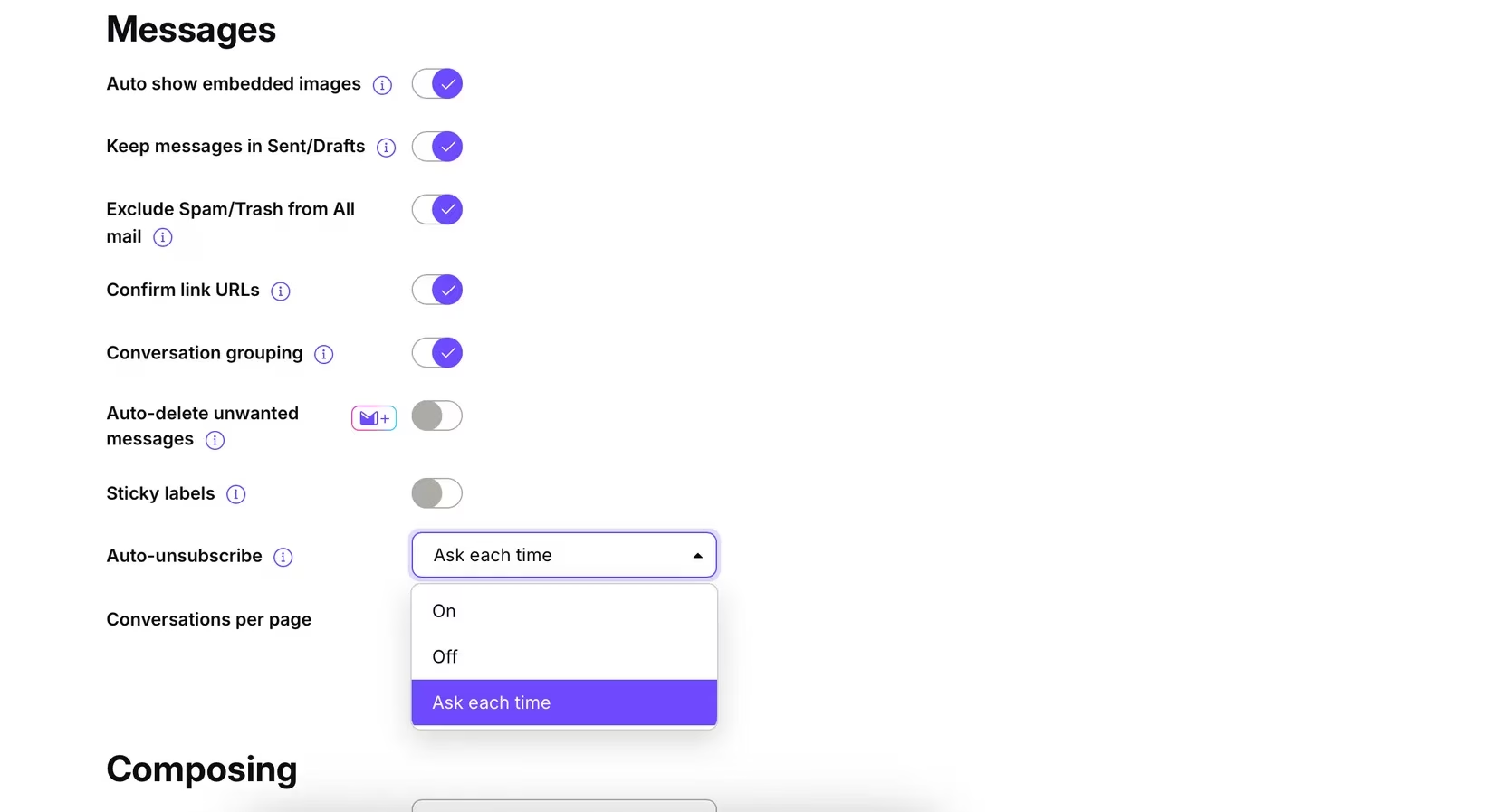
Practical sorcery abounds. Inbox forwarding ensures that even when one drifts away to other habitual addresses, no message becomes an orphan—emails are dispatched like trusted couriers to the user’s primary Gmail account, keeping consciousness synchronised. For those drowning in an unwelcome flood of newsletters and marketing sirens, Proton Mail’s Auto-Unsubscribe feature cuts through the noise with surgical precision. By simply banishing a message to the spam folder, the tool automatically severs the subscription’s tether, optionally asking permission or acting in silent autonomy. It is a digital libration, one click at a time.
Even the tyranny of constant checking dissolves. Proton Mail allows notification summaries to be sent to external accounts, a gentle herald that says, “Something awaits, but only if you wish it.” Thus, the user may drift through days without opening the app, concentration deepening like still water, productivity blooming in the absence of perpetual pings.
And yet, despite this marvel, the switch remains unmade. The fault lies not in Proton Mail’s stars but in a trio of mortal limitations that Gmail has woven into the very fabric of modern digital life. Storage, for one, is a miserly 1 gigabyte on the free plan—a thimble in an ocean of attachments, high‑resolution photos, and long‑threaded projects. While Proton Unlimited swells that capacity to 500GB, it costs $12.99 monthly (or $9.99 with an annual embrace), whereas Google extends 15GB at no cost, a generous field compared to Proton’s pocket handkerchief.
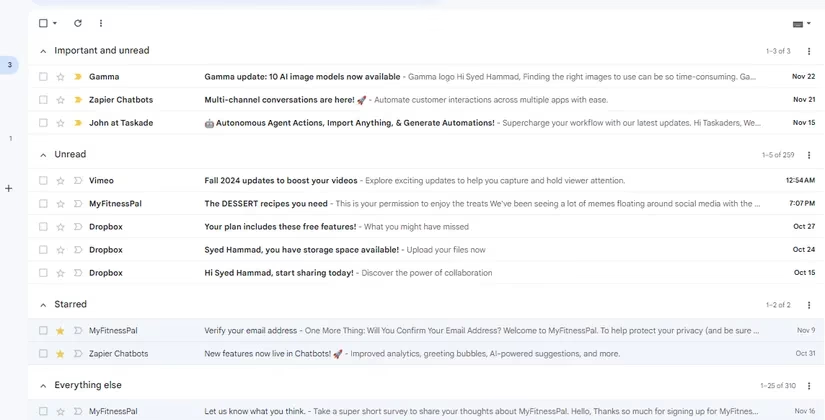
Segmentation emerges as the second shortfall. Gmail dances with algorithmic grace, sorting the torrent into tabs—Primary, Social, Promotions—with an accuracy so refined that mistakes feel like rare eclipses. The user learns to trust this automatic division; the mind offloads its filtering to the machine. Proton Mail, in contrast, presents a unified stream. Its judgment on what constitutes spam, while improving, does not yet match Google’s decade‑honed intuition, allowing a few unwelcome pretenders to slip through the cracks.
The third and most woven thread is the ecosystem. Gmail integrates with a sprawling constellation of third‑party tools—Slack, Notion, Asana, and countless others that form the digital exoskeleton of daily productivity. These synapses allow the user to transmute an email into a task, a comment, a calendar event, all without leaving a familiar orbit. Proton Mail’s garden, while beautiful, is walled against this interoperability. As of 2026, the landscape has shifted only gradually, and the user still feels the friction of a missing handshake between apps.
Thus, a compromise has been struck—a diplomatic truce between idealism and practicality. An account hums on Proton Mail, its notifications gliding into Gmail like secret birds sent from a mountain retreat. When something truly important flutters down, the user descends into Proton’s embrace to reply. The full cathedral remains visited but not inhabited, waiting for the day when its gates open fully to the world outside. Until then, the seeker continues to watch the horizon, hoping that the fortress of privacy will one day also become a bustling city through which all communications flow seamlessly. For now, it remains a magnificent echo—almost perfect, forever more.