
YouTube Comment Scams in 2026: A Gamer’s Field Guide
I spend most evenings bouncing between ranked matches and long YouTube sessions, and over the years I have learned that the comment section under gaming, crypto, and finance videos is not a friendly lobby. In 2026, scammers are still farming YouTube comments with fake mentors, fake giveaways, and fake creator accounts, and they are getting better at sounding normal. My rule is simple: if a comment tries to move me off-platform, rush me into a reward, or make me feel special for no reason, I treat it as hostile. That mindset has saved me from more traps than any anti-cheat system ever has.
Why Gamers Are a Prime Target
Gaming audiences are used to free skins, beta keys, giveaway codes, and Discord communities, so a comment offering a reward does not always look strange at first. That is exactly why scammers like this space. They copy the language of creators, use stolen profile pictures, and post under popular videos where thousands of viewers are already hyped up. I have seen comments that look like they came from a friendly player sharing a tip, but the whole thread is staged. One account starts with a normal story, several fake replies praise a so-called expert, and then the conversation drifts toward a private chat app. The goal is not to help me rank up. The goal is to separate me from my account details, my wallet, or both.
The Scam Types I See Most Often
Crypto “mentor” threads
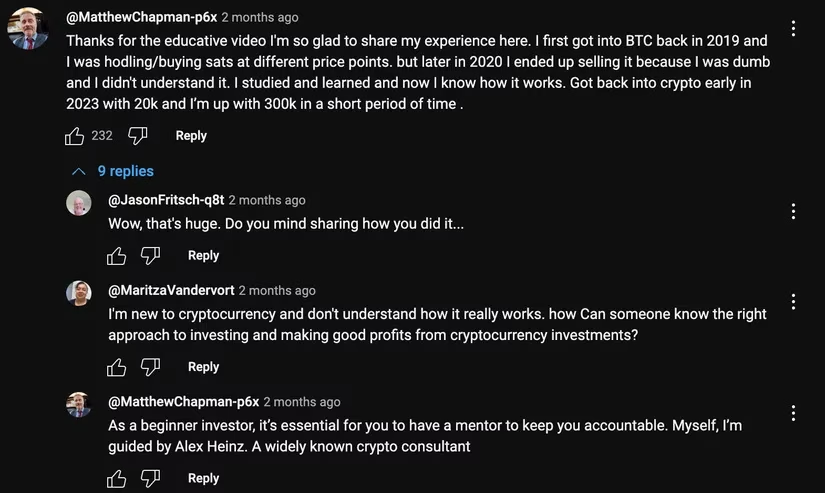
Crypto scams are everywhere under videos about investments, trading, and financial freedom. The first comment often sounds reasonable: someone shares a small success story or a few generic tips. Then the replies arrive, usually from fresh accounts, claiming that a mentor changed their life. The names are almost always fake, and the credibility is manufactured. When a viewer responds, the scammer pushes the conversation to Telegram or WhatsApp, where anonymity is easy and pressure is high. I never follow that path. A real mentor does not need a comment-section chorus of fake students.
Fake giveaways and game-code bait
Legitimate companies and YouTubers do run giveaways, but that does not make every giveaway comment real. If an account claims to host a sweepstakes for a famous brand or for the creator whose video I am watching, I check for a verification badge and an official channel announcement. Without that proof, I ignore it. In gaming spaces, the bait often looks like free currency, early access, or a rare skin. The moment a prize requires my login details, a payment, or a move to another platform, it stops being a giveaway and becomes a trap.
Investment and “finfluencer” bait
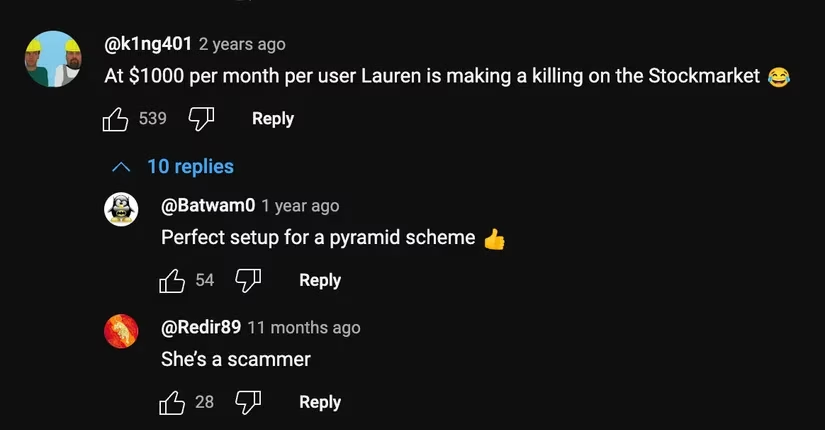
Investment scams work like crypto scams but target a wider audience. They exploit the desire for quick money, and they often appear under videos from finance influencers. Because the comments sit under popular videos, they borrow credibility from the creator. I have learned to separate a real discussion from a sales pitch. If a comment promises guaranteed returns, secret opportunities, or a private group that can beat the market, I scroll past it. In 2026, the polished wording does not make the offer safer. It usually means the scammer is using AI to clean up the script.
Phishing disguised as early access
Phishing is one of the oldest tricks, but it still works because it hides inside ordinary moments. I might be watching a video about a new console, a graphics card, or a game launch, and a comment claims I can preorder early or get a discount through a special destination. The page behind it is designed to steal my login credentials or personal information. I only use official storefronts and official creator announcements. A comment under a video is not a store, and urgency is not proof.

Impersonation accounts
Impersonation scams are the ones that make me slow down and look twice. The display name and avatar can look almost identical to the creator or business running the channel, but small details give it away. The name might have an extra letter, a swapped character, or a misspelling. The account usually has no verification badge, no older videos, and a very short history. It may reply to comments as if it were the creator, asking viewers to continue elsewhere or claim a prize. I check the channel page before I trust any comment that claims to be from the creator.
Red Flags I Check Before I Engage
I do not need to be a cybersecurity expert to spot most of these comments. I just look for a few patterns:
-
🚩 A brand-new account with no history
-
🚩 A creator name with a misspelling or strange character swap
-
🚩 A promise that is too good to be true
-
🚩 Poor grammar, odd spacing, or copied phrasing
-
🚩 The same script appearing under multiple videos
-
🚩 Pressure to move to Telegram, WhatsApp, or another private app
-
🚩 Replies that praise a mysterious mentor or guaranteed opportunity
| What I see | What I do |
|---|---|
| A comment claims I won a prize | I ignore it and check official channels only |
| A creator asks me to continue in a private chat | I verify the channel and do not engage |
| A comment offers a discount on a game or device | I go to the official storefront myself |
| A thread is full of fake praise for an expert | I report the comment and move on |
What I Do When I Spot One
I do not reply, argue, or test the scammer. Engagement gives the account attention and can pull other viewers into the thread. Instead, I use the three vertical dots beside the comment, choose Report, and select the reason that fits. YouTube can review the comment and remove it, which makes the platform safer for everyone. I also warn friends in my gaming group, especially younger players who might think a free skin code is harmless. If I want a game code or a giveaway, I wait for an official creator announcement or a verified brand page. I never let a comment-section stranger set the terms.
In 2026, the comment section can still be useful for tips, clips, and community talk, but I treat it like a public lobby full of unknown players. I verify before I trust, I report what looks wrong, and I keep my account and wallet out of reach. That is the difference between watching YouTube and getting played by it.