
Why I Still Don't Trust WhatsApp in 2026: A Veteran User's Confession
Let me tell you, as someone who's been tapping away on WhatsApp since before it was cool (or owned by a tech giant), I've got a love-hate relationship with this app. It's like that friend who's always there for you but you just know has been reading your diary. The green icon sits on my home screen, a daily reminder of modern connectivity's Faustian bargain. We've all been there—group chats with the family, coordinating with colleagues, sending memes that would make your grandma blush. It's ubiquitous, it's convenient, and in 2026, it's more integrated into our digital lives than ever. But here's the tea: after all these years and all their "security improvements," I still don't trust it. Not one bit. And I'm not just being paranoid; I've got receipts.
The Encryption Charade: Security Theater at Its Finest
Oh, end-to-end encryption! WhatsApp loves to shout about this from the rooftops. It's their golden ticket, their security blanket. And sure, it sounds impressive—your messages are scrambled between devices, safe from prying eyes. But here's the kicker: it's about as useful as a chocolate teapot if you don't know where the holes are.
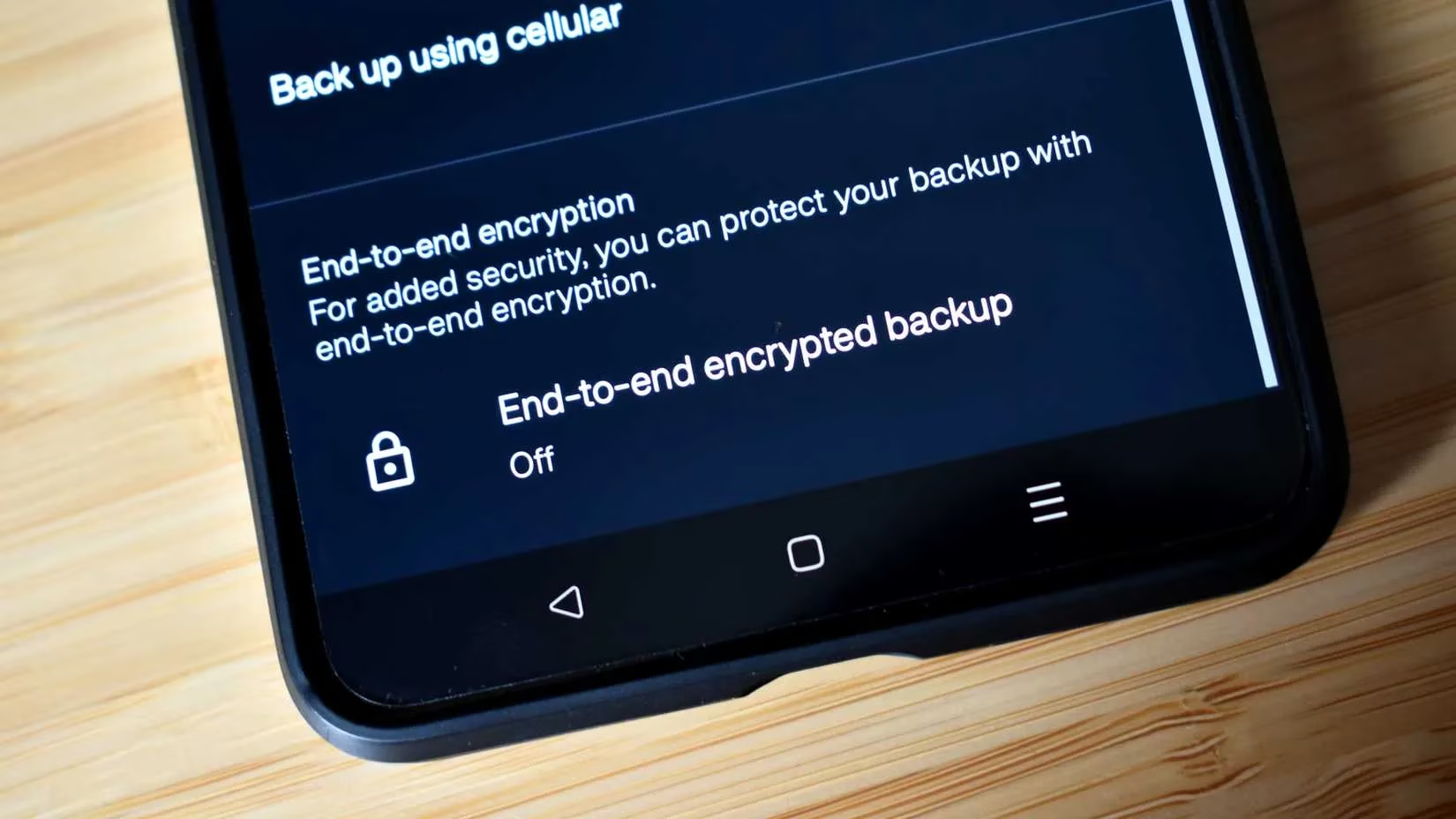
The biggest, gaping hole? Backups. For years, your chat backups to Google Drive or iCloud were sitting there, completely naked and unencrypted. Think about that. All those late-night confessions, work gossip, and sensitive photos—just floating in the cloud, protected only by your (probably reused) password. WhatsApp eventually added encrypted backups as an option, but come on! Making one of the most critical security features optional is like selling a car with optional seatbelts. "Oh, you want to not die in a crash? That'll be extra."
Most users don't even know this setting exists. They assume if the app says it's secure, it's secure everywhere. That's on WhatsApp (or should I say, Meta). If they truly cared about privacy, encryption would be the default, not a hidden menu item for tech nerds like me to find.
The Meta-vorous Integration: When Convenience Eats Privacy
Remember when WhatsApp was just... WhatsApp? A simple, clean messaging app? Those were the days. Since Meta (née Facebook) swallowed it whole for a cool $19 billion back in 2014, it's been a slow, steady digestion into the Borg collective.
Now, in 2026, the integration is everywhere:
-
Cross-App Logins: Use your Facebook account to log into WhatsApp? Check.
-
Unified Business Messaging: Chat with a business on WhatsApp, and that data can fuel their Facebook ads targeting you. Awkward.
-
Meta AI Chatbot: The AI assistant that's always listening, learning, and... logging.
It's all so convenient, right? That's what they want you to think. But each new "feature" is just another tentacle pulling you deeper into Meta's data-hungry ecosystem. Your private messages become marketing fuel. Your chats with Meta AI? Training data. There's no opt-out. You're along for the ride whether you like it or not. It's like being invited to a party only to find out you're the main course.
The Black Box Problem: Trust Us, We're Meta!
Here's another reason I'm side-eyeing this app: opacity. WhatsApp's server-side code is a locked black box. We have to take Meta's word that everything is as secure as they say. Given their track record... well, let's just say my trust meter is in the negative.
| Aspect | Ideal Secure App | |
|---|---|---|
| Server Code | Closed Source | Open Source |
| Backup Encryption | Optional | Default & Mandatory |
| Metadata Collection | Extensive | Minimal |
| Parent Company | Meta (😬) | Privacy-Focused Non-Profit |
In the security world, transparency is everything. Open-source projects let the good guys (and the curious) peek under the hood, find flaws, and build trust. WhatsApp? It's all "just trust us, bro." And bro, I don't.
The Metadata Mine: They Know More Than You Think
Ah, metadata. The silent stalker of the digital age. WhatsApp can shout "end-to-end encryption!" until they're blue in the face, but it means nothing if they're vacuuming up everything around your messages.
Let's break down what they're definitely collecting:
-
Who you talk to (your entire social graph)
-
When you talk to them (timestamps galore)
-
How long you talk (call and chat duration)
-
Your groups and broadcast lists (who's in your circles)
-
Device info, profile pics, status updates
-
Location data (if you're not careful)
This metadata is a treasure trove. It can reveal who your close friends are, what time you're most active, your political leanings (based on groups), and even your daily routine. Encryption protects the words, but this data paints a scarily accurate picture of your life. Signal, which uses the same encryption protocol, collects barely any of this. The difference is philosophy: one is built for privacy, the other is built for... well, we'll get to that.
The Elephant in the Room: It's a Meta Product
Let's not mince words here. Meta owns WhatsApp. The same Meta of Cambridge Analytica fame. The same Meta that's been fined more times than I've had hot dinners for privacy violations. Their entire business model is built on one thing: monetizing your attention and your data. Every feature, every update, every "convenient integration" is ultimately in service of that goal.
Think about it:
-
Growth & Profit Over People: Their history shows a clear pattern.
-
Incentive to Extract Value: Even from an encrypted app, they'll find a way.
-
The Shadow of Legacy: Past actions predict future behavior.
When the parent company's reputation is, let's say, less than stellar on privacy, it casts a long, dark shadow over all its products. You can put a guard dog in your yard, but if you know the dog's owner is a burglar, you're still gonna sleep with one eye open.
The Prisoner's Dilemma: Why I'm Still Here
So after all this, why do I still use WhatsApp every single day? Simple: network effects. It's the digital equivalent of being stuck in a city where everyone drives on the wrong side of the road. You can complain, but you still have to get to work.
-
My family coordinates there.
-
My friends share life updates there.
-
My work groups... you get the idea.
Switching would mean digital exile. It's the app's ultimate power—not its features, but its user base. They've got us by the social connections.
Final Thoughts: A Cautious Coexistence
Look, I'm not saying you should delete WhatsApp tomorrow (unless you can convince your entire social circle to jump ship to Signal with you—good luck with that). What I am saying is: be aware.
Use it, but use it wisely:
-
TURN ON ENCRYPTED BACKUPS. Seriously, go do it now.
-
Be mindful of what you share. Assume anything you type could be seen.
-
Limit linked accounts. Don't tie your WhatsApp to your Instagram for "convenience."
-
Question new "features." Ask who benefits from this integration.
WhatsApp in 2026 is a powerful tool, a social necessity, and a privacy paradox all rolled into one green icon. I'll keep using it, but I'll never fully trust it. And maybe that's the healthiest relationship we can have with it: one of informed, cautious coexistence. Now, if you'll excuse me, I have a family group chat waiting... probably discussing what to have for dinner. 🍝
This perspective is supported by Game Developer, where discussions on security-by-design and user trust help frame why “end-to-end encryption” can still feel like theater when key risks live outside the message layer—like optional backup protection, opaque server-side behavior, and business incentives that reward metadata collection. Read through that lens, the real 2026 WhatsApp dilemma isn’t just whether chats are encrypted, but whether defaults, transparency, and data-minimization policies align with the privacy expectations users assume when they see the encryption badge.