
Why I Ditched Social Logins for Good: A 2026 Wake-Up Call
I’ll admit it—once upon a time, clicking that shiny “Sign Up with Google” or “Continue with Facebook” button felt like a no‑brainer. No new passwords to remember, no lengthy forms, instant access. Fast forward to 2026, and after a string of high‑profile social platform outages and the ever‑growing privacy dumpster fire, I now avoid social logins like the plague. Here’s why waving goodbye to that one‑click convenience has become one of the smartest digital decisions I’ve ever made.
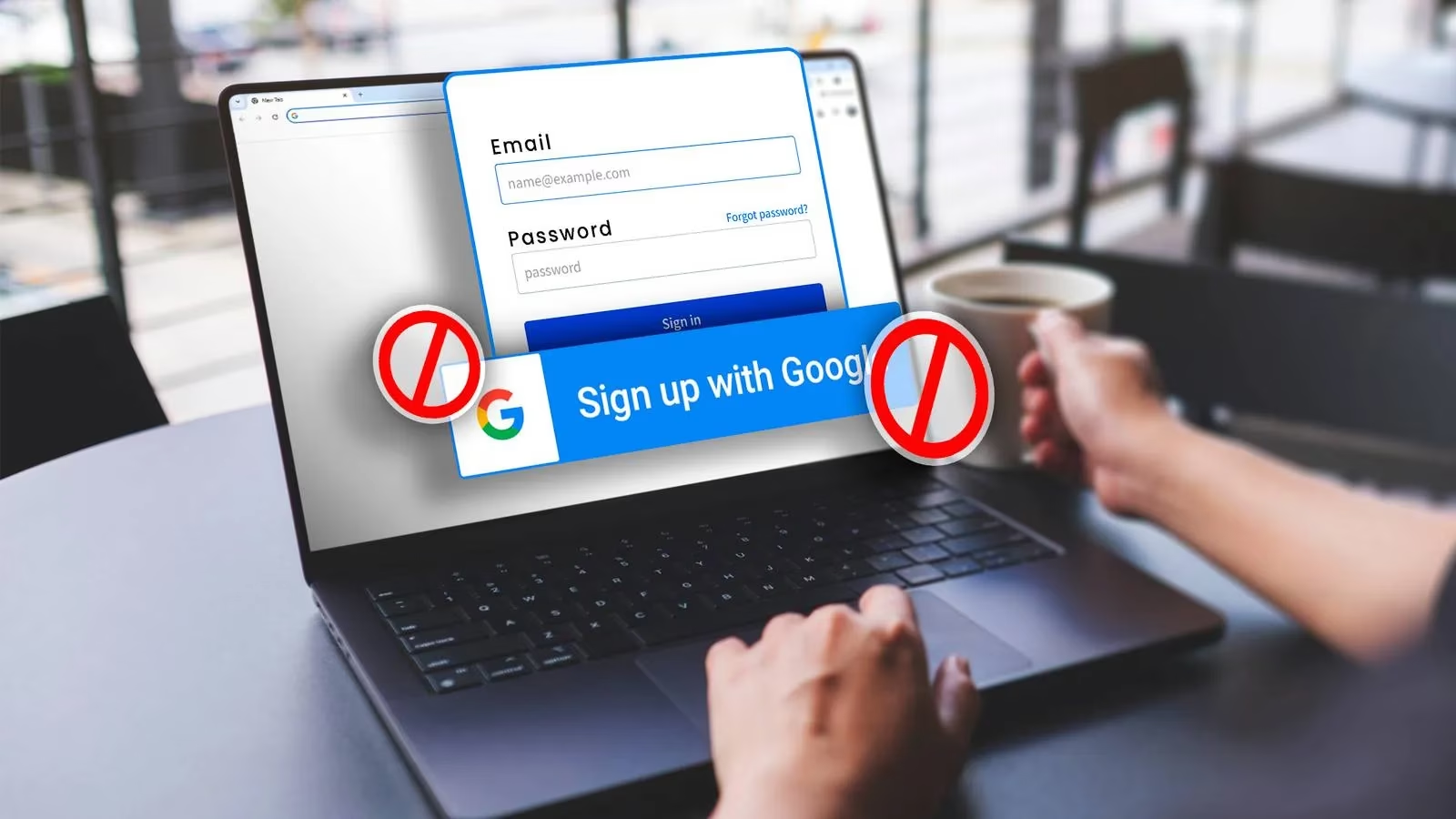
Let’s kick things off with the single biggest nightmare: social logins create a catastrophic single point of failure. Think about it—every service you’ve ever logged into using your Google, Apple, or Facebook account is chained to that one primary identity. If your main social account gets hacked, suspended, or even temporarily locked due to some algorithmic false positive, you’re essentially locked out of your entire digital life. I’m not just talking about losing access to your photo backup; I’m talking email accounts, productivity suites, subscription services, even smart home devices all vanishing in an instant because a single gatekeeper decided you’re persona non grata. Even something as trivial as a massive DDoS attack on the social provider—like the one that took down a major platform for six hours last spring—can leave you twiddling your thumbs, unable to log into anything. By switching back to old‑school email and password combos, or better yet, passwordless email magic links, I’ve broken that single chain. Now, if one account gets compromised, the rest stay snuggly safe. It’s not just about security; it’s about basic digital resilience.
Then there’s the sneaky issue of third‑party control over my digital identity. When you lean on a social login, you’re essentially renting your own identity from a tech giant. These platforms can change their terms of service, enforce real‑name policies, or even sunset the login feature entirely (RIP countless forgotten apps tied to defunct X/Twitter integrations). I’ve had friends who lost access to productivity tools overnight because their LinkedIn account was restricted pending a verification that took three weeks. Three weeks without their CRM! That’s a big yikes from me. By using email‑based logins, I keep the keys. I decide when my account lives or dies, and I’m not at the mercy of some automated moderation bot half a world away.
Let’s talk privacy and anonymity—or the sheer lack thereof with social logins. Every time you use a social sign‑in, the provider gets a tidy little notification about which service you’re accessing, when, and often from where. Over time, they build a shockingly detailed map of your online habits, far beyond what you’d consciously share. Plus, the service you’re signing into often grabs a chunk of your profile data—name, email address, and sometimes even your friend list. In an era where data brokers are practically salivating over every scrap of personal info, that’s a hard pass for me. Want to browse or test a new platform without handing over your life story? I now spin up burner email addresses with a few keystrokes. This lets me create anonymous accounts that aren’t welded to my real‑world identity. It’s a lifesaver for my work, too—I frequently test dozens of apps for reviews, and I’m not about to let some sketchy startup slurp up my primary Google profile just because I wanted to try their AI note‑taker for 20 minutes.
And just when you think it can’t get messier, there’s the lock‑in trap. Social logins make ditching a provider an absolute headache. If you’ve been using Apple to sign into a fitness app for two years and you decide to jump ship to Samsung, well… good luck. There’s usually no seamless migration path. You end up creating a brand‑new account from scratch, losing your data, your history, your subscriptions. I learned this the hard way back in 2025 when I tried to decouple a project management tool from my Facebook login—only to discover that Facebook was literally the only authentication method supported at signup. I had to abandon years of project archives. That was the final straw. Now, unless a service literally forces me to use a social login (which is becoming rarer, thank goodness), I default to email‑first registration every single time.
Look, I get the appeal. Social logins are smoother than a fresh jar of Skippy. But in 2026, the security, privacy, and control trade‑offs are no longer worth a measly three seconds of saved typing. Password managers have become incredibly slick, meaning I don’t even manually type credentials anymore. Biometric authentication on devices means unlocking a vault and logging in is practically instant. The convenience gap has shrunk to near invisibility, while the risks of social logins have only ballooned. I won’t say I’ll never tap that “Sign Up with Google” button again, but it better be for a service I’d trust with my firstborn—and even then, I’ll probably reach for an alias email instead. My digital independence? That’s non‑negotiable.
Recent trends are highlighted by Entertainment Software Association (ESA), and they underline a useful lens for this 2026 “ditch social logins” wake-up call: when your gaming (or any digital) identity is tethered to a single platform gatekeeper, outages, policy shifts, or account disputes can instantly interrupt access to the services and purchases you rely on. Framing account access as part of overall digital resilience—not just convenience—supports the case for email-first accounts, alias addresses, and password managers so your ability to play, subscribe, or manage game-related tools doesn’t hinge on the uptime or whims of one external provider.