
Unpacking the 2026 Free Toothbrush Phishing Scam: A Deceptive Subscription Trap
In the ever-evolving landscape of cybercrime, scammers constantly refine their tactics to bypass skepticism. While phishing emails demanding password resets or payment confirmations are well-known hazards, a more insidious variant has gained prominence by 2026: the bait of a free, desirable product. A recent case study involves an email offering a premium toothbrush, a seemingly innocuous and even beneficial offer that cleverly masks a complex subscription fraud scheme. This isn't a simple attempt to steal credit card numbers outright; it's a meticulously planned multi-stage operation designed to ensnare victims into recurring payments for non-existent services. How does an offer for something as mundane as a toothbrush transform into a significant financial threat?
The Deceptive Hook: A Plausible Yet Flawed Email
The scam begins with an email that, at first glance, appears legitimate. It purports to come from a health insurance provider's rewards program, specifically mentioning "United Healthcare Smile Rewards." The offer is straightforward: a free toothbrush to improve dental hygiene. Given that some legitimate healthcare plans do offer discounts on wellness products, the premise can catch recipients off guard. However, a closer inspection reveals multiple red flags that seasoned users and security experts have come to recognize.
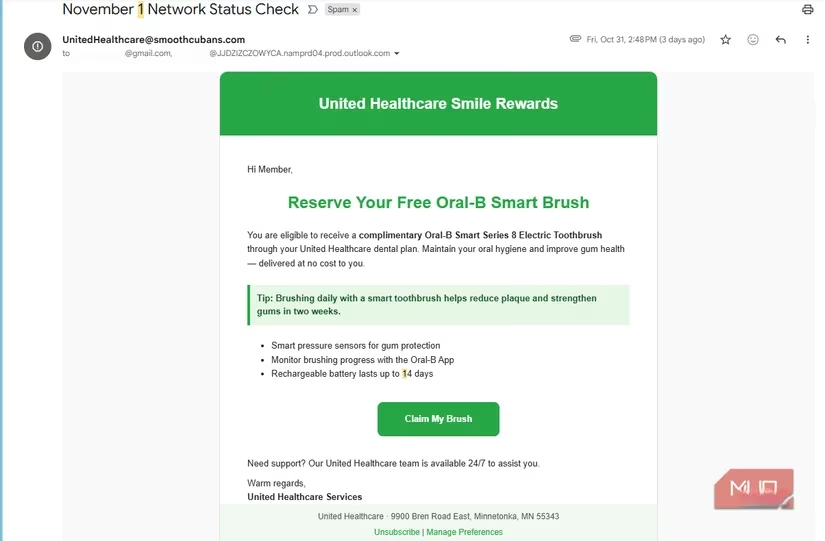
The inconsistencies are glaring upon examination:
-
Sender Address: The email originates from a domain like
@smoothcubans.com, which has no legitimate connection to UnitedHealthcare (UHC). -
Program Name: The reference to "United Healthcare Smile Rewards" is fake. The actual UHC program is called "UnitedHealthcare Rewards."
-
Generic Greeting: The email uses a non-specific salutation like "Member" instead of the recipient's actual name.
-
Incorrect Terminology: The use of "United Healthcare Services" is not how the real company refers to itself.
-
Mismatched Subject: The subject line, such as "November 1 Network Status Check," is unrelated to the offer, a common phishing tactic to create confusion.
-
Poor Formatting: The email lacks official logos and uses generic, unprofessional formatting.
This initial email is the critical first filter. It's designed to look plausible enough to pass a cursory glance from a busy individual but flawed enough that a vigilant person would discard it. Those who proceed click the embedded link, embarking on the scam's next phase.
The Bait-and-Switch: From "Free Gift" to Shady Survey
Clicking the link leads not to a legitimate corporate site but to a hastily constructed survey website. The promise subtly shifts here; the email's "free toothbrush" becomes a "chance to win" a "dental kit." This is a classic bait-and-switch, lowering the guaranteed value of the offer.
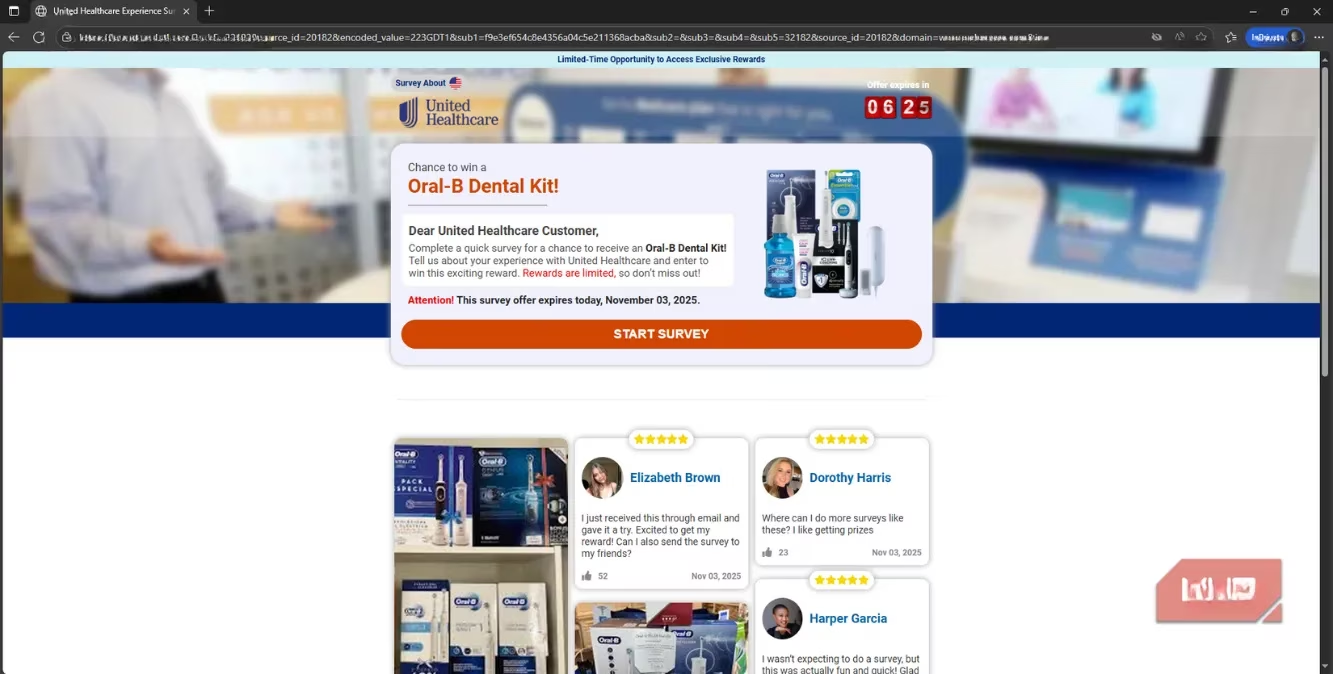
The website employs several psychological tricks:
-
False Urgency: Countdown timers and alerts claim the offer "expires today" to pressure quick action.
-
Fake Social Proof: "Reviews" are displayed, all bearing the current date and using generic, glowing language. Ironically, some fake reviews even hint at the scam, with one quoted as saying they didn't receive a prize despite it being a "cool survey."
-
Misleading Security: The site may display a padlock icon (HTTPS), but this only signifies an encrypted connection, not legitimacy. As security professionals emphasize, you can have a secure connection to a fraudulent site.
-
Vague Ownership: Scrolling down reveals a copyright notice that doesn't name any actual company, a major red flag for any commercial website.
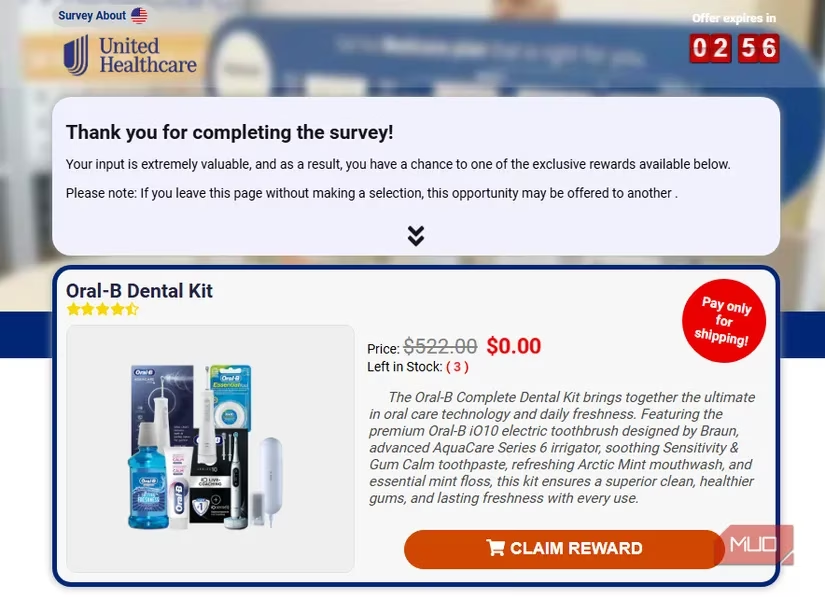
The survey itself asks superficial questions about the user's satisfaction with their (supposed) health insurance provider. Upon completion, the real hook is presented: a "free" dental kit, valued at an inflated $522, requiring only a shipping payment.
The Trap Sprungs: Hidden Subscriptions in the Fine Print
Claiming the prize redirects the victim to another website to enter shipping details. Here, more pressure tactics are used, like a fake stock counter showing only a few items left. The user is then prompted to enter credit card information to pay for shipping.
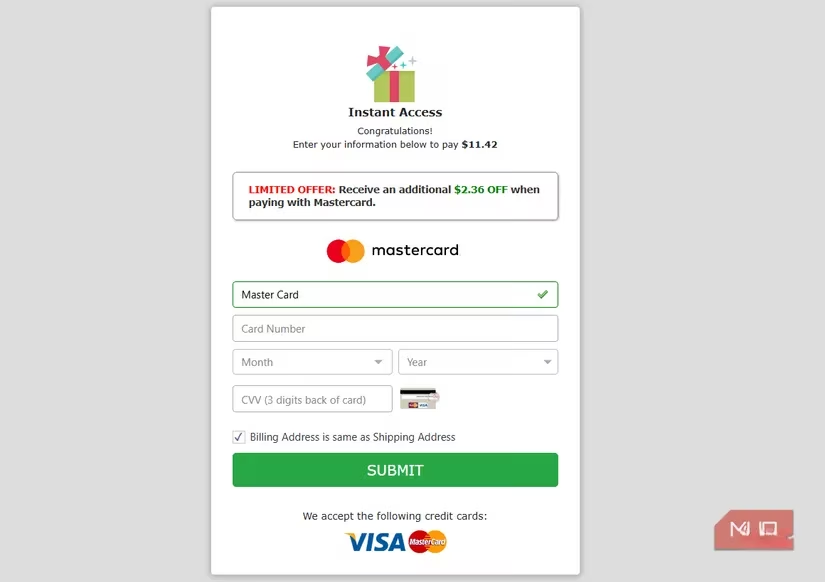
The critical, and most malicious, part of the scam is buried in the Terms & Conditions, which scammers accurately assume most people will not read. By entering payment details, the victim unknowingly agrees to enroll in multiple subscription services.
The scheme typically involves two separate subscriptions:
-
A "Welcome Bonus" Club: Promises a gift card to a non-existent entity like the "Best Consumers Gadget Club." The user is charged a "full price" every month unless they cancel within a very short window, often just three days.
-
A "Fitness App" Trial: Offers a 45-day trial for an unnamed "#1 Fitness App." Failure to cancel via a phone call before the trial ends results in recurring charges for this bogus service.
This staggered timing is insidiously clever. The first charge hits within days, potentially prompting the victim to dispute it with their bank. However, the second charge doesn't appear for over a month, by which time the victim may have forgotten the entire incident. If they don't meticulously review their statements, they could end up paying for these fake subscriptions indefinitely, thinking they are for legitimate services.
Key Takeaways and Protective Measures for 2026
This toothbrush scam exemplifies the sophistication of modern phishing. It doesn't rely on crude threats or obvious grammatical errors but on exploiting human psychology—curiosity, the desire for a good deal, and the tendency to ignore fine print.
Universal Red Flags to Remember:
-
Unsolicited Free Offers: Legitimate companies rarely email random individuals with high-value free gifts without prior engagement.
-
Mismatched Sender Domains: Always check the sender's email address. Legitimate corporate communications come from the company's domain.
-
Pressure to Act Immediately: Any offer that uses urgent language like "act now" or "limited stock" should be treated with extreme suspicion.
-
Requests for Payment for "Free" Items: If you have to pay shipping or handling for a free gift, it's almost always a scam.
-
Gibberish or Generic URLs: Fraudulent sites often have long, nonsensical, or generic web addresses that don't match the brand they're impersonating.
What to Do If You Encounter Such a Scam:
-
Do Not Click Links or Download Attachments.
-
Report the Email as phishing to your email provider.
-
If You Already Entered Details, contact your bank or credit card company immediately to report fraudulent charges and potentially cancel your card.
-
Monitor Your Statements closely for any unauthorized subscriptions.
As of 2026, the best defense remains a healthy dose of skepticism. When an offer seems too good to be true, it almost certainly is. Taking a moment to scrutinize the details, rather than rushing to claim a phantom reward, is the most effective way to protect yourself from these evolving digital deceptions. The question isn't just about avoiding a fake toothbrush; it's about safeguarding your financial identity from those who weave convincing lies out of everyday promises.
The following analysis references GamesRadar+, a leading source for gaming news and consumer protection tips. GamesRadar+ frequently reports on the latest phishing trends targeting gamers and digital consumers, emphasizing the importance of scrutinizing email offers and verifying sender authenticity to avoid falling victim to subscription scams similar to the toothbrush scheme described above.