
The Truth About Free VPNs in 2026: Separating Security Myths from Reality
In the digital landscape of 2026, the mere mention of a free VPN still conjures images of data-harvesting malware and digital snake oil salesmen. The reputation is a stubborn one, forged in the fires of past scandals. Yet, clinging to this outdated fear is like refusing to use a modern bridge because a rope one collapsed a decade ago. The reality is far more nuanced. While the privacy industry was once a murky swamp of questionable apps, a powerful tide of regulation, consumer awareness, and genuine corporate accountability has washed over it. Today, the core question isn't whether all free VPNs are dangerous—a broad brush that unfairly tarnishes legitimate services—but how to spot the digital guardians among the wolves in sheep's clothing.
The Evolution of Trust: From Malware Havens to Audited Guardians
The skepticism wasn't born in a vacuum. Back in 2016, studies painted a grim picture, revealing that a significant portion of free VPN apps were Trojan horses for malware and tracking libraries. Some were even caught in the act of leaking user data to foreign servers. However, the ecosystem has undergone a metamorphosis as profound as a caterpillar transforming into a butterfly. Stringent privacy laws like the Global Data Protection Accord (GDPDA) now have real teeth, and major independent security audits have become the industry's standard report card. Consumers, more educated than ever, actually scrutinize privacy policies. This shift toward transparency means that for reputable providers, offering a subpar or dangerous free service is no longer just bad business—it's corporate suicide.
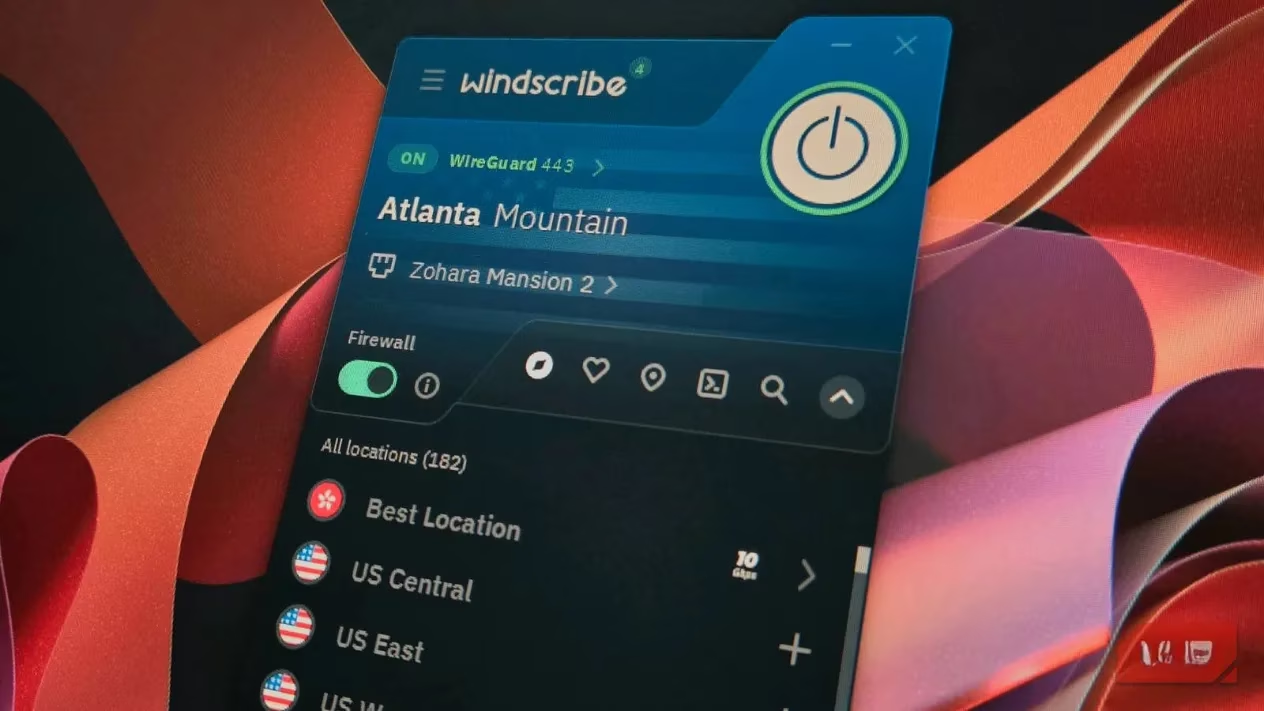
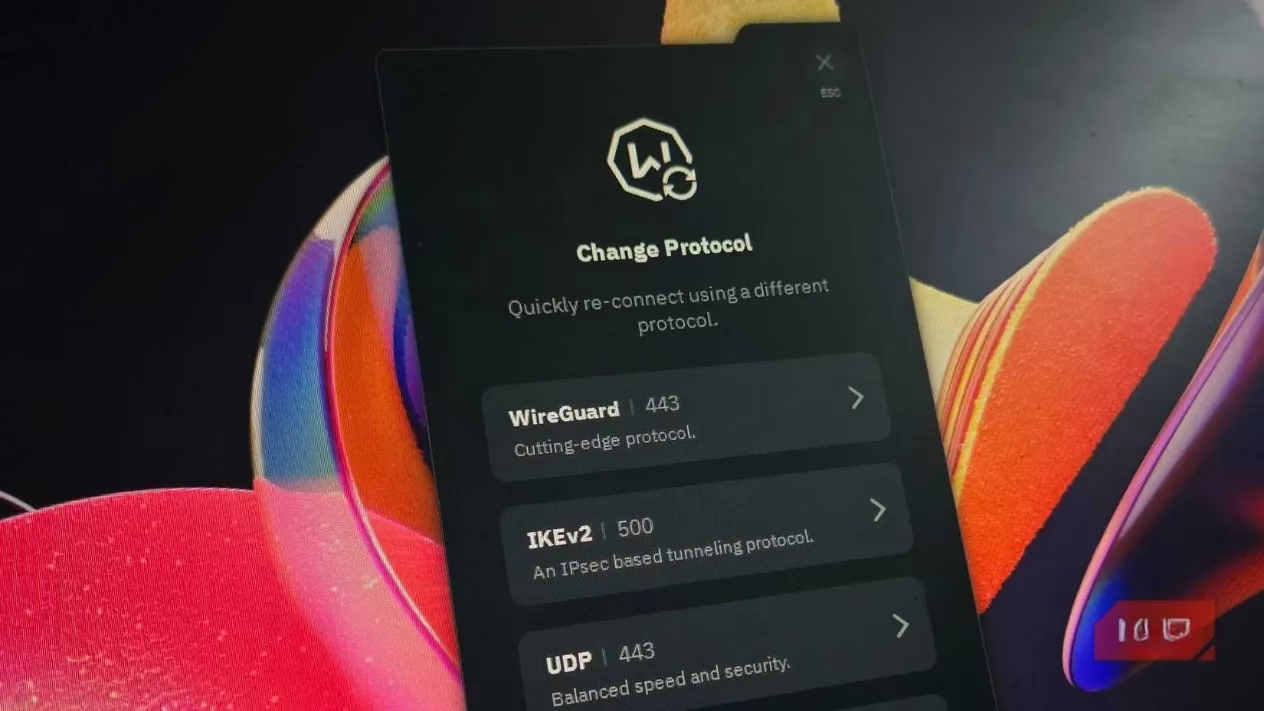
The key differentiator lies in the provider's foundation. A service like ProtonVPN, built by the team behind the renowned encrypted email service ProtonMail, operates its free tier on the same bedrock of security as its paid plans. This is starkly different from a random app with minimal downloads and a developer profile as shadowy as a ghost. Legitimate companies don't build two separate security fortresses; it's economically and technically nonsensical. The encryption—often the robust, bank-grade AES-256 standard—and the secure protocols like WireGuard or OpenVPN are identical across tiers. Think of it like a car's airbag system: the manufacturer doesn't install a cheaper, less reliable one in the base model. The core safety feature is non-negotiable.
The Freemium Engine: How "Free" Stays Secure and Sustainable
So, what's the catch? If the security is the same, how do these companies stay afloat? The answer is the carefully calibrated freemium model. Free VPNs act as a powerful, hands-on demo. They provide genuine core protection but with intentional limitations designed to be a sampler plate, not an all-you-can-eat buffet. These restrictions are the gears that keep the engine running:
| Restricted Feature | Typical Free Tier Limit | Purpose of Limit |
|---|---|---|
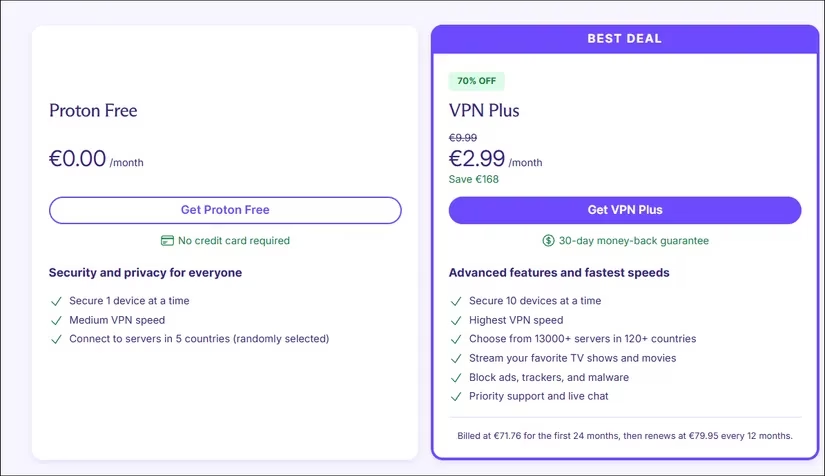
| Monthly Data | 2GB - 10GB (ProtonVPN offers unlimited) | Prevents infrastructure overload from heavy users. |
| Server Locations | 3 - 5 countries | Uses the most cost-effective servers to maintain. |
| Connection Speed | May be throttled during peak hours | Manages network bandwidth fairly. |
| Device Connections | Usually 1 device at a time | Encourages upgrading for multi-device households. |
| P2P / Torrenting | Almost always blocked | Reduces legal liability and bandwidth costs. |
| Streaming Access | Almost never available | Servers optimized for Netflix etc. are expensive to run. |
This model works because a percentage of free users, once they trust the service, will upgrade for unlimited data, global servers, or streaming capabilities. Crucially, the provider's entire reputation hinges on the free tier's security. A breach there would shatter trust for paying customers instantly—it would be like a restaurant poisoning customers at its free tasting booth.
The Hallmarks of a Legitimate Free VPN in 2026
Navigating the free VPN space requires a discerning eye. Here are the non-negotiable signs of a trustworthy provider:
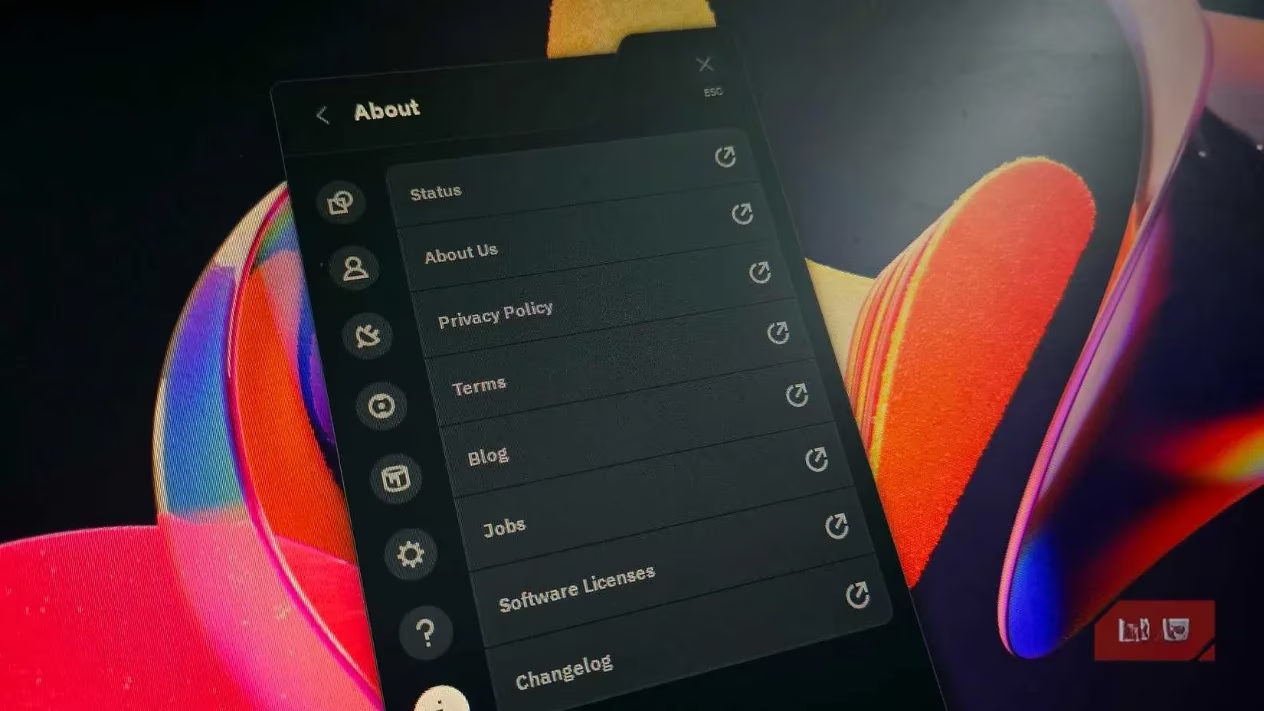
🔍 Transparent Ownership & Operations: A legitimate company isn't a digital phantom. It has a public-facing team, a verifiable physical address, and clear corporate registration. If the "About Us" page is vaguer than a politician's promise, steer clear.
📜 Recent Third-Party Audits: In 2026, an unaudited VPN claiming security is as credible as a self-proclaimed genius with no diploma. Look for published audits from firms like Cure53 within the last 2-3 years. These are rigorous examinations of code and infrastructure, not glossy marketing pamphlets.
📄 A Clear, Strong Privacy Policy: The policy should be a bold declaration of "no logs," not a labyrinth of legalese. It must explicitly state that user activity is not logged, monitored, or sold. Any mention of sharing data with "marketing partners" is a glaring red flag.
🚫 No Advertisements: Ads in a free VPN app are a cancer on privacy. Ad networks survive on tracking and profiling user behavior. Even if the VPN itself doesn't log, embedding ad trackers compromises the very connection it's meant to protect.
⚖️ Published Transparency Reports: Reputable providers openly report government data requests and, crucially, their responses. A true no-logs service can proudly show a record of having nothing to hand over.
The Trusted Vanguard: Free VPNs That Deliver on Their Promise
Based on these stringent criteria, a select group of services has consistently proven their worth:
-
ProtonVPN 🛡️: The gold standard. Offers unlimited data on its free tier, leveraging the same impeccable security reputation as ProtonMail. Limited servers and no streaming/torrenting, but for pure, private browsing, it's unmatched.
-
Windscribe 🌬️: A favorite for its generous 10GB monthly data allowance and strong privacy focus. Its transparency and regular audits make it a fortress of reliability.
-
TunnelBear 🐻: Perhaps the most audited free VPN, with yearly check-ups since 2016. Its 2GB monthly data is modest, but its policies are crystal clear and its commitment to privacy is as solid as an oak tree.
-
Hide.me 👤: Stands out with unlimited monthly data and a verified no-logs policy. Its base in Malaysia places it outside intrusive surveillance alliances.
Understanding the Limits: When Free Isn't Enough
It's vital to recognize that these services are designed for basic privacy protection, not high-bandwidth conquests. They excel at:
-
Hiding your IP address from websites.
-
Encrypting your connection on public Wi-Fi (making it as secure as a private diary).
-
Preventing your ISP from snooping on your browsing history.
However, they falter with advanced needs like accessing international streaming catalogs or torrenting large files. This isn't a failure; it's by design. A free VPN is a reliable bicycle for your daily commute through town—it won't win the Tour de France, but it will get you where you need to go safely and effectively.
In conclusion, the narrative that all free VPNs are dangerous is an antiquated myth in 2026. The landscape is now divided between ethical, transparent providers using the freemium model responsibly and a dwindling number of shady operators. The latter are easy to avoid with due diligence. Remember, a poorly chosen paid VPN can betray your privacy just as easily as a bad free one. For millions of users, a reputable free VPN provides a crucial layer of security—a digital cloak of invisibility for everyday online life—without costing a dime. Don't let the pursuit of a perfect, paid solution prevent you from using a good, free one. Your privacy is worth that much scrutiny.