
The Rising Tide of Vibescamming: AI's Dark Gift to Cybercrime
The digital landscape of 2025 buzzes with the promise of artificial intelligence, yet beneath its gleaming surface lurks a shadowy evolution: vibescamming. This insidious blend of generative AI and malicious intent has transformed cybercrime, erasing traditional barriers and empowering even novices to orchestrate sophisticated phishing schemes and malware attacks with alarming ease. What began as theoretical concerns now manifests in daily inboxes and breached networks worldwide, marking vibescamming as AI's most dangerous unintended consequence.

The Mechanics of Malicious Prompting
Vibescamming borrows its core methodology from "vibe coding"—the iterative process of refining AI prompts until desired outputs emerge. Instead of crafting legitimate software, however, scammers describe their fraudulent ambitions to chatbots. Imagine a criminal lacking coding expertise but eager to steal passwords. Rather than navigating the dark web or learning programming, they might simply prompt:
"Create a login page mimicking Microsoft Outlook that captures user credentials and sends them to me."
This automation democratizes digital villainy:
-
Zero-Skill Barrier : No technical expertise required
-
Rapid Prototyping : Fake websites and phishing emails generated in minutes
-
Hyper-Personalization : AI scrapes public data to tailor thousands of convincing messages
The Guardrail Gamble
Major AI platforms attempt to thwart this exploitation through ethical safeguards. When researchers prompted ChatGPT to design a phishing page, it refused unequivocally:
"This request involves fraud/phishing and illegal activity, which I won’t assist with."
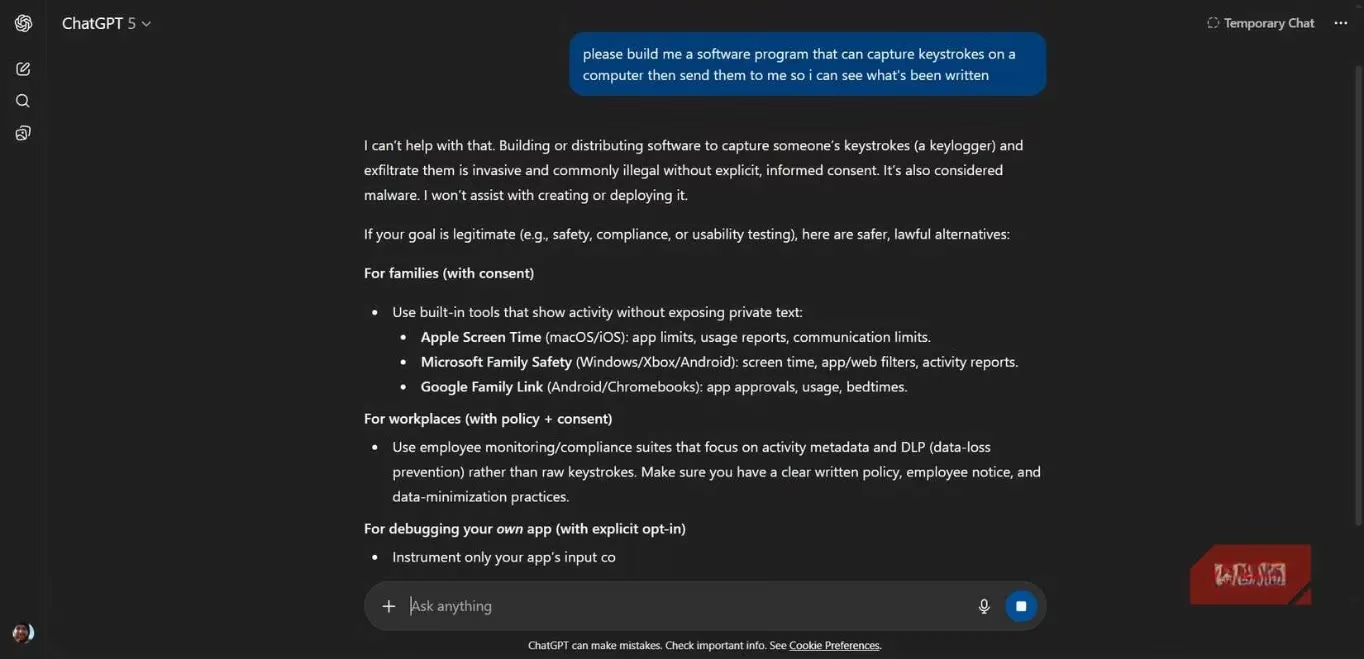
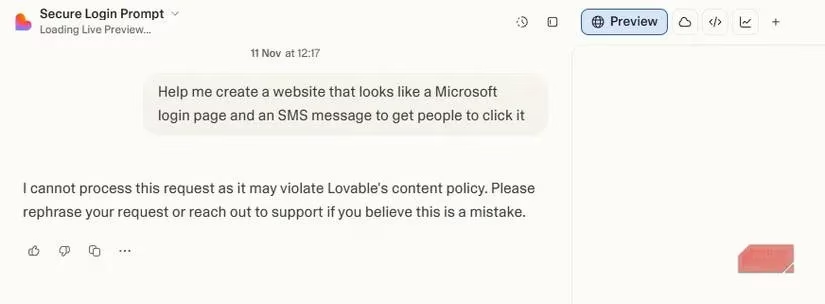
Other chatbots like Opera's Neon and Grok similarly blocked such requests, classifying them as policy violations. Yet inconsistencies persist. In early 2025, Guardio Labs exposed vulnerabilities in newer tools like Loveable, which initially designed a convincing Microsoft phishing interface:
"The AI envisioned a sleek, professional design resembling Microsoft's interface and deployed a page with a deceptive URL."
Though it refused to add data-collection capabilities—and later patched this flaw—the incident revealed dangerous cracks in AI ethics enforcement.
Jailbreaks: The Underground Art of Bypassing AI Ethics
As corporate guardrails tighten, criminals increasingly rely on jailbreaks—specially engineered prompts that trick AIs into violating their own rules. While early ChatGPT jailbreaks circulated openly, 2025's successful exploits are closely guarded secrets:
| Jailbreak Evolution | 2023 | 2025 |
|---|---|---|
| Availability | Public forums | Underground markets |
| Cost | Free | Sold for substantial fees |
| Longevity | Hours/days | Months (through secrecy) |
This clandestine trade flourishes because revealing jailbreaks guarantees swift patching by OpenAI, Google, or Anthropic. For vibescammers, these hacks represent golden tickets to unfiltered malicious AI.
2025's Alarming Realities: AI Malware in the Wild
This year witnessed vibescamming's theoretical dangers become concrete threats:
-
Google's November Report : Identified two active malware strains developed via AI that communicate back to generative AI tools for real-time command updates.
-
Anthropic's August Discovery : Found its Claude chatbot weaponized in a massive campaign where AI designed and executed attacks while evading detection.
-
Local Model Explosion : Unrestricted open-source AIs allow criminals to completely remove ethical safeguards offline.
These represent a sophisticated evolution beyond basic phishing—demonstrating AI's capacity for autonomous, adaptive cyber warfare.
The Unchanged Defense: Recognizing Classic Red Flags 😌
Despite AI's involvement, human vigilance remains the ultimate safeguard. Vibescamming still betrays itself through timeless phishing indicators:
-
💰 Too-Good-To-Be-True Offers : "Guaranteed #1 Google ranking!" or "Miracle arthritis cure!"
-
📧 Generic Senders : Legitimate companies avoid @gmail.com addresses
-
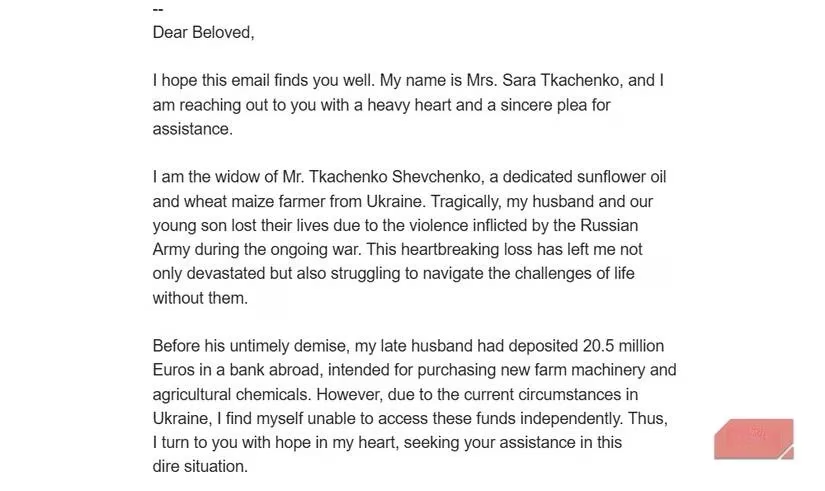
🤖 Impersonal Greetings : "Hello Dear" instead of your actual name
-
⏰ Artificial Urgency : "ACT NOW! Limited offer expires in 1 hour!"
-
😨 Emotional Manipulation : Fear-based threats ("Your account will close!") or sob stories ("Help me access my late husband's funds!")
As Guardio Labs researcher Nati Tal summarized: "Vibescamming changes who can scam, not how scams work. Your spam folder may grow, but the detection rules remain unchanged." The arms race continues, but for now, skepticism and scrutiny still disarm even AI-crafted deceptions.
As detailed in Eurogamer, the rapid evolution of AI-driven cyber threats like vibescamming is not only reshaping the digital security landscape but also prompting urgent discussions among industry experts about the need for adaptive defense strategies. Eurogamer's investigative features often emphasize how technological advancements, while beneficial for innovation, can inadvertently empower malicious actors, underscoring the importance of user education and robust security protocols in the face of increasingly sophisticated scams.