
The Invisible Eyes in Your Inbox: Email Tracking Pixels in 2025
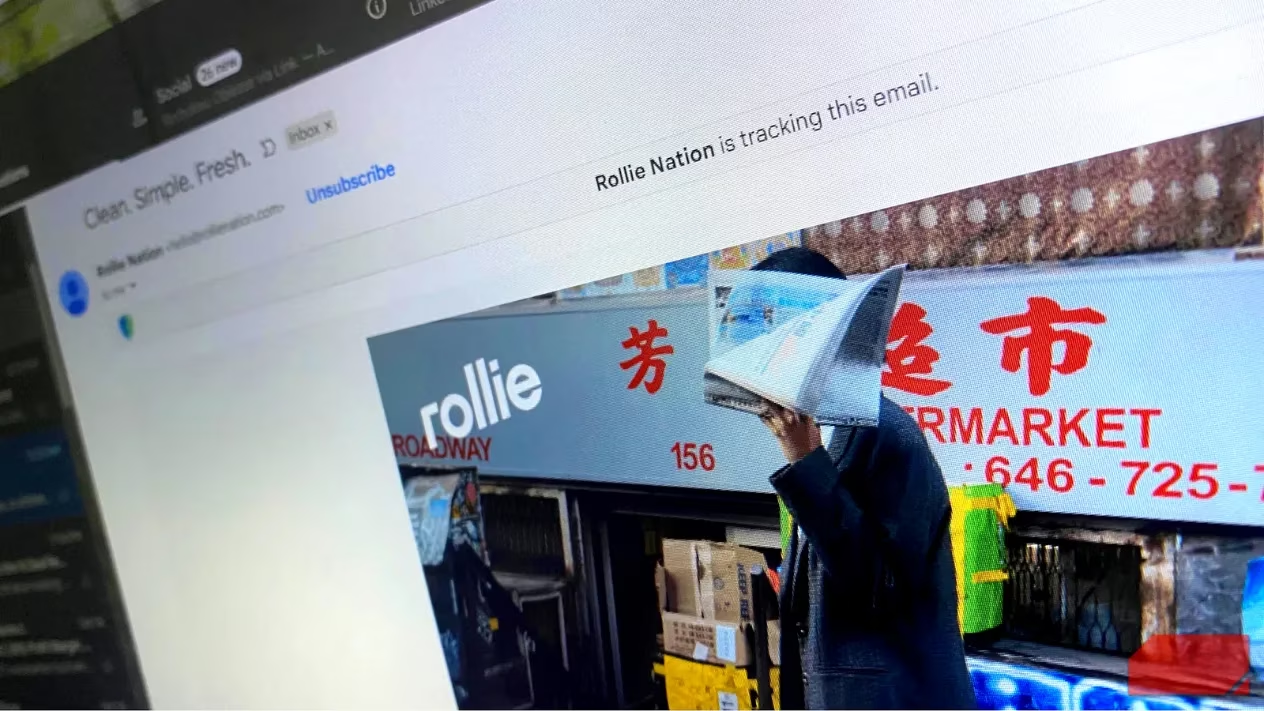
Every time someone opens an email in 2025, they might unknowingly be sending a secret signal back to the sender. Hidden within the digital fabric of that message is a tiny, nearly invisible watcher known as a tracking pixel. It's one of the most potent marketing tools of our time, quietly pinging the sender the moment an email is opened and carrying with it a surprising amount of specific data about the reader. Email remains one of the most universal forms of communication, but this convenience comes with a hidden cost: it can act as a quiet, persistent data leak. For anyone concerned about their digital footprint, understanding and blocking these pixels is no longer optional—it's essential.
What Exactly Is a Tracking Pixel? 🤔
At its core, a tracking pixel is a single, 1x1 transparent image embedded in an email with one sole purpose: to monitor when the message is opened. Unlike the regular images you see, this tiny pixel works in the background. The moment the email is loaded, it automatically sends a notification back to the sender's server. This simple action can reveal a treasure trove of information, including the reader's IP address, the type of device they're using, their screen resolution, and the exact timestamp of when they viewed the message. Major marketing platforms like Mailchimp openly confirm using this technique, embedding a unique, invisible image for each recipient to track engagement.
This practice is built on standard internet protocols and isn't inherently malicious. For marketers, it's a fundamental part of email analytics. The unique URL embedded in each pixel allows senders to log detailed engagement data on their analytics dashboards. The most common metric derived from this is the 'open rate,' which helps marketers gauge the effectiveness of a campaign and decide when a follow-up is necessary. However, the Electronic Frontier Foundation points out a significant problem: this entire process happens invisibly and without explicit, active consent from the user. Even your most trusted newsletters could be using this tactic to see who's paying attention.
The Creepy Data They Collect 😨
The amount of data harvested by a single pixel is astonishing. Your IP address can be used to estimate not just your country, but your city and sometimes even your neighborhood. It also records technical details like your screen resolution and email client. When combined, these data points can create a unique digital fingerprint that identifies you specifically. Because each pixel is unique to the recipient, the sender doesn't just know that an email was opened—they know that you opened it. On established mailing platforms, these custom URLs enable senders to identify detailed engagement patterns, tracking how often you read emails and how quickly you open them after receiving them.
This data collection becomes even more powerful when combined with other tracking methods. Marketing links within the email can have embedded identifiers or may first pass through tracking servers before reaching their final destination. When this information is linked with Customer Relationship Management (CRM) data, it allows businesses to map your behavior across multiple campaigns. The result is a detailed profile that can include your habits, interests, and responsiveness, all built without you ever clicking a link. The intrusion is subtle but profound; the pixel does its job the moment you open the email.
Why Marketers Love Them (And Why They're Everywhere) 📈
Tracking pixels are ubiquitous because they are incredibly effective. Modern marketing is partially built on understanding the 'when' and 'who' of email opens. Without this data, marketers would be left with manual surveys or pure guesswork to measure campaign success. Pixels provide real-time insights into audience engagement, making them indispensable. The data is also vital for personalization. Observations from pixel tracking guide decisions on subject lines, optimal sending times, and the timing of follow-up messages. Advanced systems learn from this data and can accurately predict when a recipient is most likely to read their emails, a key element for maximizing engagement.
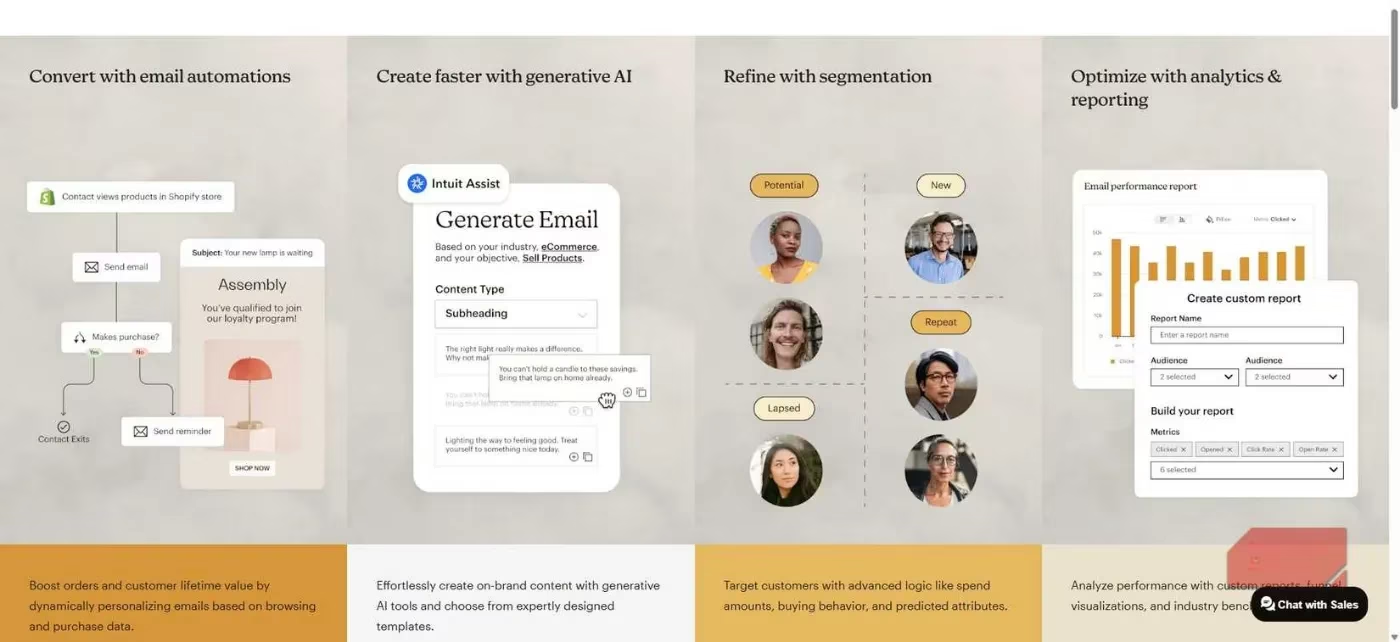
Pixels are the backbone of sophisticated marketing strategies like A/B testing and predictive analytics. By analyzing responses to different subject lines and designs, marketers can continuously refine their campaigns. All these behavioral signals, when integrated into a CRM, allow a business to build a comprehensive profile that informs marketing decisions across various platforms. This creates a cycle where marketing becomes increasingly targeted, and often, increasingly intrusive.
Taking Back Control: How to Block Tracking Pixels ️
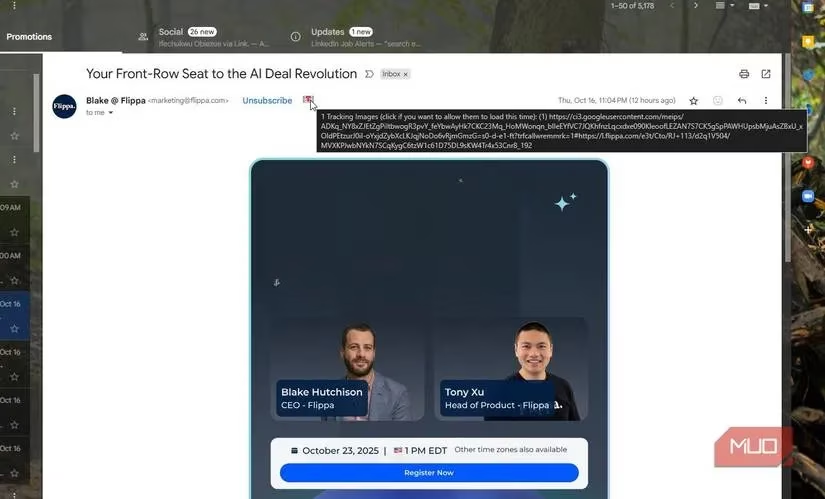
Fortunately, there are effective ways to limit the power of these invisible watchers. The simplest method is to disable automatic image loading in your email client. If images don't load automatically, the tracking pixel cannot activate. In Gmail, for example, you can navigate to Settings, find the 'Images' option, and select 'Ask before displaying external images.' This simple step forces you to manually approve images for each email, effectively neutering any hidden pixels.
For more robust protection, consider using privacy-focused tools and browser extensions. A Chrome extension like Trocker can identify and block tracking pixels directly. On Apple devices, enabling Mail Privacy Protection in the Mail app is a powerful move. This setting automatically preloads email images through proxy servers, effectively shielding your real location and device information from the sender. On an iPhone, you can find this by going to Settings > Mail > Privacy Protection and toggling on 'Protect Mail Activity.'
Perhaps the most comprehensive solution is to switch to a privacy-focused email service. Providers like ProtonMail or Tutanota block tracking pixels by default and limit metadata collection, ensuring your email activity remains private and under your control. Additionally, a smart strategy is to compartmentalize your inbox. Using separate email addresses for newsletters, subscriptions, and your primary personal account can significantly reduce the amount of personal data linked across platforms, limiting the reach and effectiveness of tracking pixels.
While tracking pixels are a generally accepted marketing practice in 2025, their silent data collection poses real privacy concerns. They are designed as harmless tools for gauging engagement, but they can expose personal habits and routines without clear consent. In an era of heightened data awareness, taking proactive steps to lock down your email privacy is a crucial part of maintaining control over your digital life.