
The Dark Web Unveiled: Separating Hollywood Fiction from 2026's Reality
When I hear the term "dark web," my mind, like many others, initially conjures images of a shadowy digital underworld straight out of a Hollywood thriller. The movies have done a spectacular job of painting it as a place where cyber-criminals lurk behind every corner, and illicit deals are a mere keystroke away. But as I've come to understand by exploring and reading about it in 2026, the reality is profoundly different. It's less a neon-lit den of instant villainy and more a slow, complex, and often mundane network of encrypted tunnels. The dramatic, high-speed hacking scenes? Pure fiction. The truth is far more nuanced, involving specific software, deliberate navigation, and a pace that would bore any movie director to tears.
🔓 Access: It's Not an Accidental Stumble
Contrary to cinematic suggestions, you absolutely cannot trip and fall into the dark web while casually scrolling through social media or clicking a suspicious email link. Gaining entry requires intent and specific tools. The primary gateway is the Tor Browser, a specialized software designed to anonymize your traffic by routing it through multiple encrypted relays across the globe.
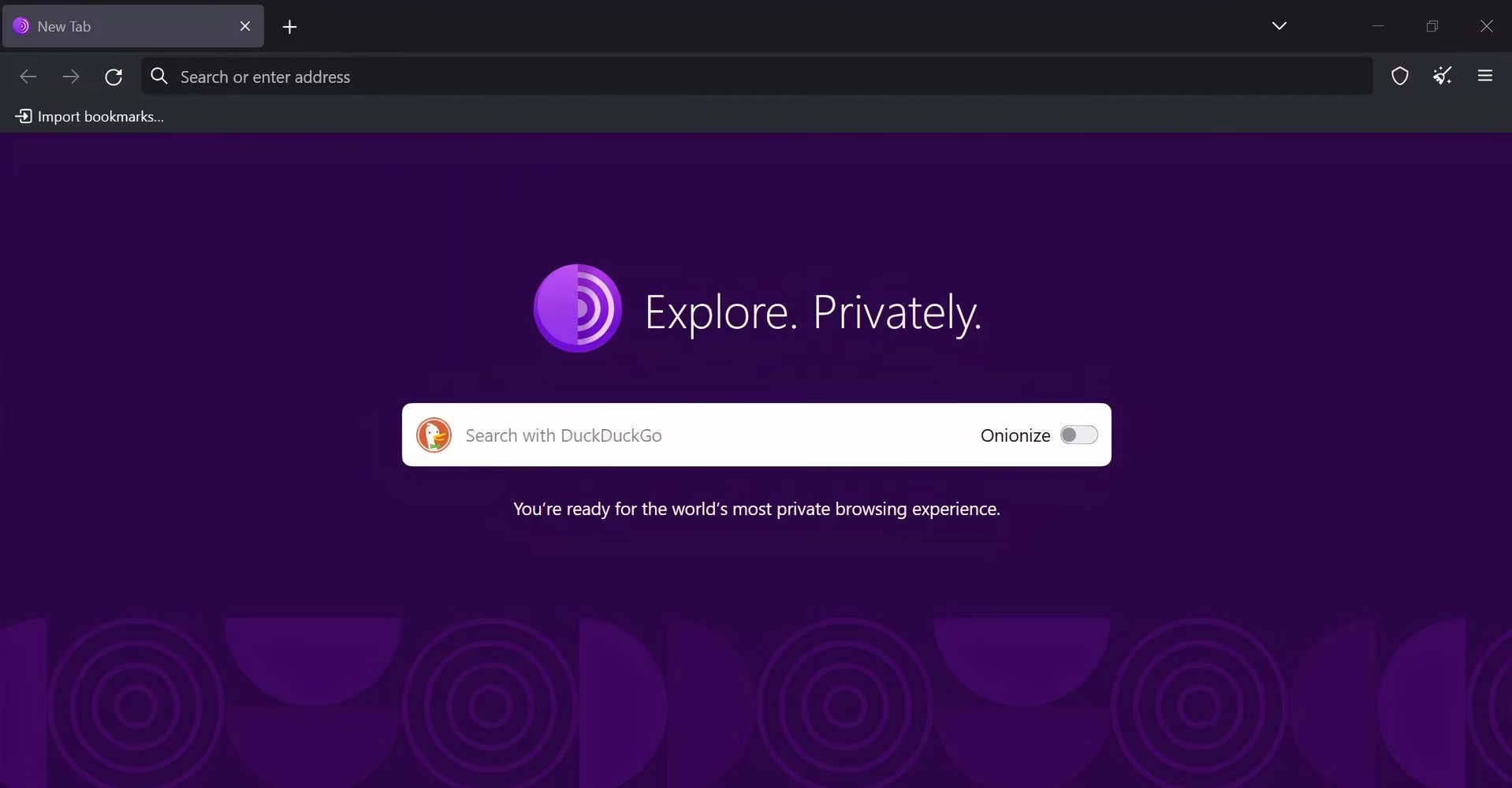
Even with Tor installed, you're not greeted by a slick, Google-like homepage for the underworld. There is no central search engine that conveniently indexes all the hidden .onion sites. To go anywhere, you need the exact address—a long, cryptic string of letters and numbers ending in .onion. It's less like typing "YouTube" into your address bar and more like needing a specific map coordinate and a secret handshake to enter a hidden speakeasy. The idea that a curious child or an unsuspecting grandparent could accidentally wind up on a darknet marketplace is, quite simply, a myth.
🐢 The Experience: Slow, Clunky, and Often Dull
If Hollywood depicted the dark web's browsing speed accurately, audiences would fall asleep. The powerful anonymity provided by the Tor network comes with a heavy tax: speed. Because your connection is bounced through several volunteer-operated servers worldwide, loading even a simple text-based page can feel glacial. Streaming video? Forget about it. The experience is characterized by:
-
Endless loading circles.
-
Frequent timeouts and connection drops.
-
A complete absence of the multimedia-rich experience we expect on the surface web.
It's not buffering; it's a test of patience. This inherent slowness is one of the biggest reasons the dark web isn't a mainstream browsing destination.
⚖️ Content: Beyond the Shock and Horror
The most pervasive myth is that the dark web is a monolithic hive of the worst humanity has to offer. While deeply disturbing and illegal content does exist in its darkest corners, it is not the sum total of the network. In fact, a significant portion of the dark web in 2026 is dedicated to practical, legal, and even altruistic purposes.
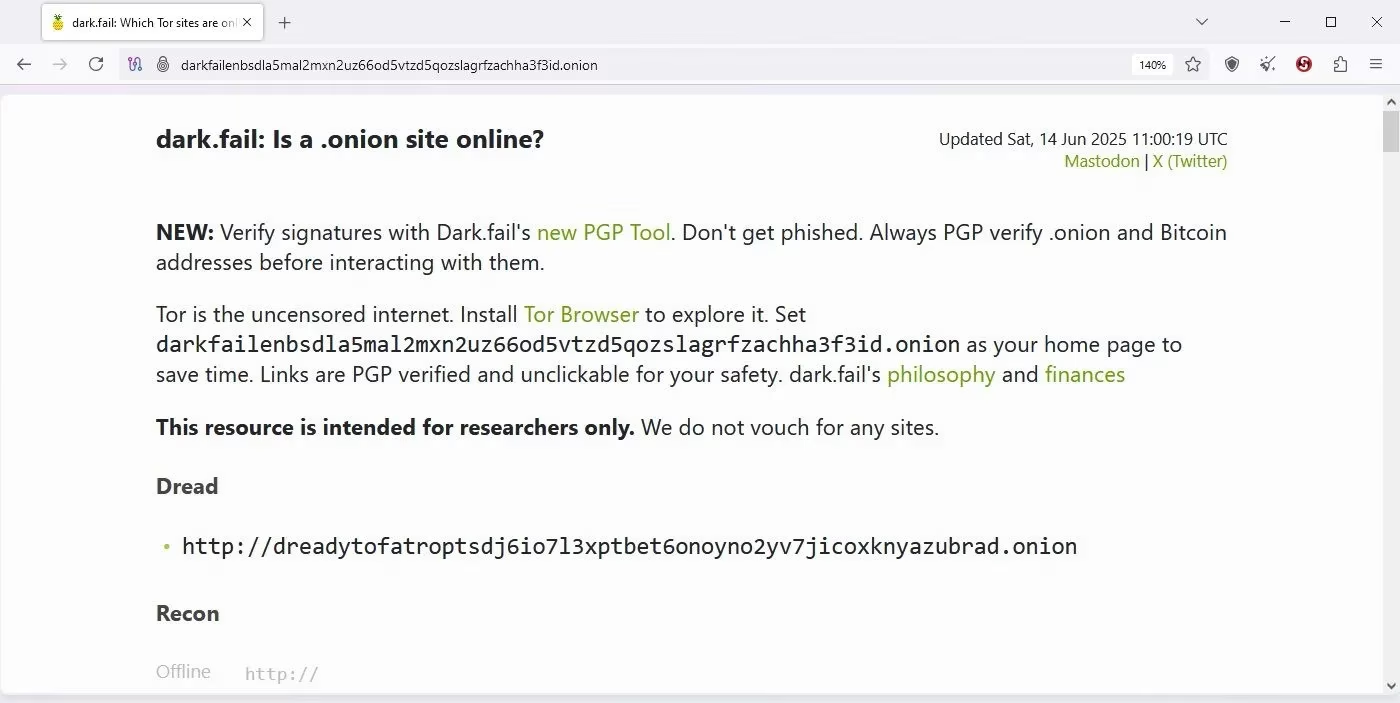
Legitimate uses are plentiful and vital:
-
Journalists and Whistleblowers: Platforms like SecureDrop operate here, allowing sources to submit information to news organizations with maximum anonymity.
-
Activists and Dissidents: People living under oppressive regimes use it to bypass censorship, organize, and access uncensored news.
-
Privacy-Conscious Individuals: Everyday users visit for enhanced privacy, away from the pervasive tracking of the surface web.
-
Communities and Tools: There are active forums like Dread (a privacy-focused Reddit alternative), anonymous email services like Mail2Tor, and dedicated search engines like Haystak that help users find useful resources.
To assume every dark web user is a criminal is a gross oversimplification. Many are there for protection, not predation.
🎭 The Great Scams: Hitmen, Red Rooms, and Urban Legends
Ah, the classic tropes. The anonymous assassin-for-hire website and the infamous "Red Rooms" streaming live torture. In 2026, I can confirm these remain almost entirely in the realm of myth and scam. Yes, you can find sites that brazenly offer "hitman services." Historical examples like the Besa Mafia site were elaborate frauds designed to steal Bitcoin from gullible visitors.
| Hollywood Trope | 2026 Reality |
|---|---|
| Instant Hitman Hire | Almost always a scam or law enforcement honeypot. |
| Red Rooms | A pervasive urban legend with no credible evidence. |
| Easy Access to Extreme Content | Heavily gated, not casually stumbled upon, and actively hunted by authorities. |
These sites prey on curiosity and fear, not professional criminals. Real-world contract killers do not advertise with flashy .onion storefronts.
👮 Law Enforcement: The Cat is Very Much in the Game
Movies often portray dark web operators as digital phantoms, always one step ahead of bumbling authorities. The reality in 2026 is that law enforcement agencies are highly sophisticated players in this space. Using Tor does not grant absolute invisibility.
Global operations have repeatedly proven this. Landmark takedowns of massive marketplaces like Silix R0ad, AlphaBay, and Hansa were executed through a combination of:
-
Infiltration: Undercover agents operating within the markets for months.
-
Cryptocurrency Tracing: Following the blockchain breadcrumbs of Bitcoin and Monero transactions.
-
Exploiting Operational Security (OpSec) Failures: Users getting caught for reusing passwords, revealing personal details, or making a single critical mistake.
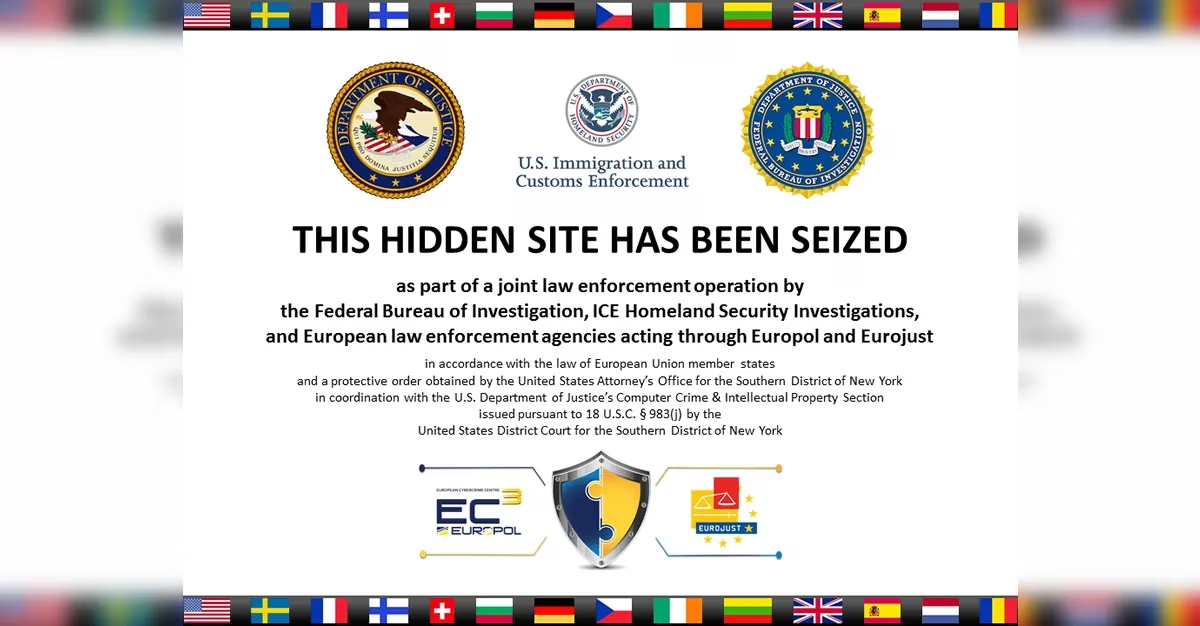
Agencies like the FBI, Europol, and ICE don't just shut sites down immediately. They often seize control and let them run silently, gathering intelligence on thousands of users before making coordinated, global arrests. The game is cat-and-mouse, but the cat has a global surveillance network, forensic accountants, and powerful legal tools.
💭 My Final Thoughts
Exploring the concept of the dark web in 2026 has been an exercise in demystification. It is not the digital boogeyman Hollywood sells. It is a tool—a set of protocols and networks that reflects the duality of human nature. For some, it is a shield against oppression and a haven for free speech. For others, it is a venue for crime. But its defining characteristics are intentionality, slow navigation, and the constant, quiet presence of both community builders and law enforcement. The most shocking thing about the real dark web might just be how ordinary and technical much of it truly is, far removed from the cinematic fantasy of instant access and omnipotent anonymity.