
The Art of Spotting AI-Generated Reviews in the 2026 Online Shopping Jungle
In the year 2026, navigating the digital marketplace feels less like shopping and more like an archaeological dig through layers of authenticity and artifice. The convenience of a few clicks is now shadowed by the sophisticated whispers of artificial intelligence, crafting product reviews so convincing they can sway even the most skeptical buyer. The once-trusted star ratings and customer testimonials have become a new frontier where human experience and algorithmic generation blur, making the act of purchase a test of discernment. For the savvy shopper, learning to separate the genuine voice of a fellow consumer from the flawless prose of a machine has become an essential survival skill in the wilds of e-commerce.
One of the most glaring tells is found in the very fabric of the language itself. AI-generated reviews often read as if they've been polished by a battalion of literary perfectionists—each sentence a gleaming marble in a sterile plaza, devoid of the organic cracks and moss that give real writing its character. They are pristine, with punctuation placed with the clinical precision of a surgeon's scalpel, and not a single typo daring to disrupt the flow. This is fine for a formal report, but it's a world away from how most people hastily tap out their thoughts on a phone screen between tasks. A real review might be peppered with slang, dropped words, or enthusiastic fragments like "luv it!" or the noncommittal "meh, not bad." Even a more considered take often retains a conversational cadence: "Does the job. A bit noisy, but grinds fast. Worth the money." This linguistic fingerprint, unique to human haste and imperfection, is often the first clue.
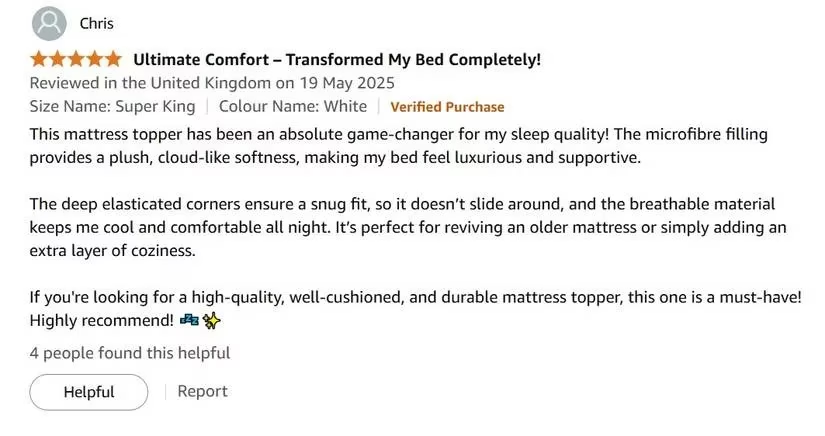
Beyond grammar, AI has a penchant for vagueness that shines like a polished but empty shell. It excels at generating platitudes that sound impressive but are hollow upon inspection. Phrases like "the craftsmanship of this product exceeded my expectations at an unbeatable price" or declaring an item a "total game-changer" are the linguistic equivalent of nutritional filler—they take up space but provide no substantive detail. These statements could apply with equal ambiguity to a high-end blender, a budget sofa, or a pair of novelty socks. Sometimes, the AI doesn't even bother to remix; it simply parrots the marketing copy from the product description verbatim, creating an echo chamber of praise without independent thought.
In stark contrast, a human who has actually lived with a product leaves a trail of specific, sometimes oddly mundane, details. Their feedback is like finding a well-worn path through a forest instead of a generic park brochure. For a laptop bag, a real user might note, "The front pocket fits my 13-inch notebook perfectly, but I wish it had a side pouch for my water bottle." They'll comment on color discrepancies ("the 'midnight blue' looks more like a stormy gray in person"), model-specific quirks, or the minor inconveniences discovered after weeks of use—the kind of insights that only emerge from real-world interaction.
Suspicion often solidifies not from a single review, but from the chorus they form. AI-written reviews, especially when deployed en masse by unscrupulous sellers, have a telltale habit of leaning on the same stock phrases and sentence structures. If you spot identical rhythmic patterns or copy-pasted language across multiple usernames, your internal alarm should sound. While advanced AI can vary its wording, many spammers opt for efficiency, dropping the same glowing blurb under a handful of fabricated profiles. Another red flag is when disparate reviewers coincidentally fixate on the same oddly specific, yet generic, point. If three different accounts all proclaim a coffee maker is "perfect for brewing two cups every morning" in those exact words, it's highly unlikely any of them actually savored that morning brew.
The timeline of reviews is another critical clue. Authentic customer feedback trickles in sporadically, mirroring real purchase and usage cycles. A product that has lingered for months only to be suddenly bombarded by twenty five-star reviews within the same week is waving a giant red flag. This pattern, often as synchronized as a flock of starlings turning in unison, typically indicates an attempt to artificially inflate a product's rating—perhaps before a major sales event or to bury a wave of legitimate negative feedback. Most platforms allow sorting reviews by date, making these suspicious clusters easy to spot.
Visual evidence can be equally revealing. AI-assisted review campaigns often come paired with images that feel generic or slightly "off." They might be overly perfect stock photos or images that don't quite match the product's advertised color or texture. A good practice is to perform a reverse-image search. If the photo originates from a stock library or appears across dozens of unrelated listings, its authenticity is dubious. Genuine customer photos, however, carry the charming imperfections of real life: slightly poor lighting, the product sitting on a cluttered kitchen counter, or held in a hand, with all the authenticity of a quick smartphone snapshot.
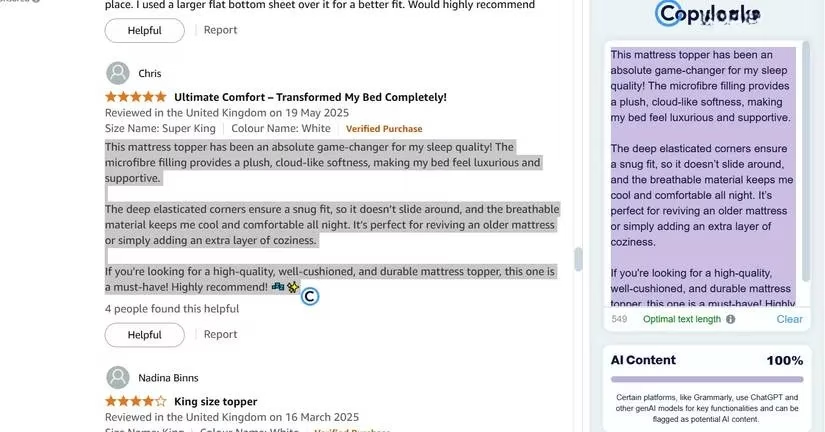
When intuition suggests a review section is as reliable as a house of cards in a breeze, modern tools offer a technological assist. Browser extensions designed for AI content detection, such as Copyleaks, have become more sophisticated by 2026. They can scan review text directly on the page, providing a probability analysis in seconds. Simply highlight suspicious text, and a sidebar will assess the likelihood of AI involvement. For images, tools like BitMind have evolved to analyze product photos in real-time, offering a "Real" or "AI-generated" probability score when you hover over them, helping to unmask photorealistic fakes. While these tools are not infallible—sometimes mistaking eloquent human writing for AI or missing cleverly disguised fakes—they serve as a valuable second opinion to back up your own detective work.
Ultimately, spotting AI-written reviews is an exercise in pattern recognition. No single sign is definitive proof, much like one odd tile doesn't prove the whole mosaic is fake. However, when you encounter a combination of flawless yet vague language, repetitive phrasing, suspicious review timelines, and generic visuals, the picture becomes clear. In the 2026 shopping landscape, the most powerful tool remains a critical eye and a healthy dose of skepticism, ensuring your hard-earned money is spent based on human truth, not algorithmic fiction.