
Safe Ways to Pay Without Exposing Your Card Numbers
As online and in-person shopping become increasingly intertwined with everyday life, handing over a physical credit card carries more risk than many people realize. Retailers collect transaction details, store financial information, and sometimes suffer data breaches that expose sensitive card numbers. Fortunately, a range of tools now allows consumers to complete purchases without ever sharing their actual card credentials. In 2026, digital wallets, virtual cards, and trusted payment intermediaries have become standard parts of a cautious shopper's routine.
The Shift Away from Physical Cards
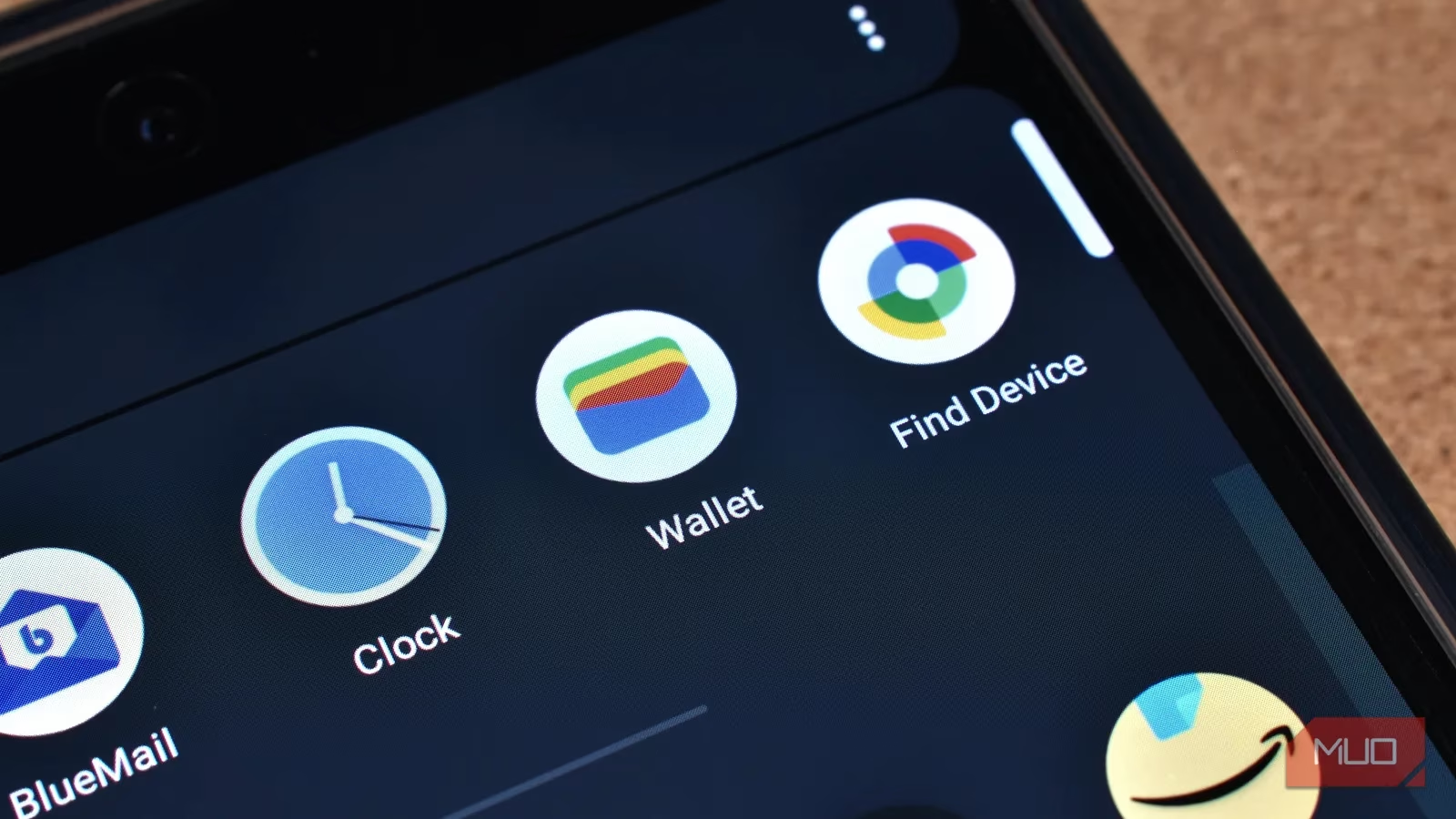
For in-person shopping, pulling a credit card from a wallet is no longer necessary in most stores. Modern smartphones can handle contactless payments at the same terminals that accept tap-to-pay cards. Apple Pay, Google Wallet, and Samsung Wallet all offer this capability. A shopper simply adds a card to the app once, then taps the phone against the payment terminal when it is time to check out.
These digital wallets work through a process called tokenization. Instead of transmitting the real card number, the app creates a temporary virtual token for each transaction. The retailer never sees the actual card details. Even more important, the token changes with every purchase. This means a merchant cannot track a customer's buying behavior across multiple visits, because the number used in one transaction will not match the number used in the next.
If a store suffers a data breach, the impact on a digital wallet user is significantly smaller. The stolen tokens are already useless after their single-use purpose. There is no need to cancel and replace a physical credit card. The numbers that were used during past purchases simply no longer exist.
Virtual Cards for Online Shopping
Digital wallets are extremely convenient in physical stores, but their usefulness online remains uneven. Some websites accept Google Wallet or Apple Pay, but many do not. For shoppers who want a secure payment method that works on virtually any website, virtual cards offer a compelling alternative. Virtual card services generate disposable card numbers that can be used just like regular debit or credit cards during online checkout.
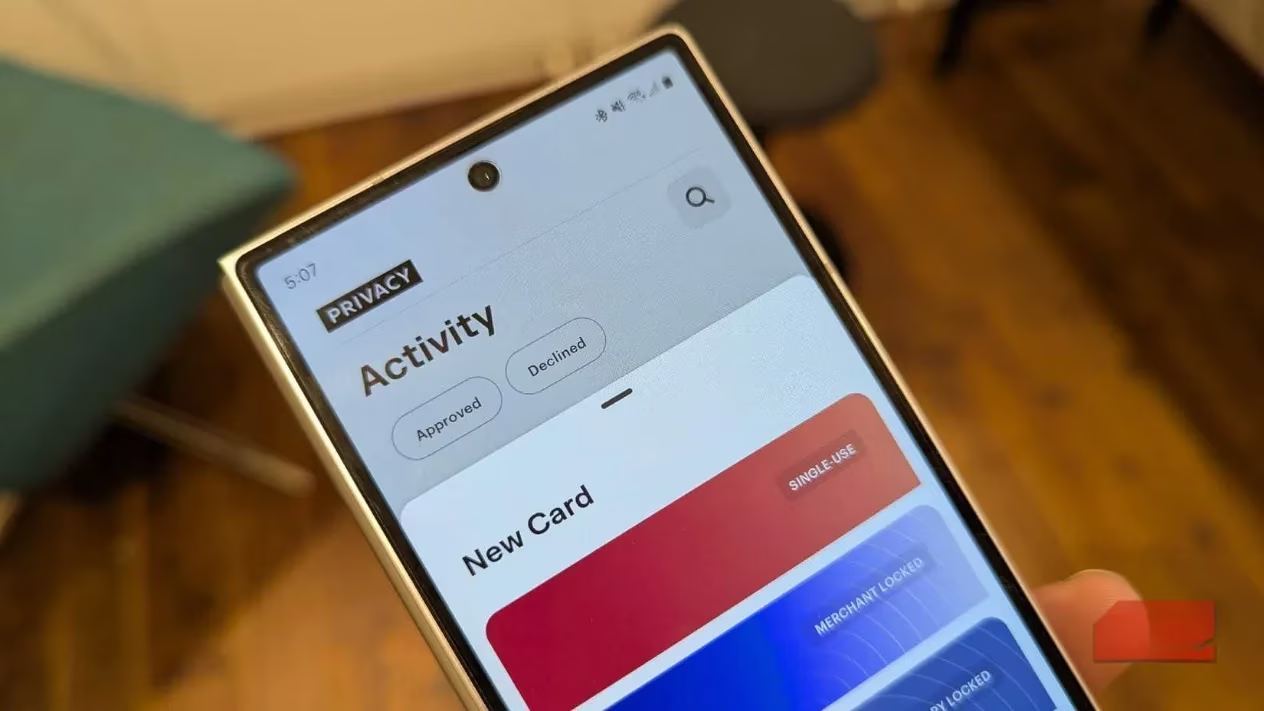
One well-known provider of virtual cards is Privacy. With a single tap, a user can create a new card for one-time use. Alternatively, the user can create a card that is locked to a single retailer. This second option is especially useful for recurring subscriptions such as Netflix, or for stores where the person shops frequently without a monthly fee, such as Steam.
Unlike digital wallets, virtual burner cards are not tied to existing physical payment cards. Instead, a service like Privacy connects to a funding source such as a bank account or a debit card. This separation adds another layer of protection. It also provides a practical budgeting benefit. The user can track exactly how much money is spent on each virtual card, making it easier to manage subscriptions and discretionary spending.
PayPal as an Online Safety Net
For people who prefer to keep using their existing payment cards, PayPal remains a widely accepted option for online purchases. PayPal has been around for decades and is accepted at many websites. It allows a shopper to save all payment cards in a single PayPal account. This removes the need to re-enter card numbers at every checkout. Sellers never receive the actual card numbers. During a data breach, the buyer's financial details remain protected.
However, PayPal is not a universal solution. Unlike NFC-based digital wallets, which are accepted anywhere contactless payments work, PayPal depends on each seller's decision to accept it. Some major retailers do not support PayPal. Amazon is a prime example. For that reason, PayPal is best viewed as part of a broader online safety strategy rather than a complete replacement for other tools.
Comparing the Main Options
The table below summarizes how each payment tool protects card information:
| Tool | Best For | How It Protects | Limitations |
|---|---|---|---|
| Apple Pay / Google Wallet / Samsung Wallet | In-store tap-to-pay and some apps | Uses one-time tokens instead of real card numbers | Not accepted at all online stores |
| Virtual cards such as Privacy | Online shopping and subscriptions | Creates disposable or merchant-locked card numbers | Requires connecting a separate funding source |
| PayPal | Online checkouts at participating sites | Hides card numbers from sellers | Not accepted everywhere; Amazon does not support it |
Building a Safer Payment Routine
A thoughtful shopper in 2026 is likely to combine multiple tools. A digital wallet can handle most in-person purchases. A virtual card service can cover one-time online buys and recurring subscriptions. PayPal can serve as a backup for online retailers that accept it. Cash remains an option for those who prefer complete anonymity, though it lacks the convenience of digital payments.
The core idea behind all of these methods is the same: keep the real card number out of the seller's hands. Tokenization, virtual cards, and payment intermediaries all achieve this in different ways. Shopping online has long carried added risks, but in-person transactions are not risk-free either. Retailers still collect and store financial data, and any stored data can be exposed. With the right tools, consumers can reclaim a meaningful degree of financial security. The technology has matured, and the barriers to adoption are lower than ever. All that remains is the willingness to change an old habit.