
Privacy vs. Convenience: Why We Choose Easy Over Secure in 2026
Let's be real for a second. You don't actually want privacy. That's not an insult—it's just an honest observation of how most people interact with technology today. Start talking about data collection, surveillance capitalism, or tracking practices, and you'll see genuine anger bubble up. And rightfully so! Our phones, apps, TVs, and nearly every gadget we own track us in some way. Even "private" browsing was never truly private.
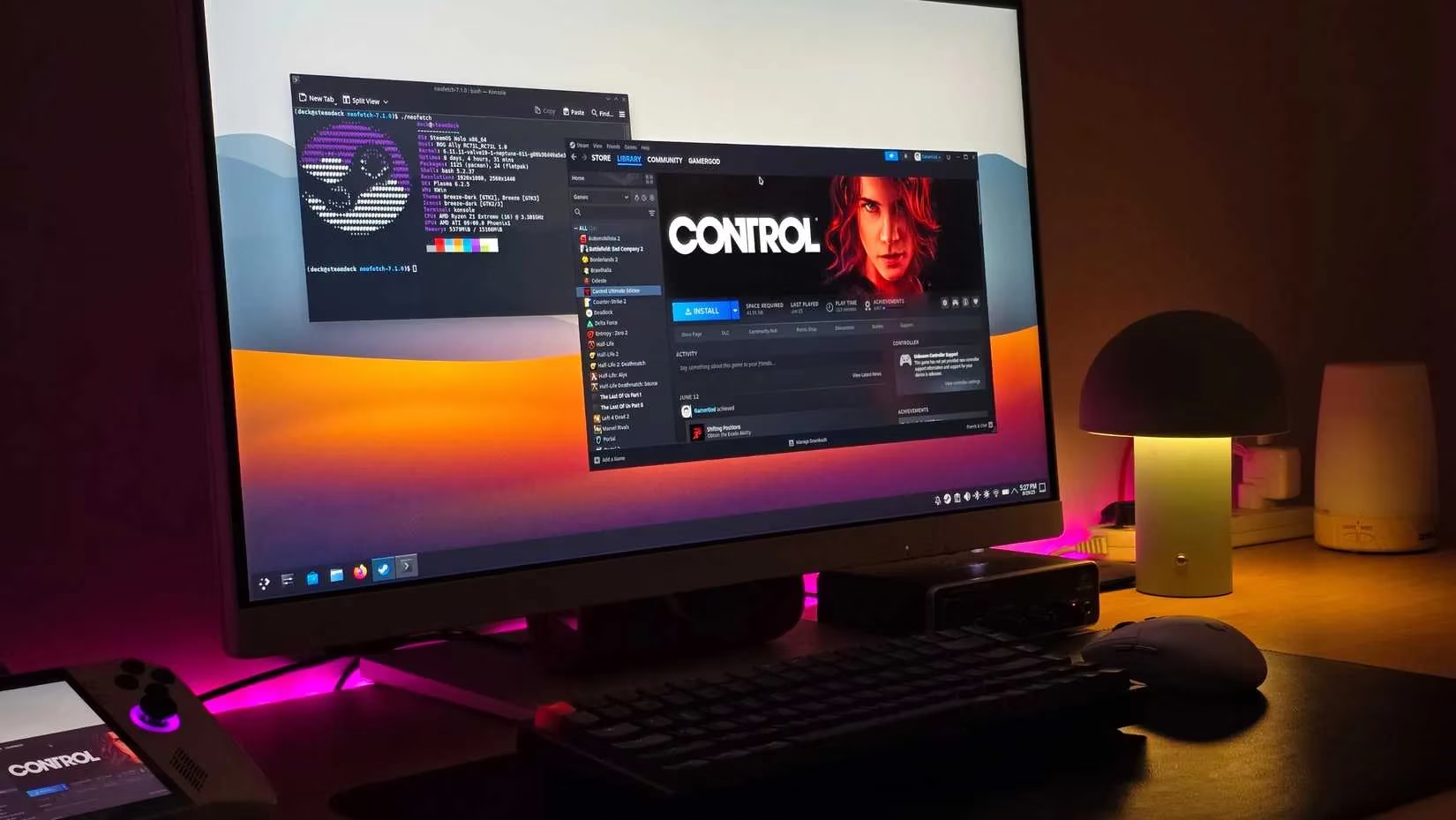
The frustrating truth? Privacy-friendly alternatives are everywhere! Hardware, software, services—they're all available and ready to use. We don't use them because they don't exist. We ignore them because convenience wins. Every. Single. Time. 🏆
The Messaging App Dilemma
Take messaging apps, for instance. Signal exists! It's free, open-source, and offers real end-to-end encryption. But look at the numbers as of 2025-2026:
| App | Monthly Active Users (2025) | Privacy Level |
|---|---|---|
| 3 billion | Moderate (Meta-owned) | |
| Telegram | ~1 billion | Variable (not E2EE by default) |
| Signal | Millions (not in top lists) | High (fully encrypted) |
Why this massive disparity when Signal offers superior privacy? Simple: your entire social circle already uses WhatsApp or Telegram. Switching to Signal means:
-
Asking everyone you know to download a new app
-
Losing all your chat history and media
-
Dealing with fragmentation across different platforms
Most people just can't be bothered. The friction is too high!
Search Engine Struggles
Want to ditch Google? DuckDuckGo and Brave Search are decent alternatives that don't build creepy digital profiles of you. But here's the catch:
🔥 Google is deeply integrated into Android
🔥 It's the default in Chrome browsers
🔥 Not using it requires constant, conscious effort
Every time you search, you have to deliberately choose a different option. Most people just want to look something up and move on with their lives. The path of least resistance? That big ol' Google search bar right there in your browser.
Email Encryption Hassles
Privacy-focused email providers like ProtonMail and Tutanota offer:
-
Better encryption 🔐
-
Enhanced security features
-
Strong anonymity options
But they're not Gmail. They don't:
-
Sync seamlessly across all your devices
-
Offer the same password recovery options
-
Have that familiar, cozy interface we're all used to
Using them requires being more technically competent, more careful, and more intentional. For many, that's just too much mental overhead for checking emails.
Hardware: The Ultimate Convenience Trap
You can absolutely buy phones from privacy-focused companies! You can even install custom operating systems:
📱 LineageOS or GrapheneOS on your phone
💻 Linux on your PC
With some effort, you can use open-source programs that respect your data from top to bottom. Yet... most people still buy iPhones and Samsung Galaxies running standard Android, then complain about privacy violations. Why?
Because "just use Linux" isn't helpful advice in 2026! Privacy-conscious alternatives come with real sacrifices:
❌ Don't support certain popular apps
❌ Don't integrate smoothly with existing ecosystems
❌ Aren't updated as frequently
❌ Don't have super user-friendly UIs
❌ Sometimes just... break
They don't "just work" like consumer hardware and software does. Windows might track your every move, but it's the default on virtually every computer you can buy. Chromebooks might sell your browsing history, but they boot instantly and rarely crash with cryptic error messages.
What We Actually Value (The Hard Truth)
If we're honest about our priorities in 2026, the list looks something like this:
-
Convenience 🚀
-
Price 💰
-
... (a bunch of other stuff)
-
... (more stuff)
-
Privacy (tied with aesthetics, probably)
We say we want privacy because it sounds good and right—like saying we want to exercise more or eat healthier. But when push comes to shove, doing it requires:
-
Breaking old habits
-
Figuring out new workflows
-
Sacrificing time we don't have
And that's not something we prioritize when we've got real deadlines and responsibilities.
The truly privacy-conscious person in 2026 is an outlier. They might:
-
Carry two phones 📱📱
-
Use different browsers for different purposes
-
Sync nothing to the cloud
-
Manually manage backups
They also can't easily call their non-tech-savvy friends because they switched to platforms nobody's heard of. As someone who's tried living this way, it's exhausting! 😫
Does Privacy Matter?
Yes, absolutely! But we need to stop pretending we want it more than we actually do. We need to recognize that the truly privacy-respecting choice isn't necessarily the best choice for someone's life right now.
For the average person in 2026, privacy exists at the intersection of:
🔵 Access (Can I actually use this?)
🟢 Convenience (Does it fit into my life easily?)
🔴 Cost (Can I afford it, both in money and time?)
Currently, genuine privacy requires sacrifice on at least one of these axes. Until that changes, most of us will continue to say we care about privacy while choosing the convenient option. And you know what? That's not hypocrisy. That's just being human in a complex digital world. We're all just trying to get through the day with our sanity intact. 🤷♂️✨