
My Journey with Privacy-First Search Engines in 2026
When I first decided to take my online privacy seriously, I realized my search habits were the biggest leak. Like most people, I saw the internet as a choice between Google and its distant cousin, Bing. But in 2026, the landscape has matured beautifully, revealing a whole ecosystem of search engines built on a simple promise: your curiosity shouldn't be someone else's business model. My journey away from the data-hungry giants led me to discover tools that don't just hide my tracks but fundamentally change how I interact with information. The transition wasn't about giving up quality; it was about reclaiming autonomy, one search at a time.
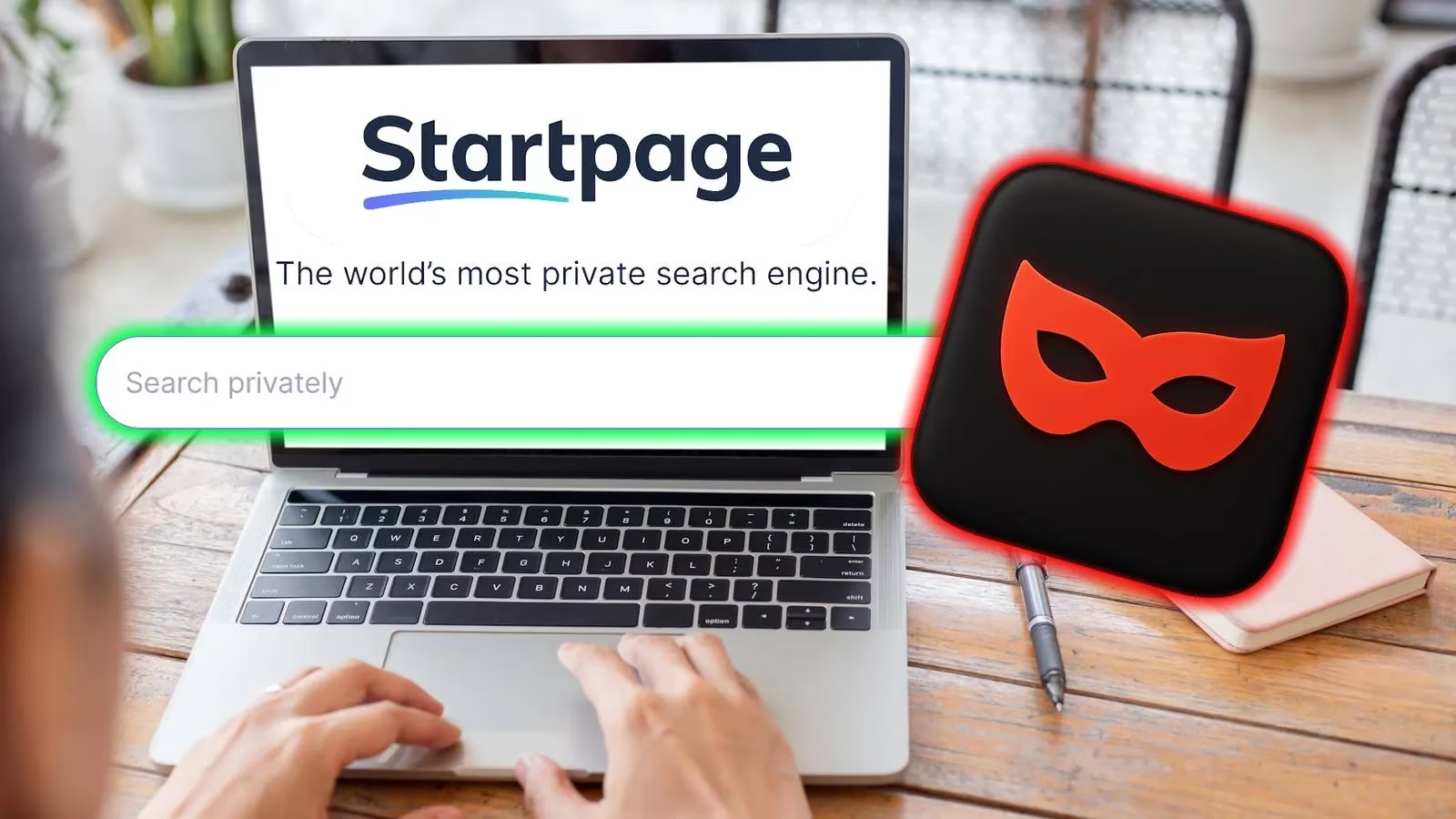
My first and most logical stop was DuckDuckGo. It felt like coming home to a familiar, yet cleaner, house. The interface was snappy and intuitive, much like what I was used to, but with a profound philosophical difference. I learned that DuckDuckGo doesn't track me. No logs, no personal history, no shadow profile growing in the background. Each search is a discrete event, which makes it incredibly difficult for advertisers or algorithms to stitch together a narrative of my interests. The results, powered primarily by Bing and other sources, are solid for everyday queries. I did notice the absence of those eerily accurate personalized suggestions, but that was the whole point. Instead of being gently nudged by my past clicks, I was presented with the same neutral list anyone else would see—a refreshing dose of digital objectivity.
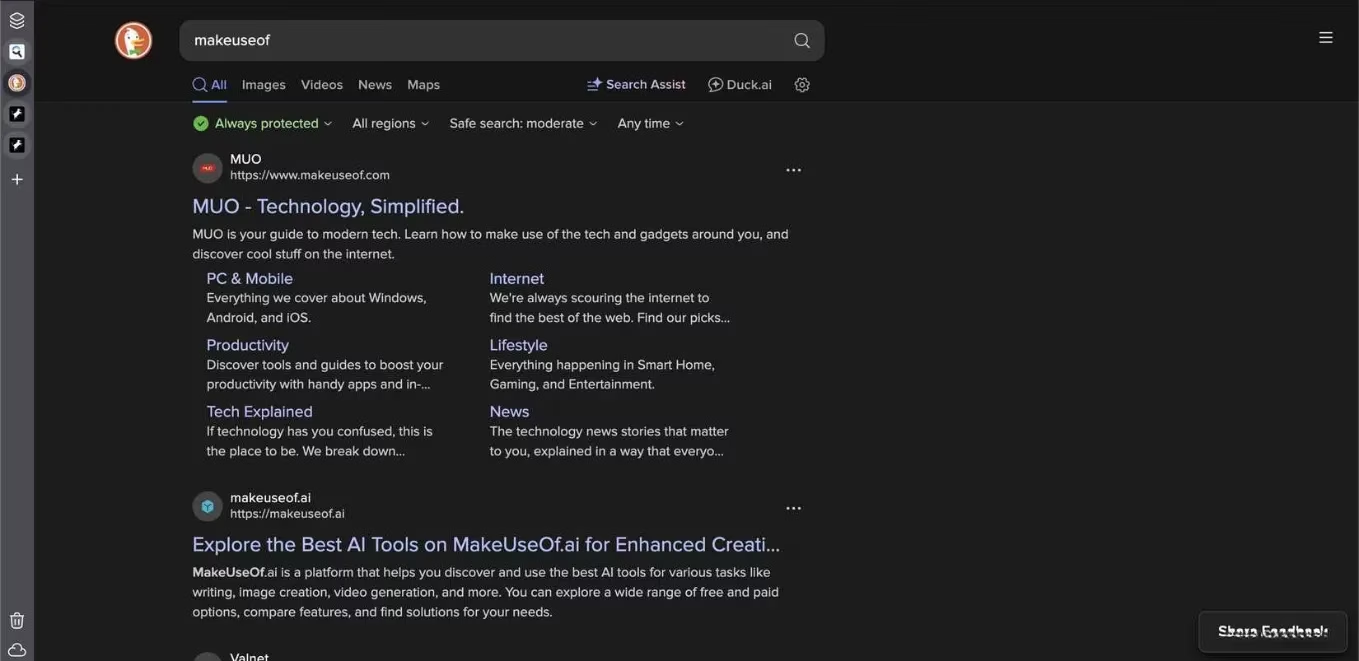
However, sometimes I missed the sheer depth and accuracy of Google's index for complex research. That's when I discovered Startpage, which felt like having my cake and eating it too. Startpage doesn't build its own index; instead, it acts as a highly skilled, anonymous intermediary. Every time I type a query, Startpage privately fetches the results from Google and presents them to me, without ever revealing my IP address or search history to the tech giant. The transition was seamless. I didn't have to sacrifice the powerful search capabilities I relied on, but I also stopped feeding the profiling machine. For an added layer of anonymity, Startpage offers a built-in proxy to open links, so even the websites I visit remain in the dark about my origin. This extra step can add a slight delay, but for those moments when I need ironclad privacy, it's an invaluable feature.
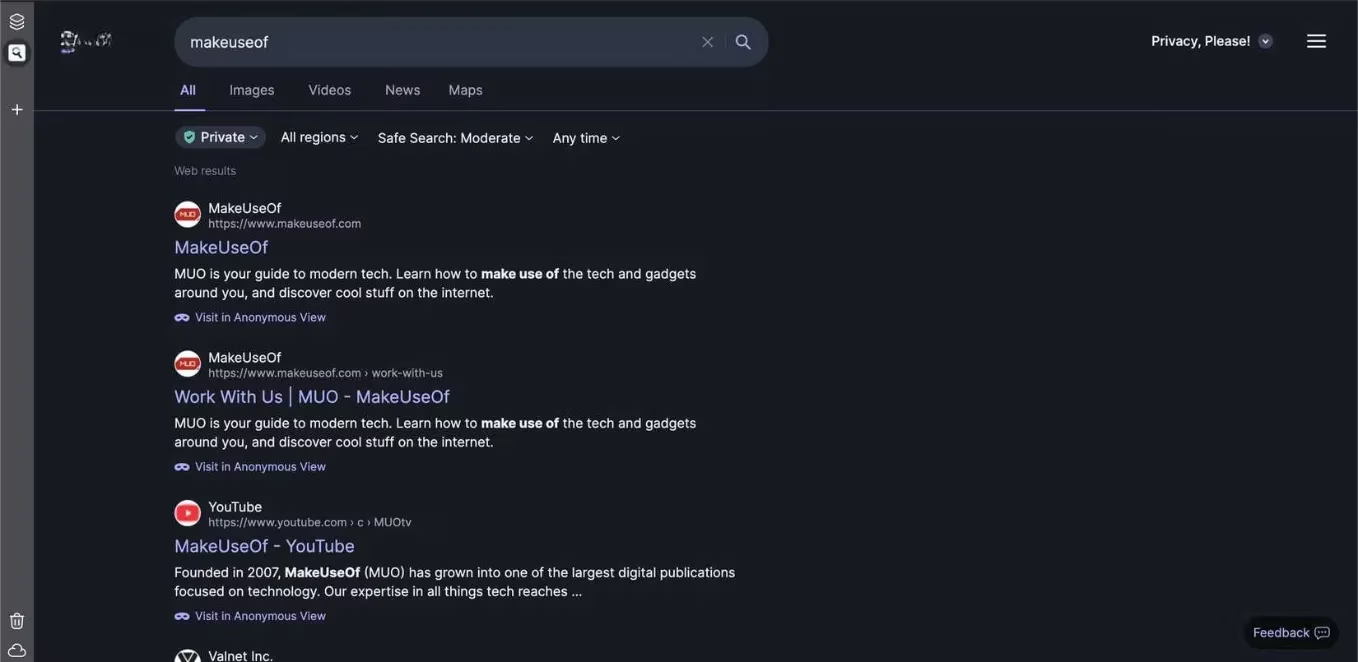
My curiosity soon led me to seek out a truly independent perspective. Enter Mojeek, a rare gem in the search world. Unlike most privacy engines, Mojeek isn't a front-end for Google or Bing. It has spent years building its own independent index by crawling the web on its own terms. This independence means the results aren't shaped by the dominant, homogenizing algorithms of the big players. Sometimes, the results feel less polished or "rough around the edges," but that's precisely their strength. I found articles, forums, and resources that never bubbled up in my mainstream searches. It was like lifting a filter and seeing a broader, less curated slice of the internet—a perfect tool for escaping the algorithmic echo chamber. Mojeek's privacy stance is crystal clear: no tracking, no profiling, no data sales. It's an engine built on ethical independence, and pairing it with a privacy-focused browser creates an incredibly secure and enlightening experience.
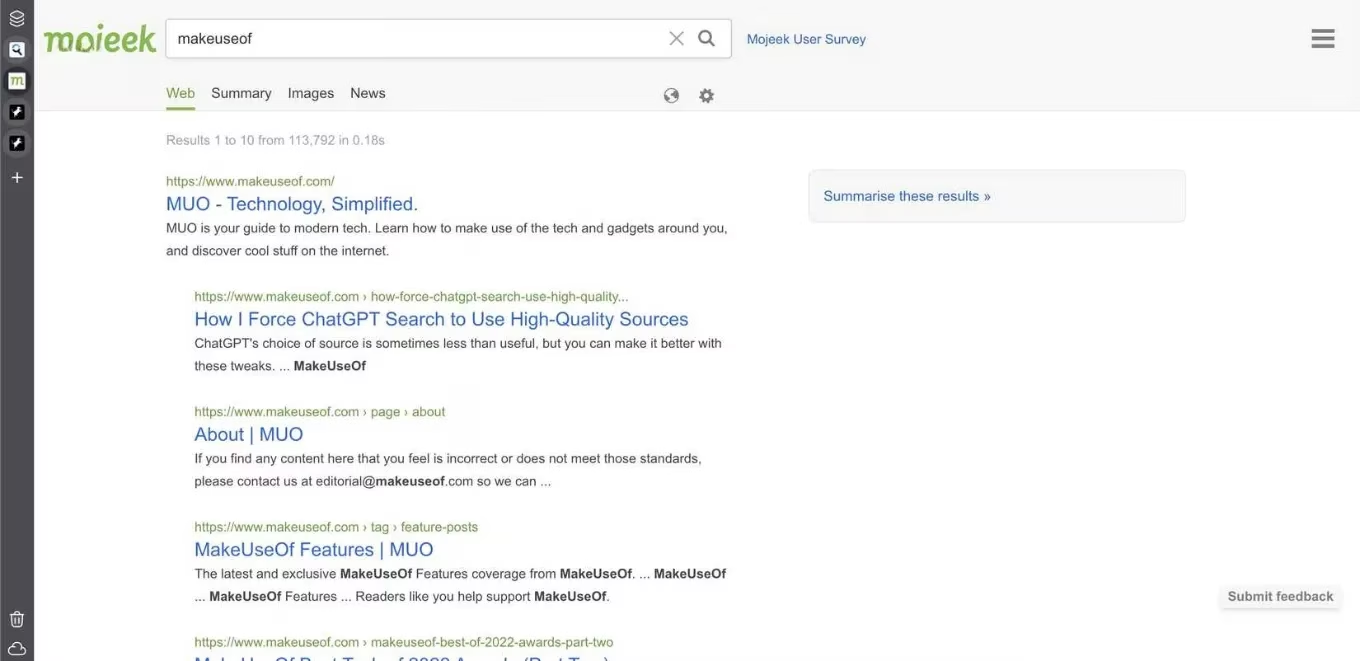
For the ultimate in control and aggregation, I turned to SearXNG. This isn't a single search engine but a powerful meta-search tool. It's open-source software that queries dozens of sources simultaneously—Google, Bing, Wikipedia, and many niche sites—then blends the results before presenting them to me. The genius is that it does this without leaking my personal data to any of those providers. The real power lies in self-hosting; I can run my own instance, choosing exactly which sources to include, how to rank results, and which sites to block. It's the antithesis of a sleek, standardized product like DuckDuckGo, but its flexibility is unmatched. The experience can vary depending on which public instance you use (some are faster, some have different source mixes), but the transparency and control are liberating.
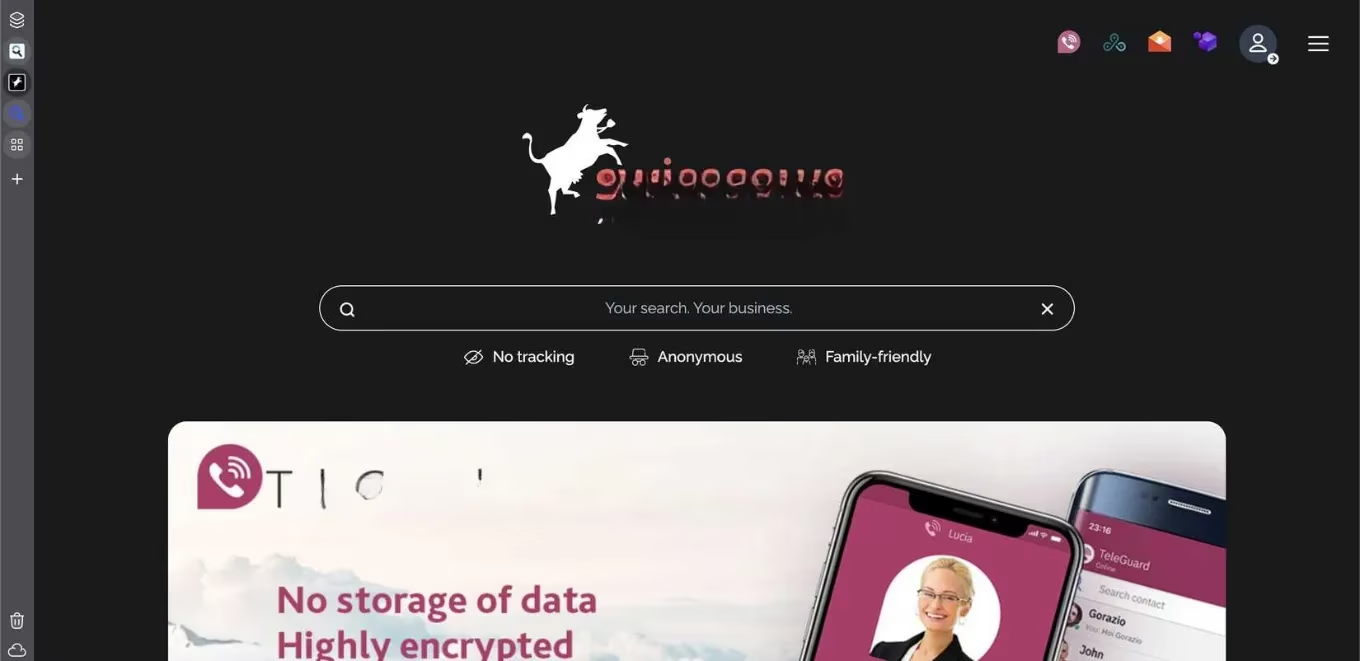
Finally, I explored Swisscows, which carves out a unique niche. It's a privacy-first engine with a built-in family-friendly filter, designed to keep explicit content out of results by default. It promises no tracking and no profiling. However, as of 2026, Swisscows has taken a distinct path: it's no longer free. For a small monthly subscription (around $4.40), you get an ad-free experience that helps fund its operations. This paid model sets it apart in a field still dominated by free options. For families, educators, or anyone wanting a guaranteed safe and private search environment, the fee might be a worthwhile investment. For those just dipping their toes into private search, however, the free alternatives remain the best starting point.
Reflecting on my journey, I've built a toolkit:
-
Daily Driver: DuckDuckGo for its balance of speed, familiarity, and strong privacy.
-
Deep Research: Startpage when I need Google's index without Google's surveillance.
-
Alternative View: Mojeek for breaking out of filter bubbles and supporting an independent index.
-
Ultimate Control: My own SearXNG instance for aggregated, customizable searches.
-
Family Setting: Swisscows for a guaranteed safe, ad-free environment (worth the subscription for specific needs).
The myth that Google is unavoidable has been thoroughly debunked in my digital life. Each of these engines—DuckDuckGo, Startpage, Mojeek, SearXNG, and Swisscows—proves that we can explore the vastness of the web without constantly paying for it with our personal data. In 2026, privacy isn't just a setting; it's a choice you make with every single search, and thankfully, we have more excellent choices than ever before.