
My Journey Beyond VPNs: How Self-Hosting Taught Me Real Privacy in 2026
As someone who's been a die-hard advocate for online privacy, I used to think a VPN was my ultimate shield. For years, I believed that by hiding my IP address and encrypting my traffic, I had solved the privacy puzzle. But let me tell you, that was just scratching the surface. The real eye-opener came when I decided to take matters into my own hands and start self-hosting my own applications. This journey taught me more about true digital privacy than any VPN service ever could, and in 2026, these lessons are more relevant than ever.
The Trust Fallacy: From Blind Faith to Actual Control
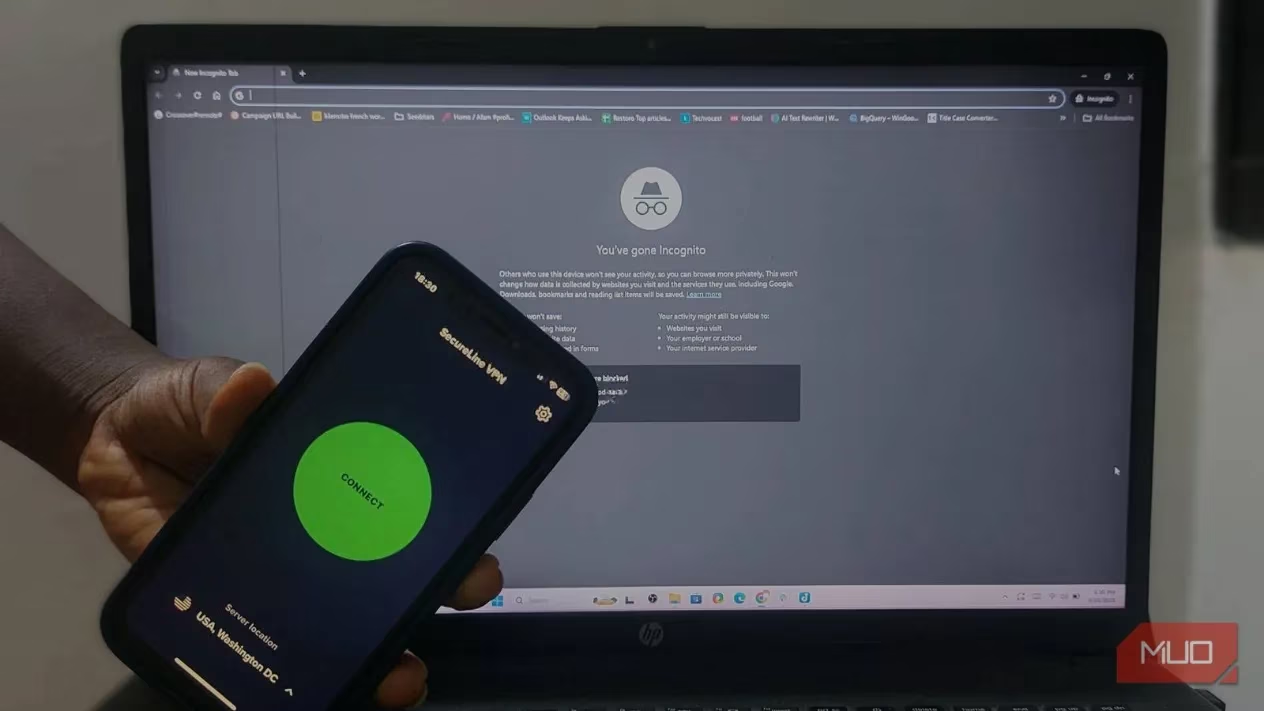
For the longest time, I operated under the assumption that VPNs would fix my trust issues with internet service providers. My logic was straightforward: if I'm not exposing my data to my ISP, I'm golden. But here's the kicker—I was simply swapping one entity I didn't trust (my ISP) for another (the VPN company). I had zero visibility into what these VPN companies were actually doing with my data, despite their fancy privacy policies and "no-logs" promises.
When I started self-hosting my open-source note-taking app, everything changed. The custody chain ended with me. There was no middleman, no third-party service, just my data on my hardware. If something went wrong—a data leak, a security breach—I had no faceless corporation to blame. This was both terrifying and incredibly liberating.
Here's what shifted in my mindset:
-
Ownership became tangible: My data wasn't just "protected" by someone else's service
-
Responsibility became personal: Backups, updates, and security configurations were mine to manage
-
Trust became verifiable: I could actually see and control what was happening
Metadata: The Devil in the Digital Details
This is where things got really interesting. When I set up my own email server, I could see all the behind-the-scenes information that usually stays hidden:
| What I Could See | What It Revealed |
|---|---|
| Email headers | Routing paths and intermediate servers |
| Sender routes | Geographic and network pathways |
| Timestamps | Exact communication patterns |
| File sizes | Data transfer behaviors |
VPNs do a great job masking your IP address, but what about all this other data? They don't hide:
-
The size of files you're sending or receiving
-
The patterns of who you communicate with and when
-
The specific services you're accessing at particular times
Let me give you a real-world example: If you use a health tracking app, a VPN might hide your location, but it won't conceal that you're connecting to a mental health or fertility clinic app every Tuesday at 10 AM. This metadata creates a data trail that's worth its weight in gold to data brokers.
Security: From Abstract Concept to Daily Practice
Before self-hosting, my understanding of security was, frankly, pretty vague. VPNs created this comforting blanket of protection, but I never really understood what threats I was being protected from. I was outsourcing my security configuration, which meant the risks felt abstract and distant.
That illusion shattered when I started managing my own servers. Suddenly, I was:
-
Configuring firewalls and understanding port security
-
Reading through server logs and identifying suspicious activity
-
Responding to failed login attempts from random IP addresses
-
Noticing port scans from unfamiliar locations
Here's a typical day in my self-hosting life:
-
Morning check: Review overnight login attempts and server logs
-
Midday maintenance: Apply security patches and check for vulnerabilities
-
Evening audit: Review traffic patterns and backup completion
I discovered that you can be exposed even when nothing seems wrong on the surface. The question stopped being "Am I a target?" and became "How quickly can I respond when I am targeted?"
The Real Costs: It's Not Just About Money
I used to think privacy would be crazy expensive. I imagined needing specialized hardware, expensive server rentals, and premium services. But the reality? The financial cost was minimal. I repurposed an old laptop and used free, open-source software. The real cost wasn't in dollars, but in convenience.
What I gave up:
-
Automatic cloud backups (goodbye, Google Photos and iCloud)
-
Single Sign-On through Google or Facebook
-
Seamless synchronization across devices
-
24/7 customer support
What I gained:
-
Complete control over my data
-
Understanding of how my services actually work
-
Real-time visibility into security threats
-
True ownership of my digital life
The trade-off became clear: The more friction you accept, the more control you retain. Every convenience we enjoy with mainstream services comes with a privacy cost.
My Current Approach: A Balanced Perspective in 2026
Let me be real with you—I don't self-host everything. That would be insane and unsustainable. Currently, less than a third of my software is self-hosted because it requires:
✅ Commitment: Regular maintenance and updates
✅ Time: Hours of configuration and troubleshooting
✅ Effort: Constant learning and adaptation
✅ Technical knowledge: Understanding networking and security principles
What I do self-host:
-
My note-taking app (contains personal thoughts and ideas)
-
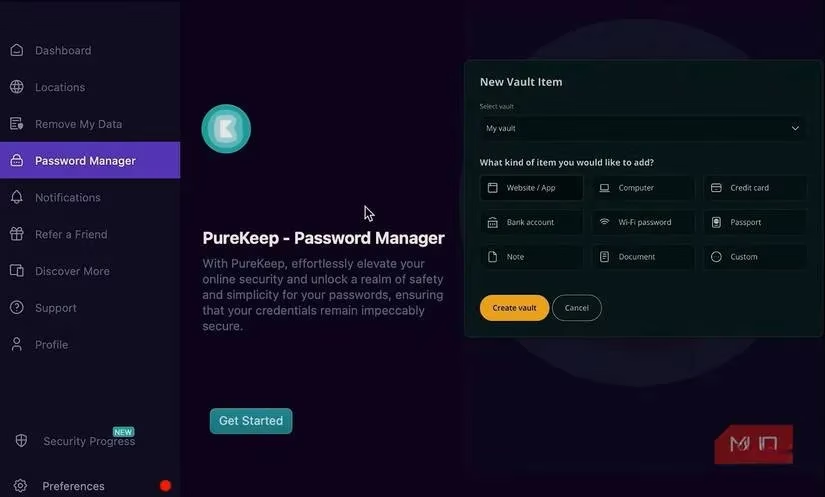
Password manager (handles my most sensitive credentials)
-
Email for critical communications
-
File storage for confidential documents
What I don't self-host:
-
Social media platforms
-
Streaming services
-
General web browsing (I still use a VPN for this!)
-
Gaming servers
Key Lessons Learned
After several years of this journey, here are my biggest takeaways:
-
Privacy is a practice, not a product: No tool—not even self-hosting—can guarantee complete privacy. It's about consistent habits and awareness.
-
Metadata matters more than content: What you do online often reveals more than what you actually say or share.
-
Control requires effort: True ownership of your digital life means accepting inconvenience and taking responsibility.
-
Knowledge is power: Understanding how your services work is the first step toward properly securing them.
-
Balance is everything: Going full self-host or full commercial both have trade-offs. Find your sweet spot.
Looking Forward: Privacy in 2026 and Beyond
As we move deeper into the 2020s, the privacy landscape continues to evolve. AI-powered data analysis makes metadata even more valuable, and new regulations (both good and bad) keep changing the game. What hasn't changed is the fundamental truth I learned through self-hosting: Your privacy is ultimately your responsibility.
Would I recommend everyone start self-hosting? Absolutely not—it's not for everyone. But would I recommend everyone think more critically about where their data lives and who controls it? 100% yes.
The journey from VPN dependence to selective self-hosting has been challenging, frustrating at times, but ultimately transformative. It's taught me that privacy isn't about being invisible—it's about being intentional. It's about understanding the trade-offs we make every time we click "accept" on a terms of service agreement.
So here's my final thought: Whether you use a VPN, self-host, or do something in between, the most important privacy tool you have is between your ears. Stay curious, stay skeptical, and never stop asking questions about where your data goes and who gets to see it. That's the real privacy superpower in 2026 and beyond. 🛡️🔒