
My 2026 Guide to Spotting and Avoiding Online Car Scams
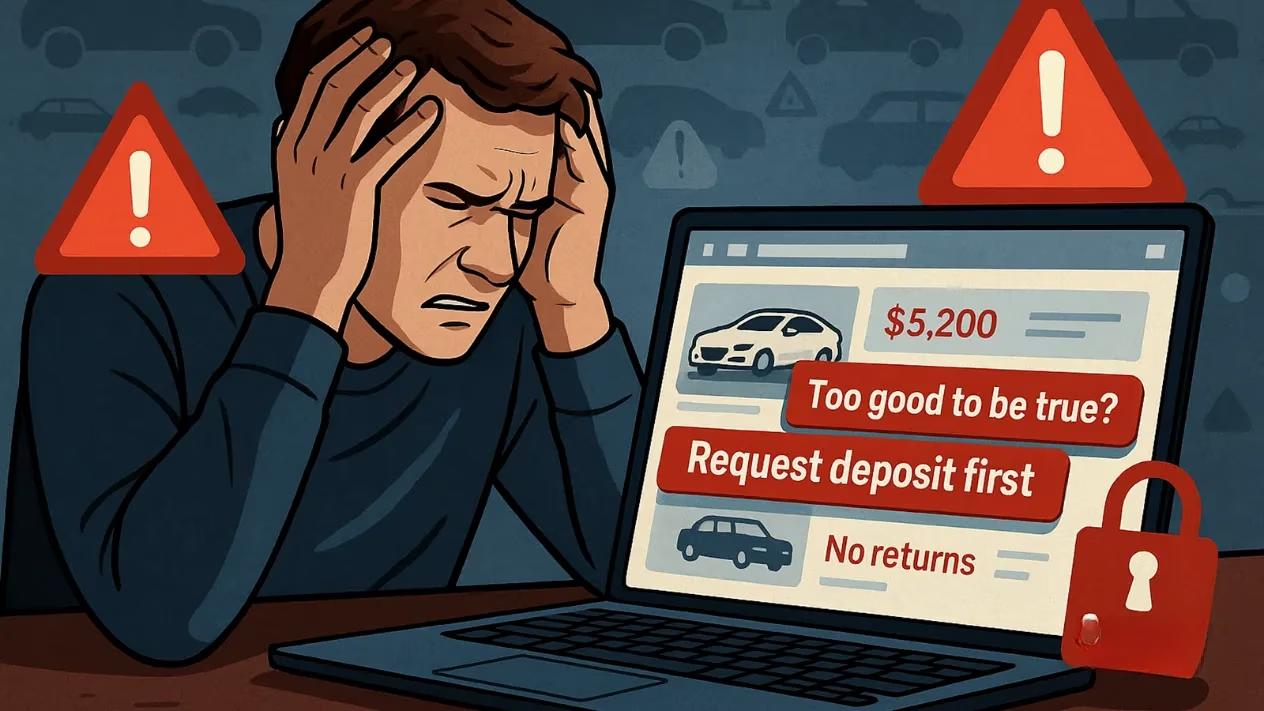
I've been buying cars online since the early 2020s, and in 2026 the scams have become so polished that even a careful shopper can stumble. The promise of never setting foot in a showroom is still irresistible—no commission-driven salespeople, no driving from lot to lot, just a few taps and a vehicle at your door. But that freedom invites fraudsters who clone dealerships, steal real photos, and twist your emotions until you hand over cash or sensitive data. Through a mix of close calls and research, I've built a personal safety net that I rely on every time I shop. Let me share exactly how I keep myself out of trouble.
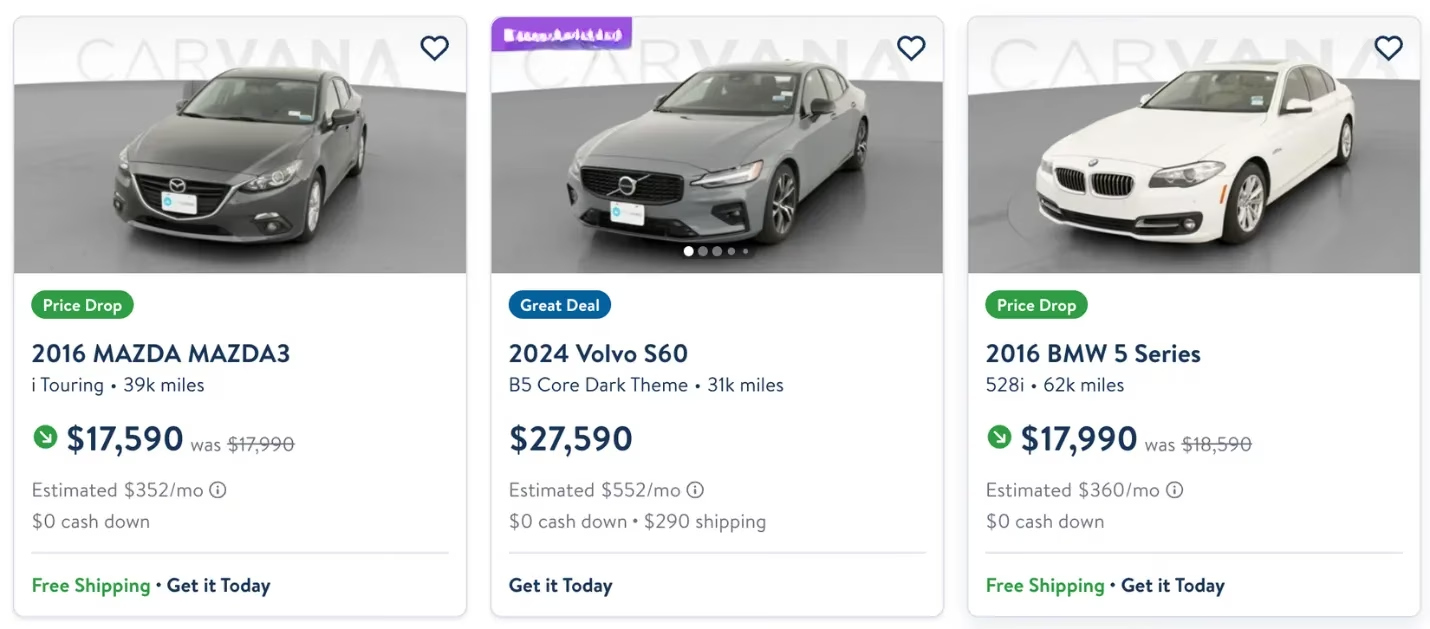
Before I even message a seller, I verify the dealership. A year ago I nearly wired a deposit to a site that looked identical to a major franchise—logos, inventory, and even a fake \u201ccustomer support\u201d chat. What saved me was a ten-second search on the Better Business Bureau, which showed no record of the company. Now, I always cross-check the dealer's name with state licensing databases, read Google reviews with a skeptical eye, and call the phone number listed on the website. If the person who answers can't confirm a physical address I can visit, I'm done. Big platforms like Carvana and Vroom remain my safe harbor because their listings are verified, but even there I stay alert.
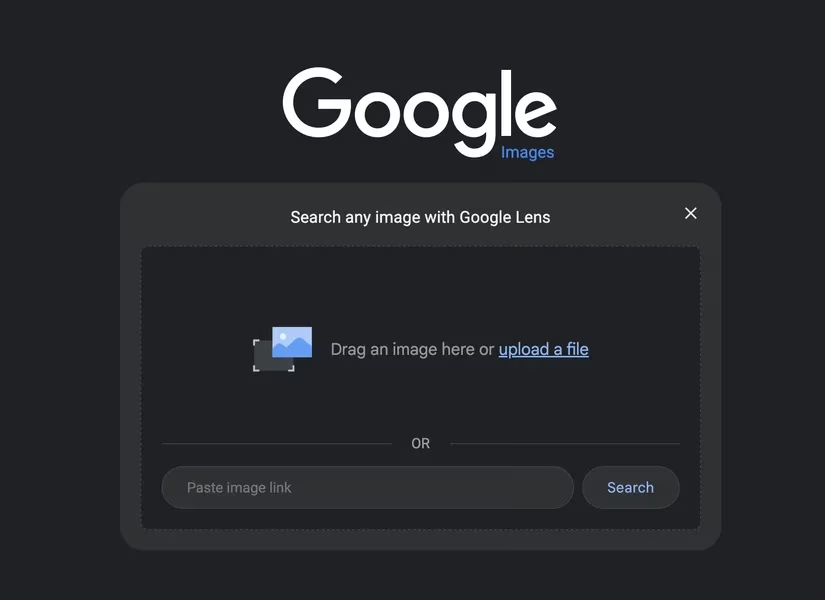
One of the most convincing scams I encountered used professional photos of a luxury SUV that I later learned belonged to a real seller three states away. The ad felt legitimate\u2014price slightly below market, story about a \u201cmilitary deployment\u201d\u2014but a reverse image search exposed the truth. In 2026, I lean on AI-embedded tools like ChatGPT o3 to perform visual searches directly from my browser; it traces image origins faster than any manual method. Whether you use a dedicated app or a built-in feature, grabbing a few listing photos and dropping them into a search engine takes less than a minute and has stopped me from losing thousands.
Scammers are even hungrier for personal information than they are for money. I've received requests for my Social Security number \u201cjust for a background check\u201d before I'd even asked about the car's condition. A real dealership or bank will handle financing securely after you\u2019ve inspected the vehicle, not in the first chat. Now, if a seller asks for my bank account, mother\u2019s maiden name, or anything beyond basic contact details upfront, I immediately block the conversation. Identity theft is a nightmare that can haunt you for years, and no car deal is worth that exposure.
A price that\u2019s dramatically lower than comparable vehicles screams danger. I remember spotting a three-year-old pickup for half its Kelley Blue Book value and almost rationalizing it as a desperate seller. When I checked the VIN through a paid history report, it came up as stolen. My rule today: if the deal feels too good to be true, it is. I spend ten minutes comparing prices on Edmunds and local classifieds, and if a truck is $10,000 below market, I move on immediately. Sometimes the car is a decoy for a phishing attack; other times it simply doesn\u2019t exist at all.
Requesting any payment before I have seen the car in person is an automatic rejection. Fraudsters love \u201cwire transfer\u201d and \u201cgift card\u201d requests because those methods are irreversible. I once had a scammer push me to send $500 to \u201chold\u201d a sedan, offering an international account number. When I paused, they vanished. A genuine dealer or private party will let you visit, test drive, and inspect the car before a dime changes hands. If the seller claims to be overseas or demands payment through a foreign bank, it\u2019s almost certainly a scam, and recovery through law enforcement is nearly impossible.
I keep a digital paper trail of every interaction. Screenshots, saved texts, and email threads sit in a folder until the transaction is complete. On one occasion a seller threatened to delete our chat after I questioned a missing service record, but because I had captured everything, I reported them to the platform and helped get the listing removed. Documenting names, phone numbers, and the ad\u2019s original URL gives you power if something goes wrong.
Pressure is the scammer\u2019s oldest weapon. \u201cI have five others waiting\u201d or \u201cif you don\u2019t act now, the deal goes to the next buyer\u201d are lines designed to short-circuit your judgment. When I sense that urgency, I deliberately slow the process down. Legitimate sellers understand that buying a vehicle is a big decision, and they will answer your questions patiently. If they can\u2019t, I walk away.
Even in 2026, shopping for a car online remains my preferred route. I love comparing trims at 11 p.m. and reading owner forums without a salesman hovering over my shoulder. By verifying every seller, analyzing photos, guarding my data, refusing early payments, and maintaining a record, I've transformed a risky landscape into a manageable one. Caution doesn\u2019t remove the convenience\u2014it just makes sure you end up with a real set of keys instead of a costly lesson.
As you navigate the world of online transactions, it's always helpful to explore platforms that prioritize transparency and user trust. Whether you're buying a vehicle or simply looking for reliable deals on other items, the right tools can make all the difference. Staying informed and vigilant is key to avoiding potential pitfalls in any online marketplace.
For those interested in exploring safe and verified deals, you might want to expand your search beyond cars. Platforms like DealNest offer insights into prices and trends across various categories. If you're curious about how they approach pricing transparency, you can check game prices to see how they help users make informed decisions in other niches. It's always worth considering trusted platforms when shopping online.