
How to Spot Fake Job Offers in 2026 Without Falling for Scams
Online job offers can feel like golden tickets, but in 2026, plenty of them are just cardboard rectangles painted gold. The remote-work boom has made it easier than ever for scammers to slide into inboxes with promises of flexible hours, giant paychecks, and zero experience required. A cautious job seeker—let's call them the Hero of the Inbox—knows that excitement is exactly what scammers want. The Hero has learned to slow down, verify everything, and treat every unsolicited offer like a suspicious package from an unknown sender.
🕵️ Red Flag #1: The Email Address Smells Fishy
The first thing the Hero checks is the email address. If it comes from a sketchy domain, it is probably a scam. Scammers often use free email services like Yahoo, Gmail, or Hotmail because those services do not require rigorous verification. That makes it easy for them to create dozens of fake accounts and blast out mass job offers. A legitimate company usually has its own domain tied to its name. If the company is XYZ, a real recruiter might use [email protected]. If the email is [email protected], the Hero's eyebrow goes up.
A quick cross-check with the company's official website can reveal the truth. If the email does not match the official domain, the Hero reports it and moves on. No second chances for sketchy senders.
📝 Red Flag #2: Buzzwords and Baloney
Job posts describe roles, responsibilities, and requirements. Scammers, however, create fake listings to collect personal information. They love buzzwords and technical jargon that sound professional but mean nothing. Phrases like work from home and earn thousands or no experience needed - instant hiring are designed to create false urgency and scarcity.
Legitimate companies avoid exaggerated wording. They clarify duties, responsibilities, and expectations carefully and concisely. They also provide details about the company, such as an address, website, or contact information. The Hero compares the job post to the company's official careers page. If the post is a ghost, the Hero ghosts it.
✍️ Red Flag #3: Writing Quality, With a 2026 Twist
Sloppy writing used to be a dead giveaway. Scammers used automated tools to pump out job postings, resulting in typos, bad grammar, and weird punctuation. Those postings lacked detail because they were created quickly and in bulk. But in 2026, AI writing tools can polish a scam until it shines. That means grammar alone is no longer enough. The Hero looks for substance: specific tools, clear reporting lines, realistic schedules, and a named hiring manager. If the post is beautifully written but says nothing, it is probably a beautifully written trap.
💸 Red Flag #4: Upfront Fees Are a Giant Neon Sign
Legitimate companies do not ask applicants to pay upfront fees or deposits. Scammers do. They claim the money is for training materials, background checks, or administrative costs. Real employers cover all hiring and onboarding costs. That is their responsibility, not the applicant's.
One unfortunate applicant learned this the hard way. They paid a training fee for a promising remote job, thinking it was a small price for a big opportunity. Then the requests kept coming: more fees for different expenses, plus a request to recruit other people for a commission. It turned out to be a pyramid scheme disguised as a legitimate job offer. The money never came back. The lesson was harsh but clear: if an employer asks for money, the only thing the applicant should send is a report to the authorities.
⏳ Red Flag #5: Pressure Tactics and Instant Hiring
A real hiring process is a journey with multiple steps. Candidates showcase skills, impress interviewers, and provide references. It takes time and effort. Scammers use pressure tactics like immediate hiring to trick job seekers. They create a false sense of urgency, claiming the opportunity is limited or that others are waiting for the same offer.
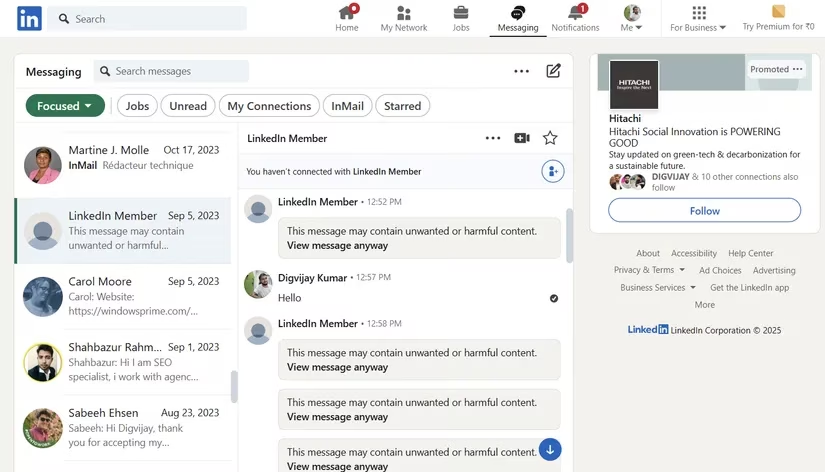
Even platforms like LinkedIn are not 100 percent scam-proof. Scammers send direct messages pretending to be recruiters with fake job postings or unsolicited offers. The Hero researches the company before replying. Official sources like Companies House or the FCA can verify legitimacy. Glassdoor reveals company culture and employee reviews. Crunchbase and WHOIS help uncover the company's history and ownership.
🔍 Salary Reality Check
Legitimate companies are transparent about salaries and avoid unrealistic promises. If a job claims someone will get rich in a few weeks with zero effort, it is like saying a magic pill can drop 20 pounds overnight. Pretty sketchy. The same applies to jobs offering huge salaries with little to no qualifications.
To judge whether a salary is realistic, the Hero researches industry standards for the role and experience level in that location. Sites like Glassdoor and Payscale give ballpark figures. Talking to people in similar roles or connecting on LinkedIn provides insider insights. If the offered salary is wildly above the norm, it could be a red flag. Beyond salary, unrealistic promises of quick promotions or an easy, luxurious lifestyle are classic scam bait. Success comes from dedication and hard work, not from empty promises designed to exploit dreams.
🛡️ Extra Safety Checks for 2026
The Hero digs deeper. Real companies have verified phone numbers, office addresses, and websites. Calling the number on the official site or cross-checking the address on Google Maps helps confirm the employer exists. Better yet, the Hero asks the recruiter to set up a video call or in-person meeting before accepting any offer. Scammers usually avoid face-to-face interactions, which makes the request a useful filter.
For finding legitimate remote jobs, trusted sites like Indeed, Glassdoor, and LinkedIn are good starting points. Asking a professional network for recommendations or joining online communities for remote workers can also provide tips from people who have been through the wringer.
🎯 The Bottom Line
If something feels off, the Hero walks away and reports it as a scam. The job market in 2026 is full of real opportunities, but it is also full of people trying to turn hope into profit. A healthy dose of skepticism, a few verification steps, and a refusal to pay upfront fees can keep a job search from becoming a cautionary tale. After all, a real job pays the employee. It does not charge them for the privilege of being scammed.