
How to Keep Your Secrets From ChatGPT’s Ever‑Expanding Memory
In the rapidly shifting landscape of artificial intelligence, the line between helpful assistant and digital confidant has grown dangerously thin. By 2026, OpenAI's ChatGPT has evolved far beyond a simple question‑and‑answer tool; it now possesses a persistent, adaptive memory that can recall a user’s professional ambitions, deepest frustrations, and casual confessions across conversations. This memory doesn’t fade with time—it accumulates, reshaping responses to feel more personal and intuitive. While that might sound convenient, it also means the machine is building a psychological profile of its user, one that could be exploited, leaked, or misused in ways no one truly understands. For those who value their privacy, ignoring this capability is no longer an option.

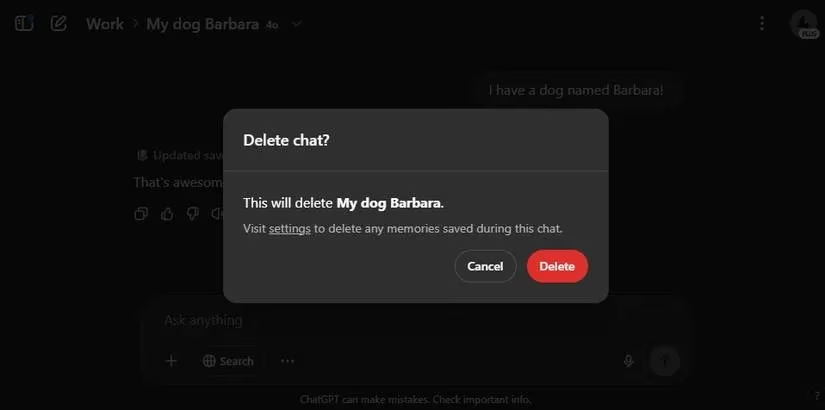
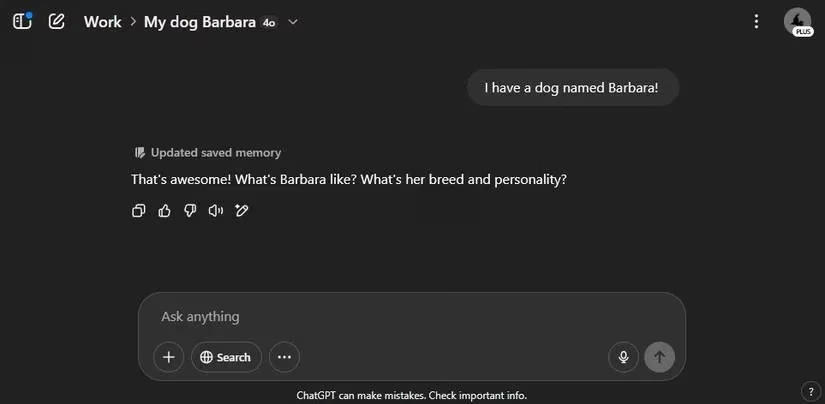
Understanding how ChatGPT’s memory truly works is the first step toward controlling it. Many users assume that tidying up their chat sidebar will erase what the AI has learned, but reality is far more complicated. The platform offers a feature to archive conversations, effectively hiding them from the main interface. However, archiving is purely cosmetic; it does not remove any stored knowledge from the long‑term memory banks. The AI still holds onto every nugget of personal data it gleaned from those interactions. Even when a chat is explicitly deleted, the interface itself warns that this action only removes the visible transcript—not the memories ChatGPT may have already absorbed from it.
This distinction is crucial because ChatGPT’s memory operates at an account level, silently weaving together information from diverse sources. The introduction of Projects—a feature that bundles multiple chats and allows custom instructions—initially seemed like a safe haven. Early implementations prevented Projects from accessing or contributing to shared memory, but recent updates have seamlessly integrated them into the same memory pool, unless a user has proactively disabled the function globally. This means that confidential client work mixed with personal role‑playing campaigns can all bleed into the AI's collective understanding of who you are.
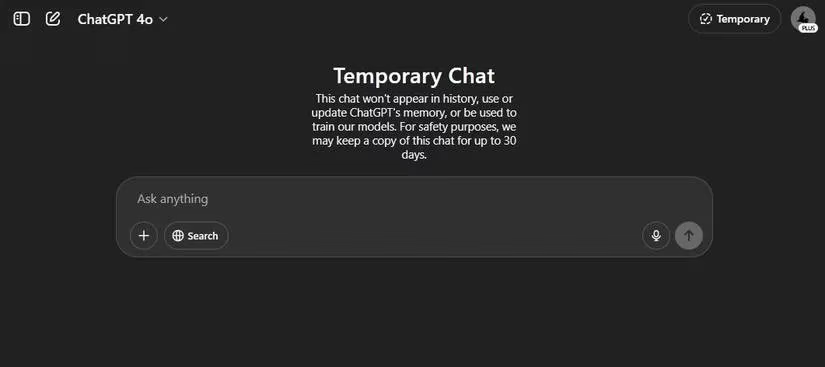
For those seeking a truly ephemeral experience, Temporary Chat is often touted as the solution. Much like an incognito browser window, this mode prevents the model from reading any past memories and, critically, from creating new ones. Once the session ends, the conversation is gone from both the user’s view and the AI’s working context. But even here, caution is warranted. OpenAI retains a backup of the data for up to 30 days to enforce its usage policies, which means the interaction is not entirely traceless. A temporary chat still requires trusting a corporate entity to delete that record on schedule.
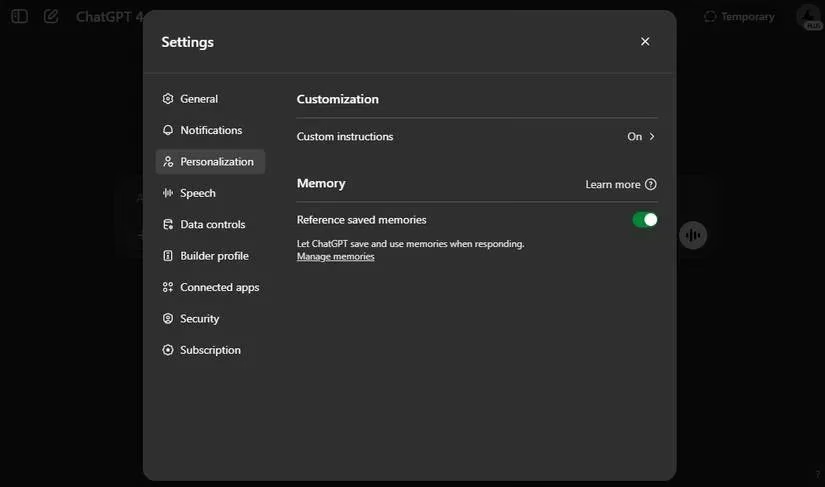
A more sweeping approach is to disable memory entirely through the personalization settings. Under the profile menu, toggling off the option labeled \u201cReference saved memories\u201d is supposed to halt both the reading and writing of memory. The name itself, however, raises suspicion: it implies only that referencing is stopped, not necessarily that new data collection ceases. Without any independent audit mechanism, this toggle feels more like a speed bump than an impenetrable wall. For the truly privacy‑conscious, additional layers of protection are non‑negotiable.
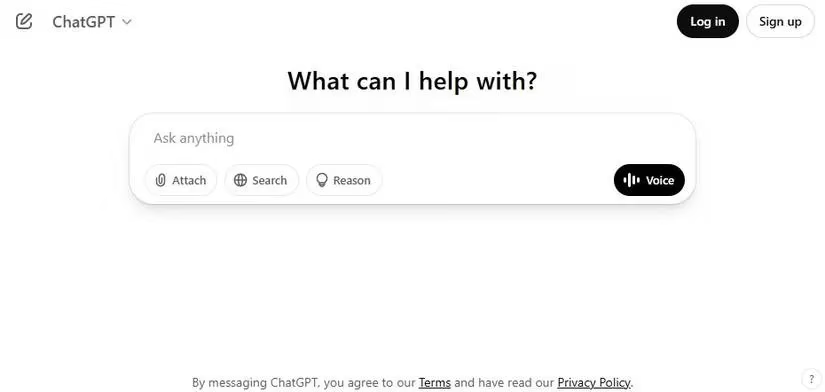
One such layer is anonymity. Since late 2024, OpenAI has allowed anyone to use a limited version of ChatGPT at chat.openai.com without signing in. By opening a private browser window and avoiding any login, a user can interact with the AI while keeping their identity completely dissociated from the conversation. Pairing this with a VPN makes the activity nearly untraceable. The trade‑off is access to only older model tiers and no plugins, but for sensitive queries, it\u2019s a small price to pay.
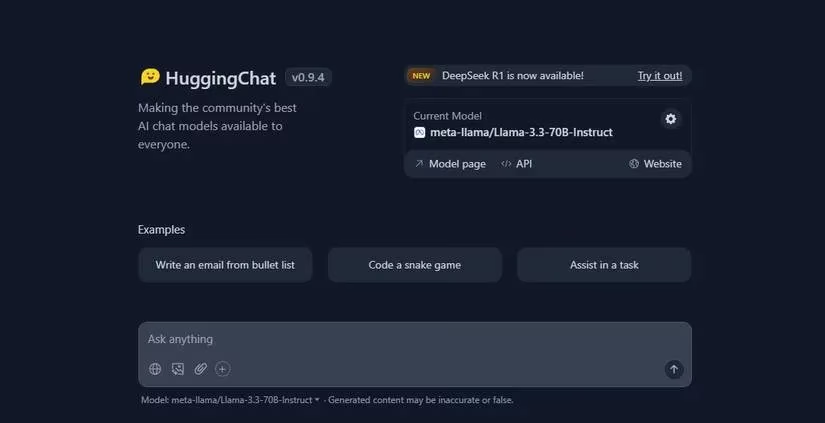
An even more robust method bypasses the standard web interface altogether. Third‑party platforms like HuggingChat or Poe, as well as unified AI dashboards, make API calls to OpenAI on a user’s behalf. Because ChatGPT’s memory feature does not extend to API interactions, OpenAI only sees anonymized text and a client ID, shifting the privacy burden onto the wrapper service. This doesn’t eliminate risk entirely—it merely transfers trust from one company to another. Diligent users must scrutinize the privacy policies of these intermediaries, and whenever possible, avoid social logins that could re‑identify them.
At its heart, the tension between utility and privacy is sharper than ever. The more an AI knows about a person, the more tailored and effective its assistance becomes. Yet that intimate knowledge simultaneously grants the technology—and the corporations behind it—enormous power. Unlike Spotify playlists or Netflix recommendations, the revelations confided to ChatGPT often cut to the core of personal identity: career frustrations, relationship worries, health anxieties. Handing such data to a black‑box algorithm managed by a multi‑billion‑dollar company requires a leap of faith that many are no longer willing to make.
The silver lining is that users are far from powerless. They can audit what the memory has stored, manually wipe individual entries, or disable the feature entirely—at least to the degree the interface allows. They can switch to incognito‑like sessions, log out completely, or route conversations through protective APIs. ChatGPT can remain a brilliant brainstorming partner and email drafter without turning into a diary that never forgets. Controlling what the machine remembers ultimately controls the relationship, and in an era of expanding AI capabilities, that agency is more precious than ever.