
How Scammers Weaponize Celebrity Culture in 2026
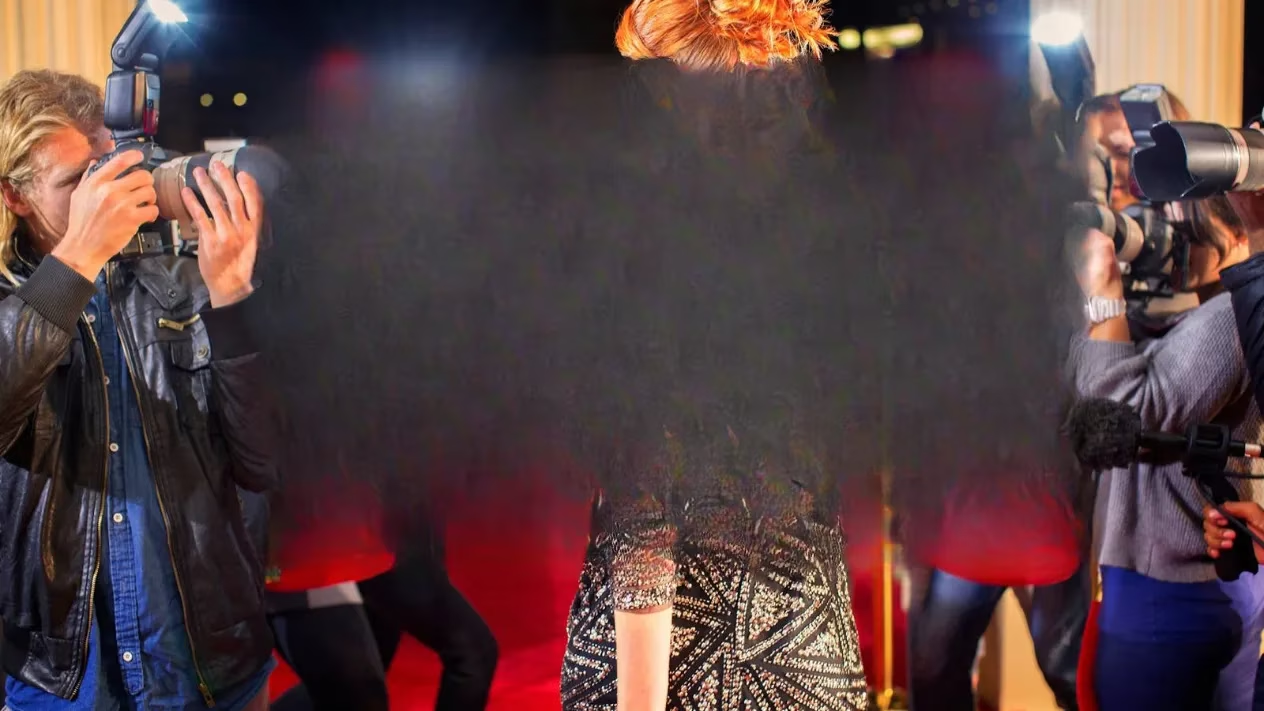
Celebrity culture has always been a magnet for attention, and scammers know it. In 2026, the public's fascination with famous actors, musicians, athletes, and influencers remains powerful, but the tools available to criminals are more dangerous than ever. Generative AI can produce convincing images, voices, and videos in seconds, while social media platforms continue to host impersonation accounts, fake endorsements, and romance schemes that use celebrity names as bait. A single click, a moment of curiosity, or a lonely evening can lead to financial loss and identity theft. The following guide explains how these scams operate and how people can recognize the warning signs before it is too late.
Phishing and Fake Social Media Accounts
Phishing remains one of the most common tactics. While emails that appear to come from celebrities are relatively rare, fake social media accounts are everywhere. On X, the platform formerly known as Twitter, anyone can buy a blue checkmark. That symbol used to mean verification, but it no longer guarantees authenticity. A criminal may happily pay a small fee to make an impersonation account look more trustworthy, and with fewer checks on Meta-owned platforms such as Facebook and Instagram, celebrity-based phishing scams are likely to increase.
Skepticism is essential. Anyone can claim to be a famous person online. Tell-tale signs include spelling and grammar mistakes, dubious usernames that often include the word 'private,' and a lack of basic knowledge about the celebrity's own life. If someone claiming to be Hugh Jackman is asked about his favorite X-Men film and answers Dark Phoenix, that is a red flag, because he was not in that movie. If a supposed celebrity account asks for money or tries to sell something unusual, it is almost certainly fake. Zendaya is not sending Facebook messages asking for $1,000 for a random emergency, and no genuine star needs a fan to cover a sudden bill.
Fake Endorsements, Deepfakes, and Crypto Traps
Fake celebrity endorsements are a massive concern, especially as AI improves. Scammers no longer need advanced editing skills to create a believable image or video of a famous person promoting a fraudulent product. Cryptocurrency is a favorite target because transactions are generally untraceable and almost impossible to reverse. The David Attenborough scam is a notable example: deceptive adverts frequently circulate on social media, claiming that the environmentalist has shares in a crypto coin and has made a fortune from it. The claim is completely false.
Other fake endorsements use screenshots from interviews or TV magazine programs. Headlines may claim that a broadcaster, often the BBC, had to cut a celebrity off mid-sentence for revealing a money-making secret. Or they may show news presenters whose jobs are supposedly threatened after doing something similar. These fakes often use the wrong fonts for the official source they are mimicking. Readers should ask whether a famous face would realistically endorse the product or service. Many celebrities avoid social media entirely because they fear impersonation, so any sudden endorsement should be treated with suspicion.
Reposts, Charity Buzzwords, and Malicious Links
When a celebrity reposts something, fans often interpret it as an endorsement. A scammer can exploit this by using buzzwords such as 'charity' to earn a repost from a famous account, even when the original post is malicious. The celebrity may not click the link or investigate the post properly. When people notice the scam, they often alert the celebrity. Sometimes the post is removed and followers are warned, which prevents further victims. Unfortunately, those who notice the fraud may already have fallen for it. Even clicking a fraudulent link can download malware.
Catfishing and Romance Scams
Catfishing often begins innocently. Someone posts online about liking a celebrity, and another account contacts them based on that shared interest. Chatting about a shared fandom builds closeness, and an online friendship forms. That is natural, but it can turn sour when one party is lying. If the person is a scammer, the victim may not suspect anything after investing time and energy into the friendship. The fraudster may eventually ask for money, or they may simply enjoy pretending to be someone else. Either way, the betrayal hurts.
Dating scams can combine fake friendships, impersonation, and phishing. Getting to know someone online can lead to love or infatuation, which makes the deception even more painful. Some fake social media accounts pretend to be a celebrity looking for a new love interest. These scams rely on curiosity and temptation. The victim does not have to believe that a celebrity is using Instagram like a dating app; the post only needs to make a few followers think with their heart instead of their head. A prime example is the French woman who lost over $853,000 to a scammer pretending to be Brad Pitt using AI-generated pictures. Are celebrities realistically looking for a new partner on X? No. If something like that appears, it is always a scam.
Red Flags at a Glance
| Warning Sign | What It Usually Means |
|---|---|
| A celebrity account asks for money | The account is fake; real celebrities do not need fans' cash |
| Username includes 'private' or random numbers | Common impersonation tactic |
| Grammar and spelling errors | The scammer may not be a native speaker or is rushing |
| The 'celebrity' lacks knowledge of their own career | The person is not who they claim to be |
| A crypto or investment endorsement appears in an ad | AI-generated or fake endorsement |
| A famous person wants romance online | Catfishing or romance scam |
| A repost about a charity asks for urgent donations | The link may be malicious or fraudulent |
How to Stay Safe in 2026
-
Verify official accounts through multiple sources, not just a blue checkmark.
-
Never send money, gift cards, or crypto to someone met online.
-
Avoid clicking links in unsolicited messages, even if they appear to come from a celebrity.
-
Reverse-search profile photos and check for AI artifacts, such as odd hands or inconsistent lighting.
-
Be wary of emotional urgency, secret investment tips, and requests to move conversations to private apps.
-
Report and block suspicious accounts, and warn others who might be targeted.
-
Remember that celebrities are not likely to contact strangers for money, love, or crypto advice.
Celebrity culture will continue to fascinate the public, and scammers will continue to exploit that fascination. The best defense is a healthy dose of skepticism. If a famous person appears to be asking for money, promoting a strange investment, or seeking love through a direct message, the safest assumption is that it is a scam. In 2026, with AI making fakes more convincing than ever, that caution is not cynicism. It is survival.