
How I Expanded VPN Protection Beyond My Computer to Every Device
I’ve always used a VPN to keep my laptop and desktop data safe—encrypting everything from banking passwords to late-night streaming rabbit holes. But over the past year I’ve discovered that a VPN is more like a digital Swiss Army knife than a simple shield. Once I started pulling out its other tools, I realized it could cloak my entire digital life, from the browser tab I open for five minutes to the smart TV that keeps me company in hotel rooms. Here’s what I learned while wrapping my entire home in a private, invisible cocoon.

The Lightweight Armor: VPN Browser Extensions
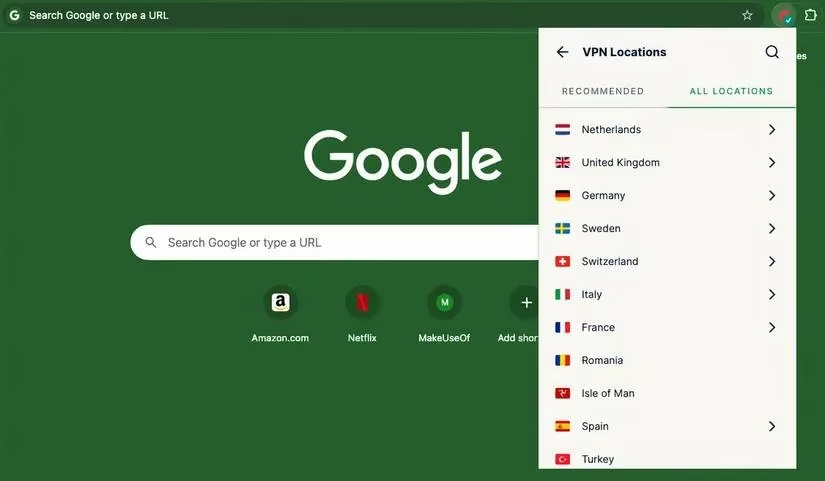
A VPN browser extension does something almost surgical. Instead of routing every single packet from every app through an encrypted tunnel, it only focuses on the browser. I think of it as giving only my web explorer a private jet, while the rest of my applications continue to jog along the public road. That selectivity makes it wonderfully fast.
When I’m racing to check a flight price or read a geo‑blocked news article, I don’t want the overhead of a full VPN. The extension installs in seconds, lives quietly beside my address bar, and activates with two clicks. It masks my IP and encrypts browser traffic without touching my music stream, video conference, or system updates. For a casual user like me who wants quick, cost‑effective privacy—some are even free—it’s the digital equivalent of slipping on a light windbreaker instead of full plate armor.
Of course, I quickly learned the trade‑off. Many extensions act more like proxies than true VPNs, meaning they skip end‑to‑end encryption. I wouldn’t trust them with my most sensitive logins, but for everyday browsing they’re a sleek, targeted solution.
The Stealth Shuttle for Gamers
Gaming brought me to the next level of VPN use. Late‑night multiplayer sessions are my unwind ritual, but with the rise of competitive eSports and personal stream sniping in 2026, exposing your real IP feels like leaving your front door wide open. A dedicated gaming VPN operates like a stealth shuttle that slips through interstellar blockades—bypassing cosmic congestion and pirate ambushes. It obscures my address so thoroughly that DDoS attackers can’t flood my connection and knock me offline mid‑match.
Beyond defense, the VPN unlocks doors. I’ve used it to access regional beta tests and to purchase a game that wasn’t yet available in my country. When my ISP’s routing turned sluggish—likely due to outdated peering agreements—the gaming VPN’s optimized server charted a more direct path, shaving milliseconds off my latency. Not all VPNs can do this; cheap, free ones often introduce lag. I invested in a service that offers ultra‑fast nodes specifically tuned for cloud gaming platforms, and the difference feels like upgrading from a rusty bicycle to a magnetic levitation train.
The Diplomatic Passport for Smart TVs
Travel is a big part of my life, and nothing stings quite like curling up in a hotel bed only to find my favorite shows locked behind “This content is not available in your region.” Connecting my smart TV to a VPN gave it a diplomatic passport—visa‑free access to streaming libraries from the US, UK, Japan, and beyond. With a quick virtual location change, my watchlist stays loyal no matter where I wake up.
Using a VPN on a smart TV also guards against surveillance. I’ve grown uneasy about how smart TVs track viewing habits, feeding data to advertisers. Encrypting the traffic makes that profiling much harder. The same encryption helps if I’m in a motorhome or shared accommodation and must hook the TV up to a public network. And when my ISP starts throttling me because it sees a Netflix binge, the VPN keeps my data usage pattern hidden, preserving those crisp 4K and, increasingly, 8K streams.
The only hurdle: not every smart TV app store carries a robust VPN client. I had to sideload it on one older model, but the payoff was worth the extra step.
The Cloaking Field for the Entire Home
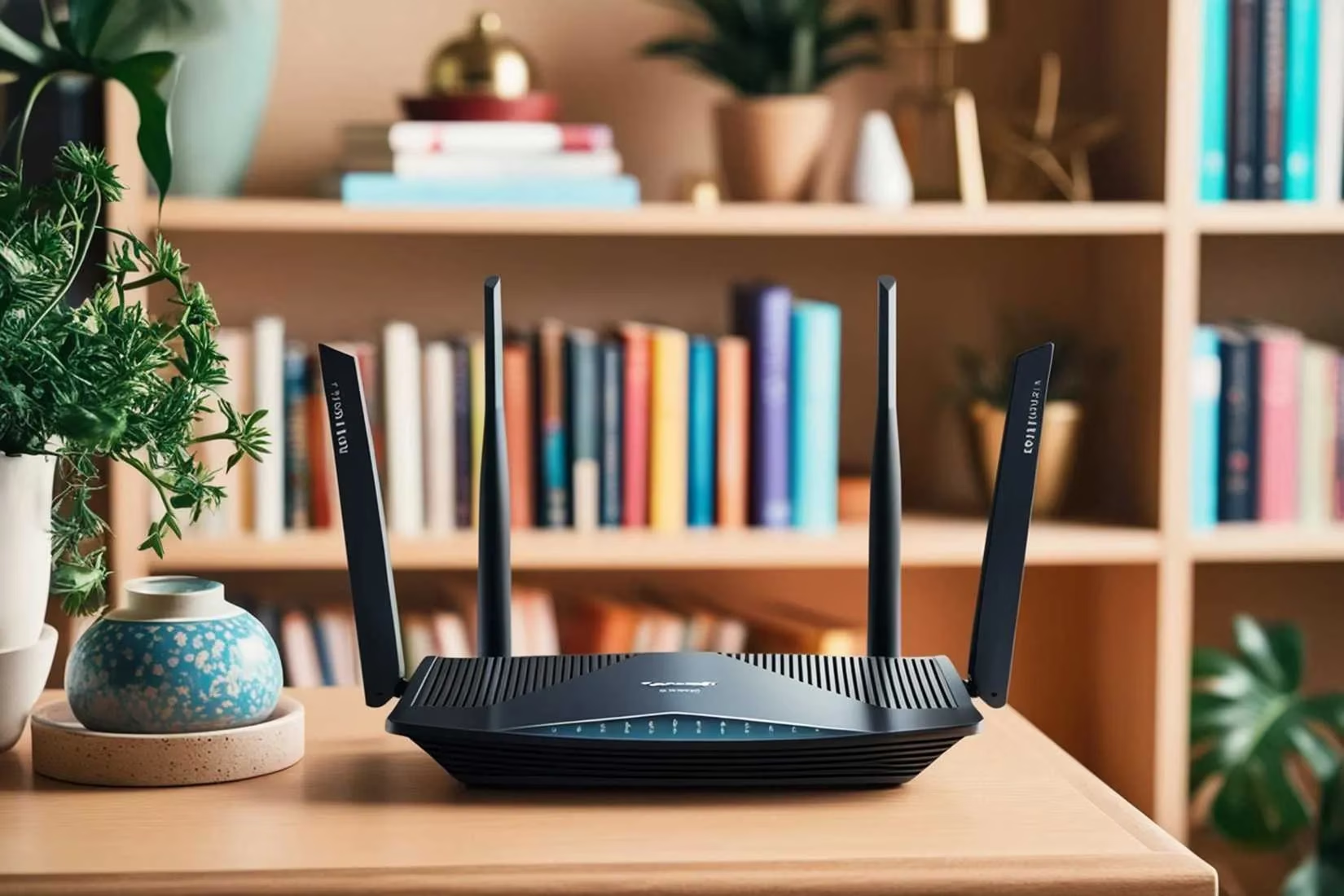
The most transformative step was installing a VPN directly on my router. Suddenly, I didn’t need to manage separate apps for the gaming console, the tablet, the doorbell camera, and the smart speaker. It was like draping my entire home in a sci‑fi cloaking field—every device inside automatically operated behind the same encrypted veil.
With router‑based VPN protection, I get always‑on privacy without remembering to activate anything. The router handles encryption, IP masking, and server selection from a single dashboard. It’s perfect for large households or a home office teeming with IoT gadgets. Managing a dozen devices from one control panel simplifies my life immensely.
I must note that not every router supports VPN firmware, and older, less‑powerful models can suffer a noticeable speed hit. After upgrading to a router with a beefier processor, I barely notice the overhead. For anyone building a smart home in 2026, a VPN‑compatible router is a cornerstone worth considering.
The Invisible Bodyguard for Mobile Devices
Our smartphones hold more sensitive data than our wallets ever did—banking apps, authentication codes, health records. Yet I used to connect them to coffee shop Wi‑Fi as casually as saying hello. Now, a mobile VPN is my digital bodyguard, weaving an encrypted cocoon around every byte as I move through the urban jungle.
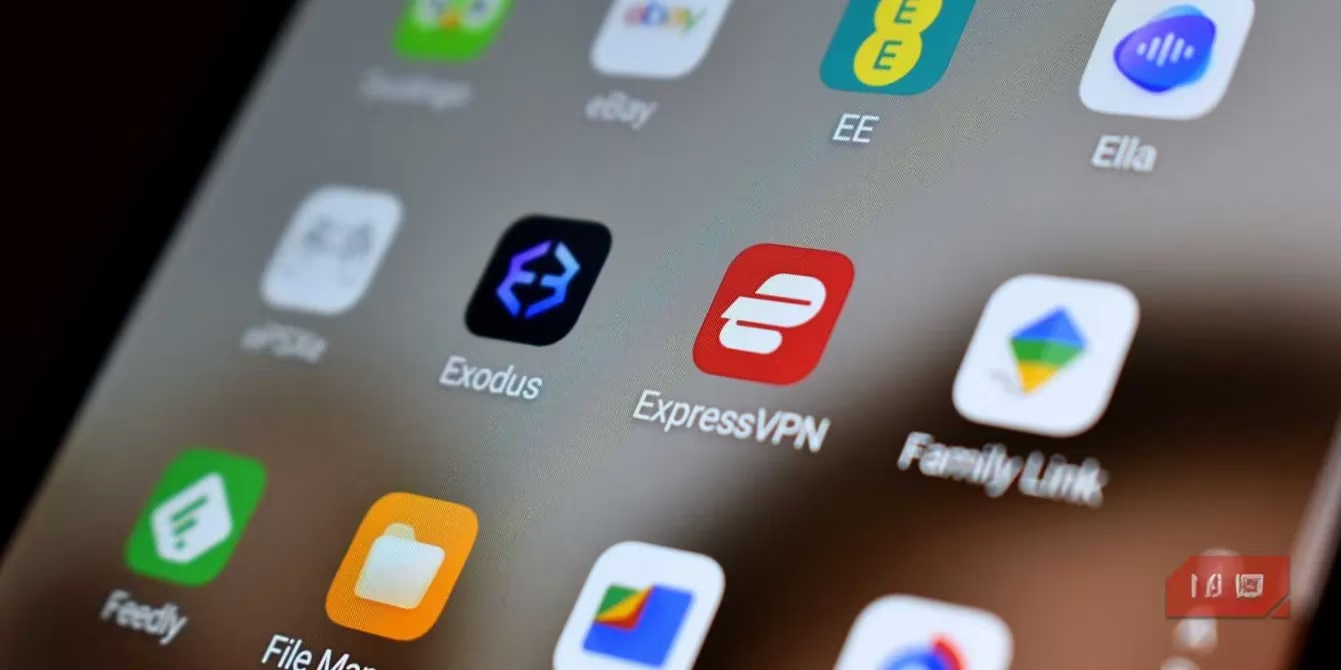
Most top‑tier VPN providers let you protect multiple devices under one subscription. I currently have eight covered, including tablets. The perks extend beyond privacy: built‑in ad blockers make mobile browsing cleaner, threat detection warns me of malicious sites, and 4K streaming support means I can cast content to my TV without a separate setup. In 2026, when public charging stations and open networks have become even more common, having this seamless, cross‑device armor is no longer optional—it’s essential.
Why I Now See VPNs as the Key to My Digital Estate
Expanding VPN protection from a single computer to a whole ecosystem has reshaped how I think about online security. It’s not just about hiding my browsing from an ISP or bypassing a regional block; it’s about taking deliberate control of my entire digital footprint. Every device, from the phone in my pocket to the game console under my TV, now operates inside a unified shield. The cost is modest compared to the peace of mind, and the extra features—like DDoS defense and bandwidth‑throttle avoidance—feel like hidden treasures I didn’t know existed. In a world where data brokers and cybercriminals grow more sophisticated by the day, a well‑deployed VPN is my master key that locks every door in sight.