
FBI Warns of BADBOX 2.0 Malware Surge Infecting Millions of IoT Devices
In homes around the world, millions of internet‑connected devices are quietly being turned against their owners. The FBI has sounded a fresh alarm that BADBOX 2.0, a sophisticated strain of malware, is spreading faster than ever through residential consumer electronics—smart TVs, streaming boxes, tablets, projectors, and a wide assortment of IoT gadgets. Often preloaded before the device ever leaves the factory floor or injected during the initial setup, this malicious code transforms innocent hardware into nodes of a sprawling botnet, siphoning off personal data, executing fraudulent schemes, and opening backdoors that external attackers can exploit. For the average user, there may be no pop‑ups, no sluggish performance, and no outward signs that the infection exists. That silence is exactly what makes it so dangerous.
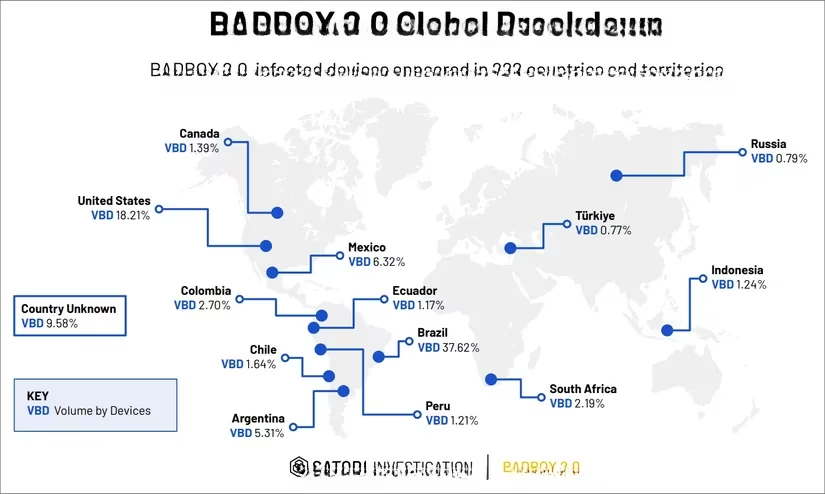
The roots of BADBOX 2.0 reach back to 2023, when security researchers first identified the original BADBOX malware. At that time, a German cybersecurity agency briefly disrupted the operation by sinkholing the communication channels that linked infected devices to their command‑and‑control servers. It was a partial victory—enough to slow the botnet but not to destroy it. By 2025, the malware had evolved into a far more resilient and versatile threat. According to a public service announcement from the FBI, the revamped BADBOX 2.0 botnet had swelled to encompass more than one million compromised units, and investigators discovered that the majority of these devices were sold with the infection already baked into their firmware. Most of those flagged products trace back to low‑cost Asian supply chains, particularly from China, where manufacturers or intermediary sellers sometimes configure the hardware with malicious software before the package ever reaches a customer’s doorstep. In other cases, the malware is slipped into the device during the first boot‑up sequence, hidden inside applications that download necessary components but also carry Trojan‑style backdoors.
The moment an infected gadget connects to a home Wi‑Fi network, it silently reaches out to a remote control network. That routine “phone home” check‑in activates the BADBOX 2.0 payload, and the device is absorbed into the botnet almost instantly. From that point onward, the hardware can be rented out as a residential proxy node, used to generate fake ad impressions, or harnessed to launch distributed denial‑of‑service attacks—all while streaming movies or displaying a weather widget as if nothing were wrong.
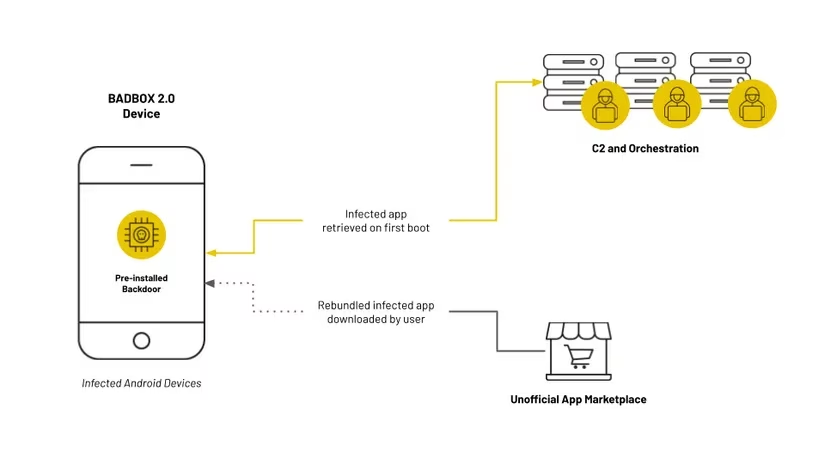
Pre‑installed firmware is no longer the only delivery channel. Where the original BADBOX relied almost exclusively on factory‑seeded infections, its successor has diversified. Security analysts at Human Security, the firm that uncovered the full scope of BADBOX 2.0, have documented so‑called drive‑by download techniques—situations where simply visiting a compromised website can trigger a stealthy installation. The malware has also been spotted bundled inside apps that circulate on unofficial third‑party Android marketplaces, feeding on users who sideload software from sources beyond the Google Play Store. That vector alone highlights why sideloading Android apps remains such a persistent risk, as pirated app stores are often lightly moderated and become conduits for everything from aggressive adware to full‑blown botnet recruits.
Once fully activated, BADBOX 2.0 unleashes a multi‑layered attack suite that covers the gamut of modern cybercrime. Programmatic ad fraud and click fraud generate illicit revenue by simulating human engagement with online advertisements, draining advertiser budgets without generating any real value. Residential proxy services turn infected devices into gateways that other criminals can purchase, routing their own malicious traffic through a victim’s legitimate IP address to mask illegal activities. Account takeover attacks, fake account creation, and one‑time password (OTP) theft all weaponize the infected hardware to breach online accounts, bypass multi‑factor authentication, and commit financial fraud. The botnet can also be leased out for distributed denial‑of‑service campaigns that overwhelm websites or online services with junk traffic. And in a particularly insidious twist, the same infrastructure is sometimes used to distribute other malware families, building a self‑sustaining cycle of infection.
All of this occurs without triggering the usual warning signs. BADBOX 2.0 is engineered for longevity, not for notoriety. It keeps its CPU footprint low to avoid slowing down the host device, refrains from displaying pop‑ups or unwanted advertisements, and avoids making configuration changes that a vigilant owner might notice. Even tech‑savvy users can go months without realizing that their living room streamer or smart speaker has been quietly serving a criminal syndicate.
For households that have never purchased a no‑name Chinese streaming box or a suspiciously cheap IoT gadget, the immediate risk is relatively low. However, the hardware supply chain is murkier than it appears; well‑known brands sometimes relabel devices built in the same factories that produce infected units. That is why every connected appliance should be audited, regardless of its branding. The FBI and independent researchers advise owners to comb through their device settings, looking for unfamiliar app marketplaces, altered network configurations, or any other changes they do not remember making. Human Security has also published detailed charts of identified infected device models, giving consumers a concrete way to check whether any of their existing gear appears on the list.
Unfortunately, cleansing a device of BADBOX 2.0 is rarely a simple task. The malware often lodges itself inside the firmware, the foundational software that tells the hardware how to boot and communicate. Removing it typically requires a complete firmware reflash—a procedure that demands technical skill and a clean firmware image from the manufacturer. For many low‑cost streaming boxes, smart bulbs, and other IoT peripherals, official reflash tools and updated firmware packages simply do not exist. In those cases, cybersecurity experts recommend cutting your losses: disconnect the device from the network immediately and replace it with a product from a reputable vendor that has a verifiable history of security support. While discarding a recently bought gadget may sting, the cost is trivial compared to the damage a persistent botnet infection can inflict—stolen credentials, drained bank accounts, hijacked online identities, and even unwitting participation in large‑scale cyberattacks.
As BADBOX 2.0 continues to evolve, the burden increasingly falls on consumers to remain cautious and proactive. Regulatory bodies in multiple countries are debating mandatory security labeling for smart devices, but meaningful change is slow. In the meantime, a combination of hardware audits, strict avoidance of third‑party app stores, and a healthy skepticism toward electronics sold at prices that seem too good to be true remains the best defense against an invisible enemy that already lives inside millions of homes.