
Beware the Siren Song of Cheap Software on Amazon
I have walked the neon-lit aisles of Amazon for years, a digital cartographer mapping the sprawling bazaar where convenience meets chaos. As a lifelong gamer and tech pilgrim, I have learned that the promise of instant digital treasure often hides worms beneath the silk. The keyboard is my compass, but even the savviest traveler can mistake a polished storefront for a sanctuary. Last spring, chasing a discounted video editing suite, I stumbled—a transaction that turned into a ghost story of vanished licenses and silent seller support. From that crucible, I forged a set of rules not written in any manual, but etched in the scars of my own hubris.
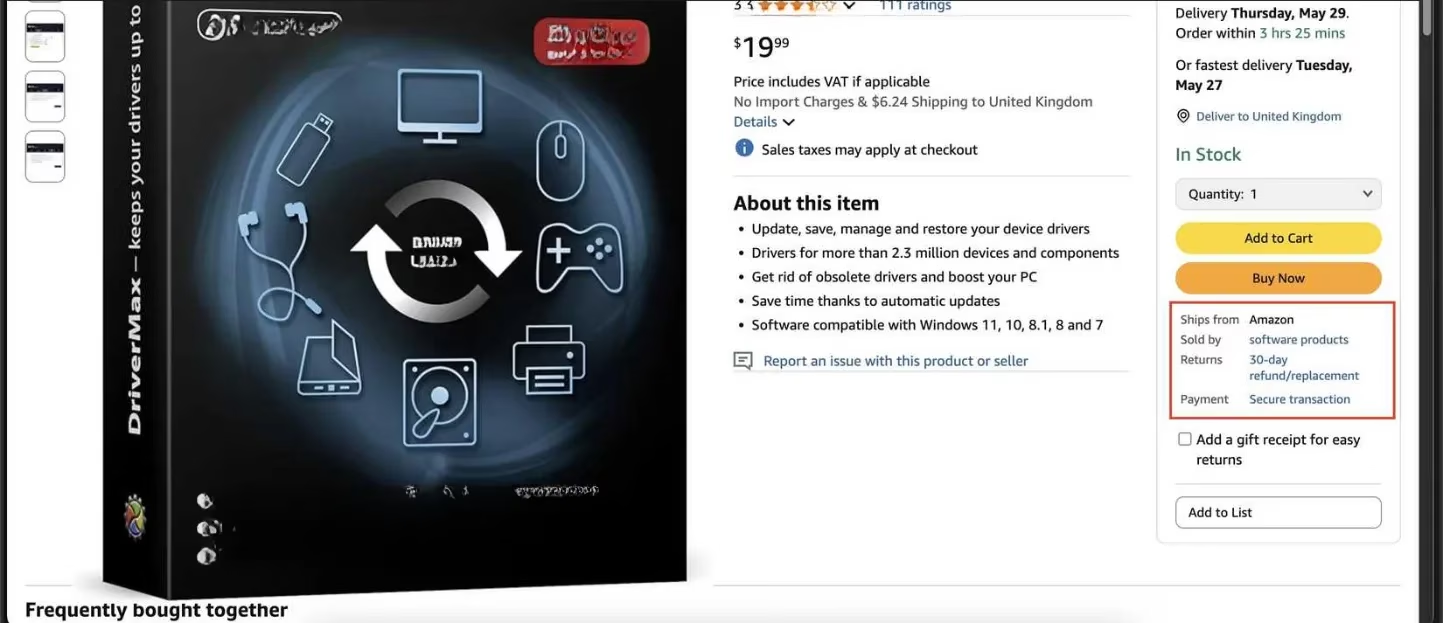
The truth I uncovered is this: yes, legitimate software sleeps on Amazon’s shelves, but it dreams beside doppelgängers. A product page glistening with five-star praise may be a mask worn by a vendor who changes names like a serpent sheds skin. Reviews breathe and pulse with artifice—whispered by bots, purchased in bulk. When the code fails, you might reach into the void and find no human hand to clasp. I learned to click the seller’s name before I click “Buy,” to trace the lineage of feedback and the gray hairs of account age. Three minutes of archaeology can spare you a season of regret.
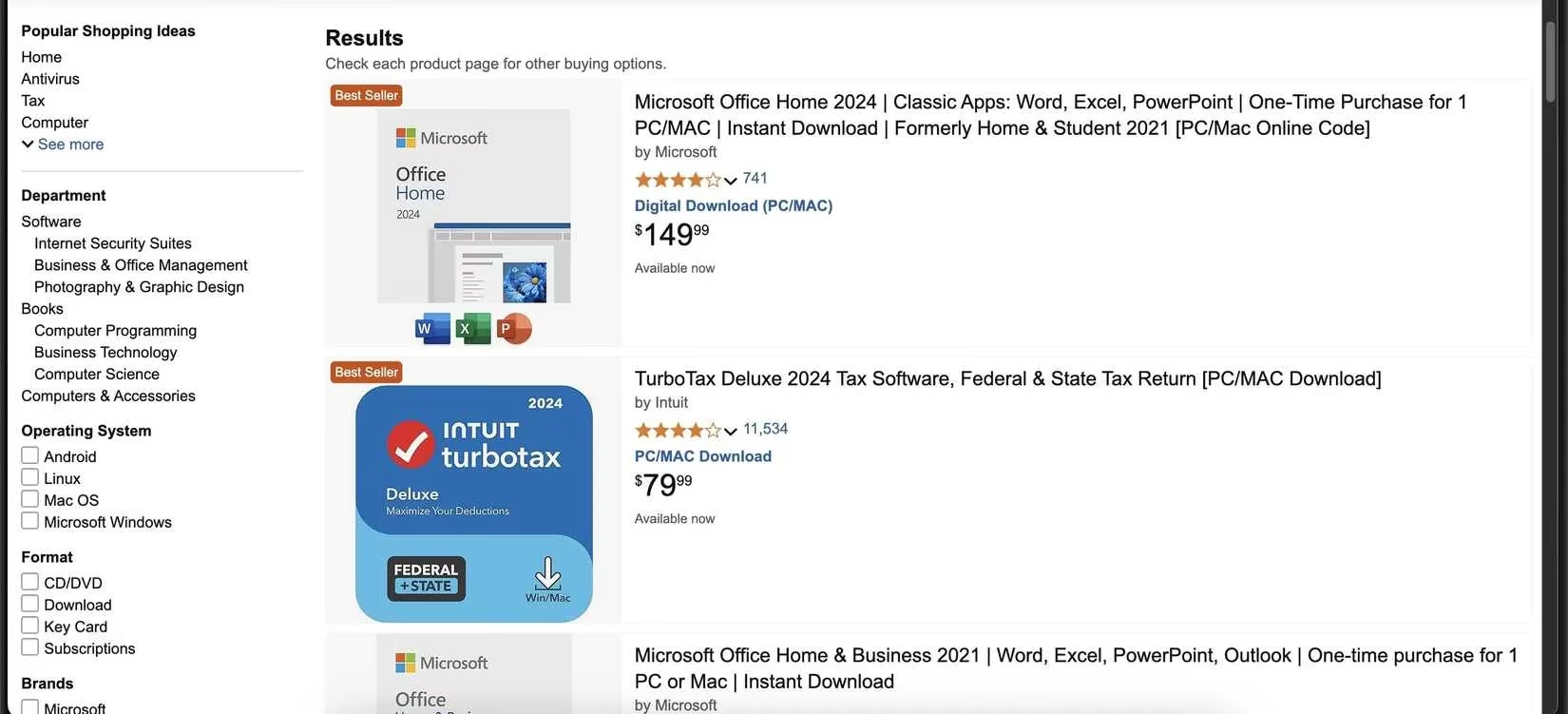
Price—oh, the seductive whisper of a $19.99 symphony that elsewhere costs a fortune. When I saw a premium creative suite dangling at a fraction of its worth, my heart raced, but my spine chilled. I have come to recognize these sirens for what they are: siren songs of cracked keys and reused licenses, of OEM labels that mean nothing and lifetime promises that evaporate before the next operating system update. Microsoft, Adobe, Corel—these titans rarely cast their pearls at such depths without a hook. A key that activates today may deactivate tomorrow, leaving you stranded with a dead application and a receipt that mocks you. My mantra now: if it glitters too brightly, it’s probably fool’s gold. ⛔
Then there are the listings themselves, written in a tongue both familiar and slippery. “Full version,” they croon. “Instant download,” they sigh. Yet they refuse to say whether you are buying a subscription that will gnaw at your wallet monthly, or a one-time license you can hold like a deed. Some bury restrictions in fine print, like a clause demanding activation within a fortnight, or a single-install limit that makes the software a mayfly. I scan for awkward grammar, for the stutter of a description that dances around the question: What exactly am I buying? When the answer remains a fog, I close the tab and walk away. 🌫️

Return policies—those safety nets woven by Amazon’s generosity—often dissolve when digital goods cross the threshold. Once a license key exposes its naked alphanumeric body, or a download link breathes to life, the transaction becomes a one-way mirror. I recall a friend who purchased a misrepresented antivirus suite, only to find the seller had vanished behind a curtain of legalese: “All digital sales final.” There is a unique heartbreak in owning a product you cannot touch and cannot return. My advice, born of that shared grief, is to examine the return clause with the same intensity a jeweler appraises a diamond. If the policy is missing or mumbles, consider it a portent. 🔮
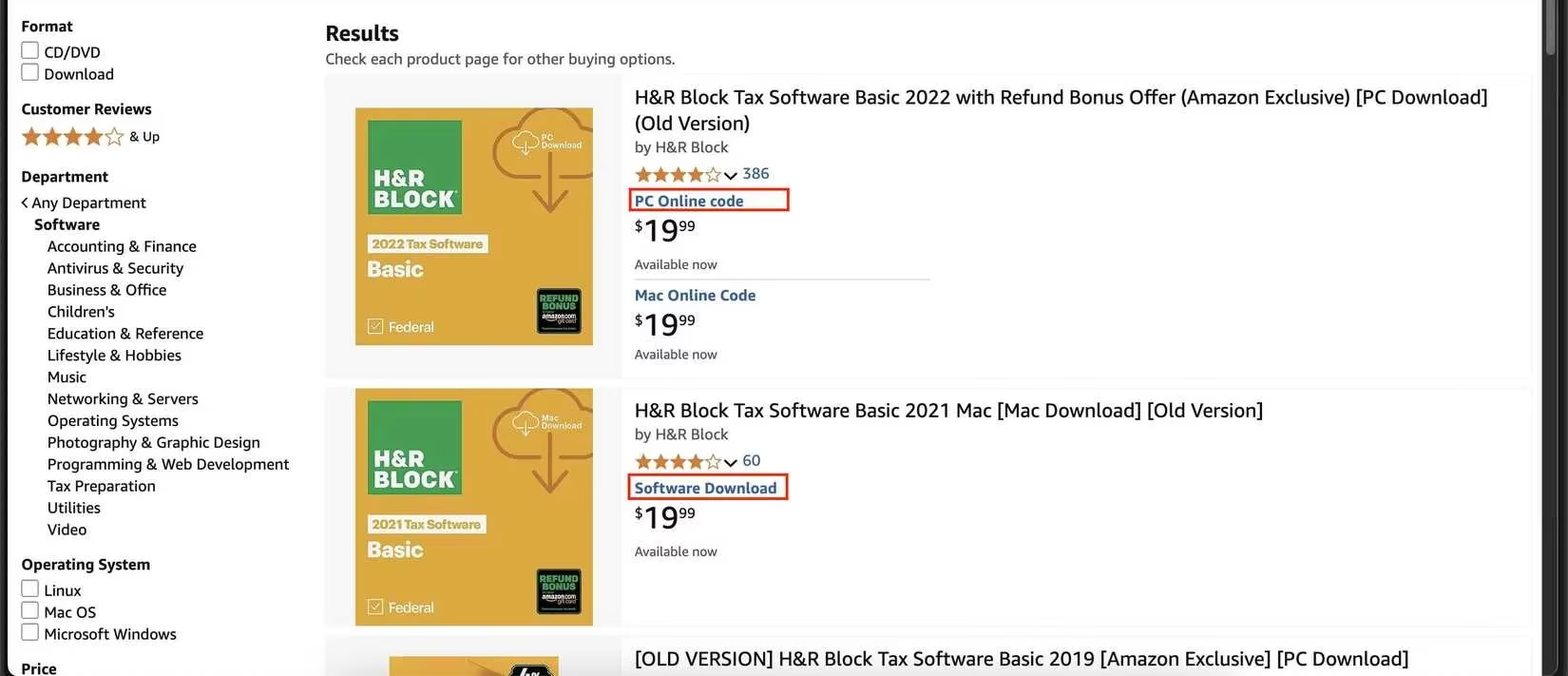
And how does the treasure arrive? A physical disc spinning in a jewel case? A digital code flaming into your Amazon library? Or a cryptic email with a link to a foreign domain? I once expected a disc for a legacy game; instead, I received a download code that demanded I visit a site smelling of mothballs and malware. The delivery method is not a footnote—it’s the stage upon which your purchase performs. I now scrutinize whether it’s an “Online Code,” a “CD-ROM,” or a “Download,” and I verify my machine still has a disc drive (many modern laptops have shed them like autumn leaves). A mismatch births frustration, and a vague delivery promise births danger.
External links—these are the hidden trapdoors. Some third-party sellers, cloaked in legitimacy, will direct you away from Amazon’s guarded halls to a file-hosting service or a shadowy website. The link might slither into your inbox after purchase, or lurk within the product description’s underbelly. I have seen cracked software masquerading as genuine, bundled with spyware that prowls your system. A golden rule I now hold sacred: if the delivery path leaves Amazon’s ecosystem or fails to route you through the publisher’s official portal, I retreat. Secure delivery, to my mind, flows through Amazon’s Digital Software Library or the maker’s sanctified site—never through a stranger’s upload.
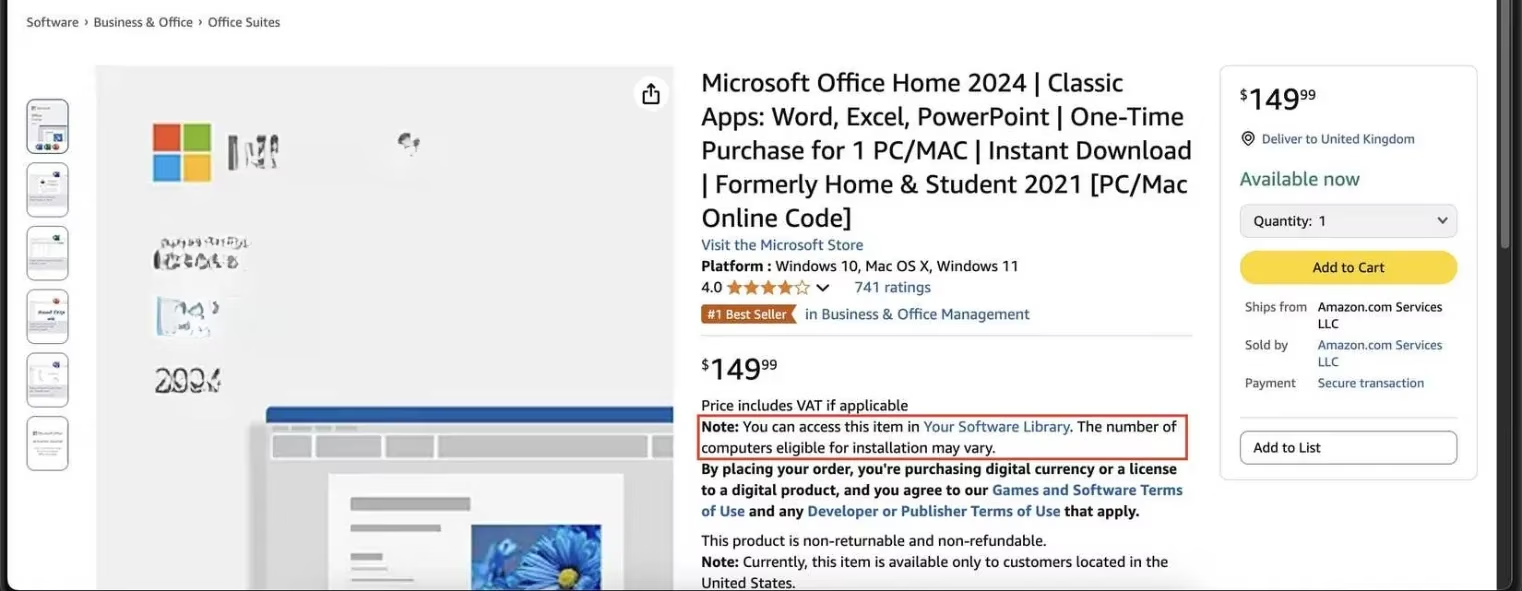
In the end, I have become an advocate for the direct route. When doubt swirls, I travel to the developer’s own storefront, where the air is clearer and the support less phantasmagoric. Amazon remains a vast and wondrous marketplace, but for digital software, it is a realm where shadows dance with light. A few extra heartbeats spent verifying a seller, parsing the description, and tracing the delivery method can transform a potential curse into a blessed acquisition. Remember: the most expensive software is the one you buy twice. 🌟