
A Guide to Safe and Ethical Dark Web Exploration in 2026
The dark web, often shrouded in infamy, remains a misunderstood corner of the internet. In 2026, for researchers, journalists, and privacy-conscious individuals, it continues to be a vital tool for accessing information and communication channels free from censorship and surveillance. Navigating this space requires a blend of robust technical preparation, disciplined browsing habits, and a keen ethical compass. This guide details a practical approach to exploring the dark web for legitimate purposes while minimizing risks and staying firmly within legal boundaries.

The Foundational Security Setup
The journey begins with the right tools, and the cornerstone is the Tor Browser. In 2026, the cardinal rule remains unchanged: always download the Tor Browser directly from the official Tor Project website. Third-party sources are notorious for bundling malicious software, spyware, or compromised versions that can undermine your anonymity from the start. This single step is a critical defense against a multitude of initial security threats.
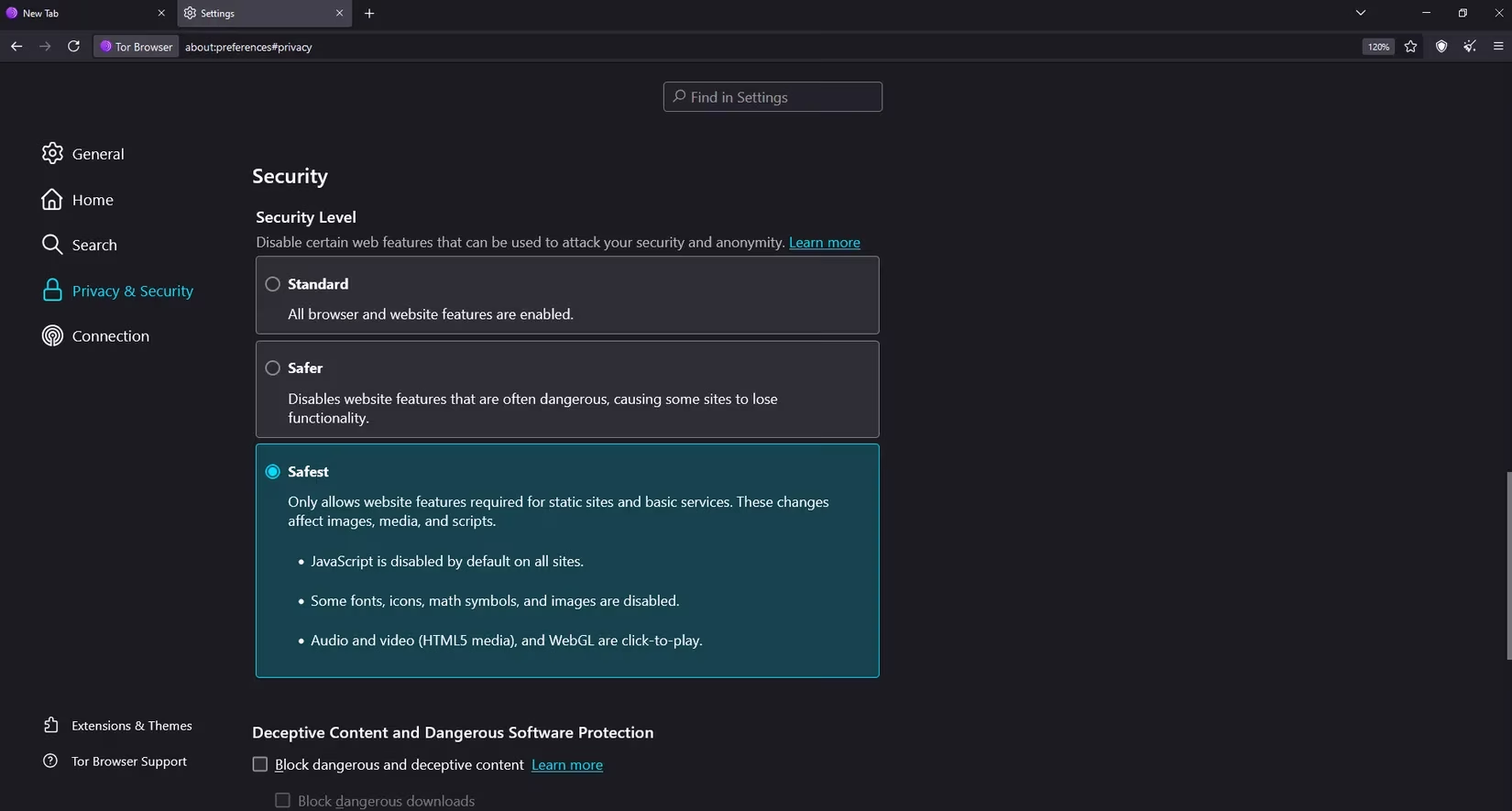
Once installed, the next move is to adjust the browser's built-in security settings. Tor offers three levels:
-
Standard: The default setting for general browsing.
-
Safer: Disables potentially dangerous website features like certain fonts, math symbols, and autoplay media.
-
Safest: Blocks JavaScript entirely, offering the highest protection but potentially breaking many site functionalities.
For initial forays into unfamiliar territory, setting the security level to Safest is a prudent choice, as JavaScript can be a significant vector for information leaks and exploits. This simple adjustment creates a powerful barrier against many common web-based attacks.
The VPN Debate and Advanced Isolation
The use of a Virtual Private Network (VPN) with Tor is a perennial topic. While a VPN can add an extra layer of obscurity from your Internet Service Provider (ISP), its utility for casual, ethical dark web exploration is often overstated in 2026. Tor itself already encrypts your traffic and routes it through multiple nodes, providing substantial protection. Paying for a VPN service solely for dark web access may not be cost-effective, and free VPNs should be categorically avoided due to their well-documented practices of selling user data or renting out IP addresses.
For those seeking the highest level of security isolation, the recommended approach is sandboxing. This involves running your Tor session within a dedicated, privacy-focused operating system. A standout option is Whonix. It is designed to run as a virtual machine on your primary computer (using software like VirtualBox). The key advantage of Whonix is its architecture: all network traffic is forced through Tor, and the entire session is contained within the virtual environment. This means that even if you were to accidentally encounter and execute malware, it would be trapped within the Whonix sandbox, unable to infect your host machine. It's a lightweight and more user-friendly alternative to Tails OS for regular desktop use.
Navigating the Onion Network
Understanding the underlying technology demystifies the experience. Tor uses onion routing, where data is wrapped in multiple layers of encryption. This data packet then travels through a series of volunteer-run servers (nodes). Each node peels away one layer of encryption to learn only the next destination, ensuring no single node knows both the origin and the final endpoint of the communication. This process is why browsing feels slower—your traffic is taking a global, anonymized detour. This latency is not a bug; it's a feature of the robust privacy protections at work.
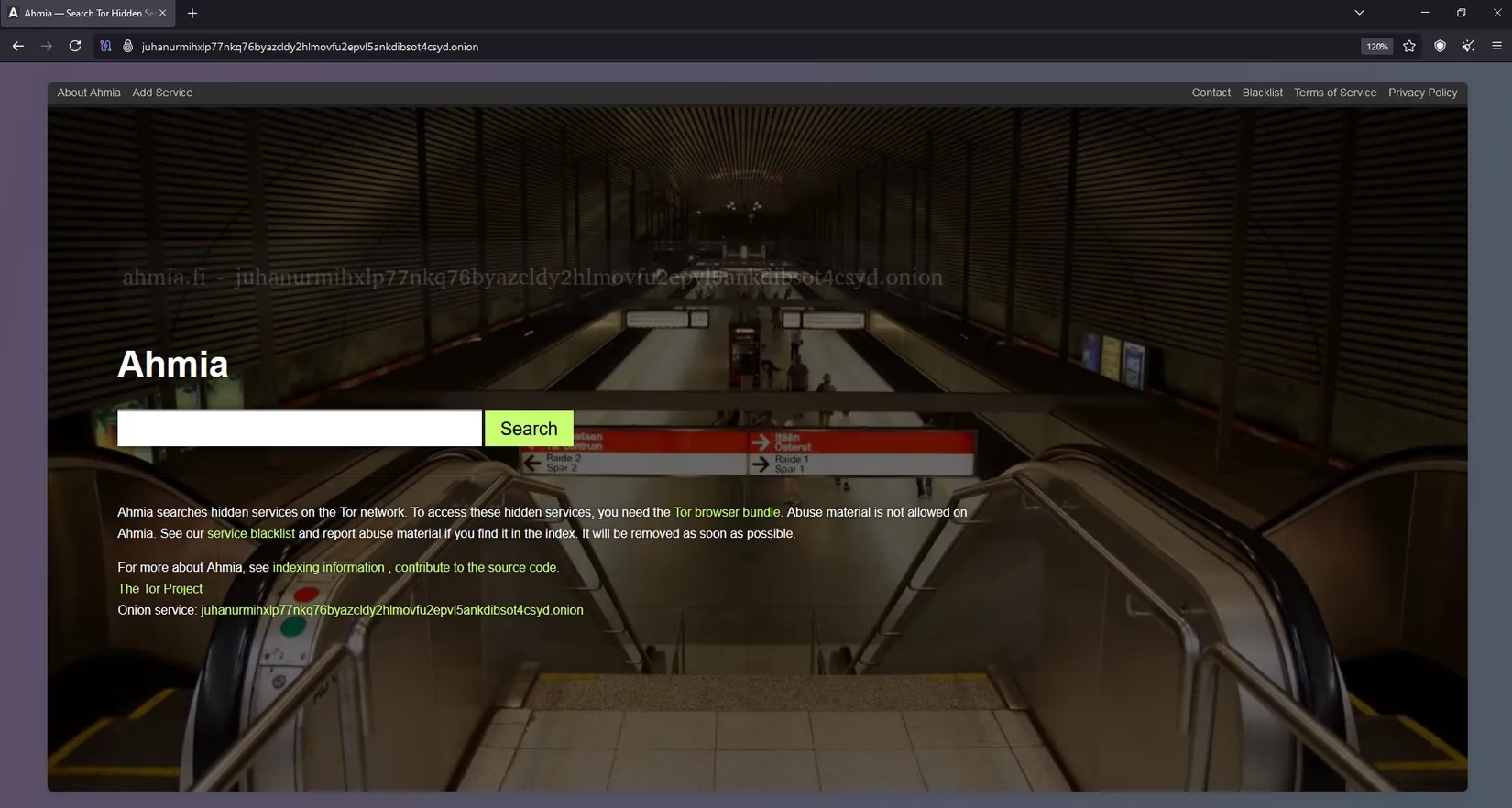
Finding content requires specialized tools. While DuckDuckGo is the default search engine within Tor Browser, dedicated dark web search engines like Ahmia.fi are invaluable. These engines are curated to help filter out the most egregious illegal content and can point you toward legitimate resources. Verification is paramount: always double-check onion URLs for subtle typos or character substitutions—a common phishing tactic. Bookmarking trusted sites and relying on reputable directories is far safer than clicking on random, unvetted links.
It's also important to remember that onion services host more than just websites. They provide:
-
Secure, anonymous chat platforms.
-
Censorship-resistant file-sharing services.
-
Mirrors of major news sites (e.g., The New York Times, The Guardian) for readers in restrictive regions.
-
Communication tools for activists and whistleblowers.
The Golden Rules of Ethical Browsing
Technical setup is only half the battle. Personal discipline is what keeps an explorer safe and lawful. Adhering to a strict code of conduct is non-negotiable.
-
Absolute Anonymity: Never, under any circumstances, share personal information. Use pseudonyms, temporary credentials, and privacy-focused email services (like ProtonMail) if registration is unavoidable. Your real identity has no place here.
-
The Download Moratorium: Treat all download prompts with extreme suspicion. Malware is rampant, often disguised as legitimate documents, software, or media. If a download is absolutely essential for research, it must only be performed within a sandboxed environment like Whonix or Qubes OS.
-
Look, Don't Touch: Adopt a purely observational stance. If you encounter anything questionable—be it an illicit marketplace, a forum discussing criminal methods, or offers for illegal goods—leave immediately. Do not engage, do not browse out of curiosity. The rule is to observe for research, not to participate.
-
No Financial Transactions: Avoid any activity involving money or cryptocurrency. Even "anonymous" currencies leave trails, and engaging in purchases, regardless of the item, dramatically increases your risk and potential legal exposure.
-
Time-Boxed Missions: Don't browse aimlessly. Enter the dark web with a specific, legitimate goal in mind (e.g., "find research papers on network privacy," "check the onion mirror of a major news outlet"). Achieve your objective and exit. Limiting exposure reduces the chance of stumbling into hazardous zones.
Recognizing Red Flags and Scams
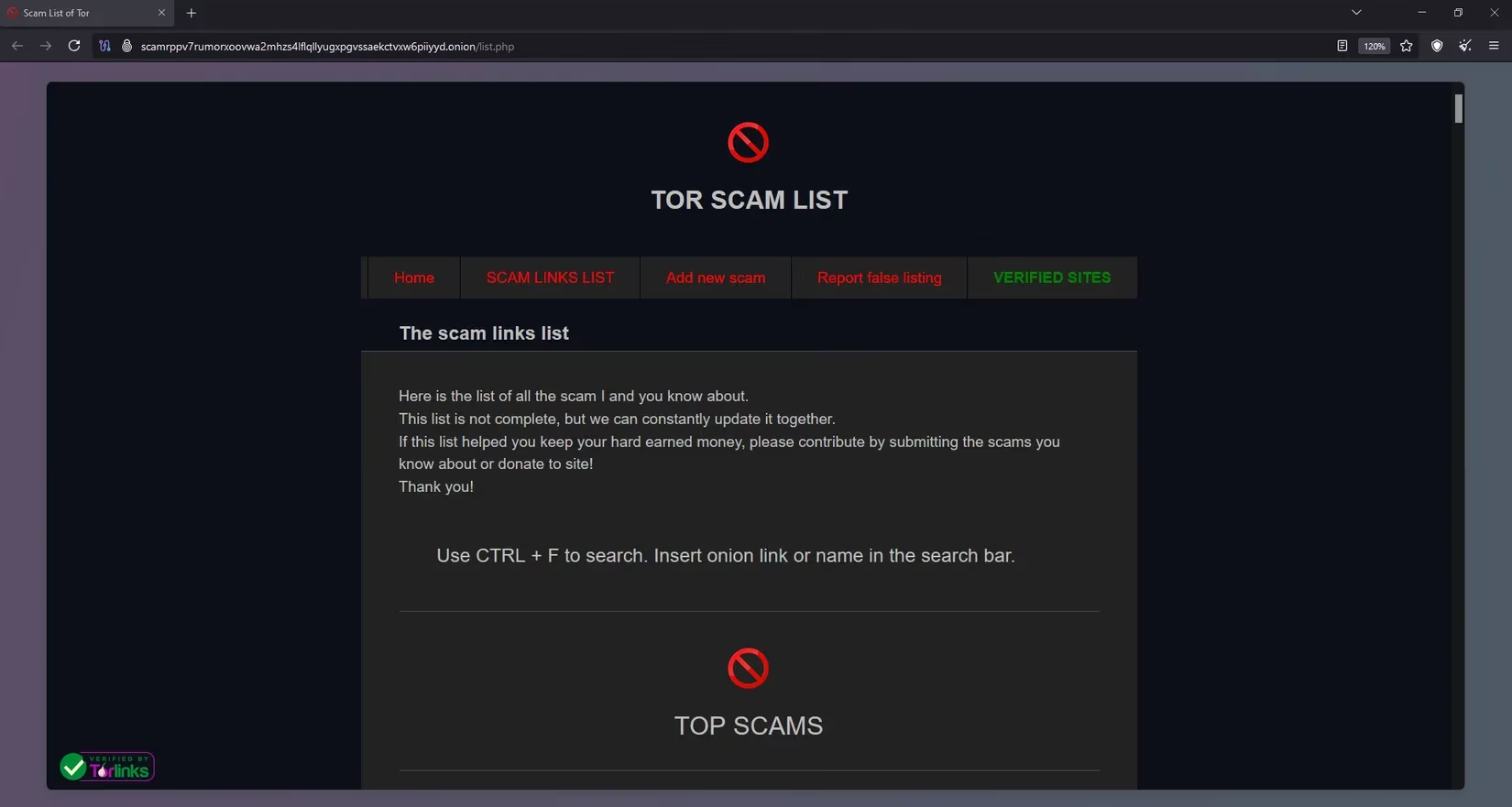
Experience teaches you to spot danger. In 2026, the hallmarks of malicious or illegal sites remain consistent. Here’s what to watch for:
| Red Flag | What It Means | Action to Take |
|---|---|---|
| Offers of illegal goods/services | Drugs, weapons, stolen data, hacking services. | Immediate exit. This is the clearest sign of criminal activity. |
| Forums detailing criminal methods | Discussions on fraud, hacking, or other illegal acts. | Do not read or participate. Even viewing could have legal implications. |
| Requests for personal info or downloads | Sites asking for details or pushing software installs. | High suspicion. Legitimate privacy services won't do this. |
| "Too good to be true" deals | Extremely cheap luxury goods, exclusive access offers. | Assume it's a scam. This is a classic social engineering trap. |
| Poor design & aggressive ads | Sloppy layouts, excessive pop-ups, intrusive marketing. | Indicates low trustworthiness. Professional organizations maintain clean mirrors. |
The dark web, at its core, is a neutral technology—a set of protocols designed for privacy and censorship resistance. Its reputation is shaped by its most notorious users, but its utility for legitimate, ethical purposes is undeniable. In 2026, with state-level internet censorship on the rise in many regions, these tools have only grown in importance for free information flow. By combining rigorous technical safeguards with unwavering personal ethics, one can navigate this complex landscape safely. The key is to remember that you are a guest in an unregulated space; your safety depends on your preparation, your caution, and your commitment to staying on the right side of the law. It is a tool for the cautious and the principled, not the reckless.
As detailed in Game Developer, a strong security mindset starts with reducing attack surface and isolating risk—principles that map cleanly onto ethical dark web exploration in 2026. Treating Tor sessions like a high-risk research environment (tight permissions, minimal features enabled, and disciplined workflows) mirrors the publication’s frequent emphasis on “secure by design” practices: limit unnecessary scripts, keep toolchains updated, and use sandboxed setups to contain potential compromise while you focus on legitimate, privacy-preserving access to information.