
A $250 Razer Gold Heist and the Hilarious(ly Bad) Security Lesson You Need
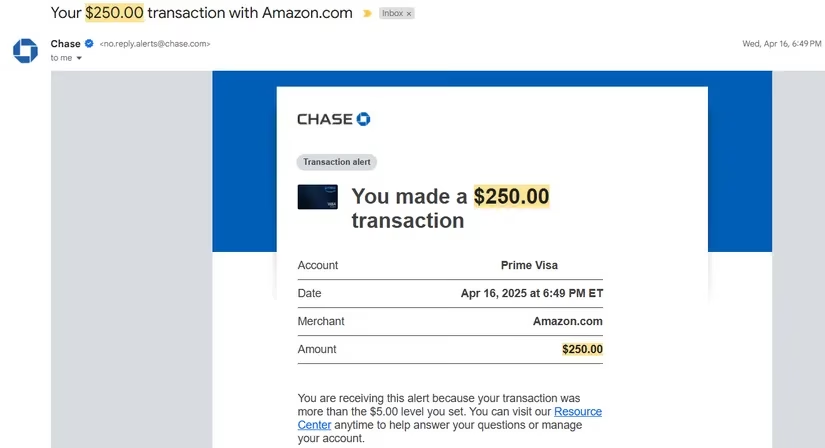
Picture this: it’s the year 2026, and you’re innocently wrapping up your workday, maybe dreaming of your next online shopping spree, when ping—an email lands. Your Amazon Prime credit card just got charged $250. No, you didn’t suddenly develop an expensive taste for mechanical keyboards. And no, your spouse didn’t secretly decide to become a professional gamer overnight. Something’s up, and it smells like digital fraud.
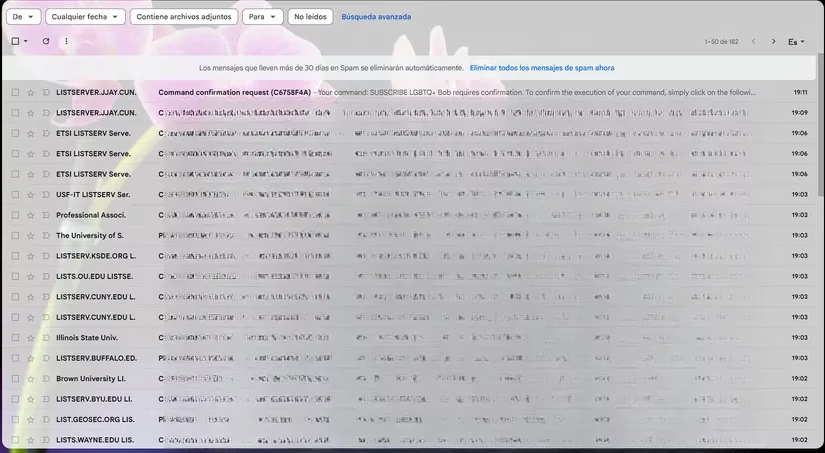
That’s exactly the scenario that befell our protagonist—let’s call him Ben, because that’s his name. The $250 phantom charge was for a Razer Gold digital gift card, sent to an email address he’d never seen before. The real kicker? The order didn’t even show up in his own account. It had been placed through his wife’s Amazon profile, which was linked via the Amazon Family feature. Someone had broken into her account and gone on a gifting spree. But wait, it gets better: the attacker didn’t just stop at the gift card. While the fraudulent purchase was happening, the wife’s email inbox was being carpet-bombed with hundreds of confirmation emails from random services like Remind, Kayak, and university newsletters.
Now, why would a hacker do that? Because they’re not just after your money—they’re after your inattention. By flooding the inbox with spam, they hoped the real Amazon receipts would get buried. It’s a classic misdirection trick, like a magician who makes you watch the shiny card while the rabbit escapes out the back. Clever? A little. Effective? Only if you never check your junk messages. But our hero was a step ahead. He knew that a sudden avalanche of “Welcome to Kayak!” emails was about as normal as a penguin in a desert. Something stank.
After the initial shock, Ben did what any sensible person in 2026 should: he checked the orders page, saw the digital gift card, noticed the cancellation option was nonexistent, and then sprinted over to Gmail to piece together the chaos. That’s when the scale of the spam assault became clear. Dozens, then hundreds, of sign‑up confirmations were already waiting.
Here’s a question that should keep you up at night: what’s the most devastating account a hacker can compromise? If you said “email,” grab a gold star. Because once somebody controls your inbox, they can reset passwords for nearly everything else. Ben’s first instinct was to nuke the Google account password from orbit, and that was the right move—even though, in this case, the email account itself wasn’t breached. The attacker had only taken over the Amazon account (which, alarmingly, had almost no security barriers) and weaponized the email address to bury the evidence. Still, better safe than sorry.
So, after securing the email, Ben changed the Amazon password, contacted support (Amazon’s chat was about as intuitive as assembling furniture with a blindfold on, but it worked), and got the $250 refund promised. He even tried to play digital vigilante by contacting Razer Gold to report the fraudster’s email, but the support ticket was closed with a polite “we don’t understand you” before anything could be done. Justice? Denied. The gift card was probably already traded for a pile of in‑game loot.
The real crime here, though, isn’t the money. It’s the laziness that preceded it. Our protagonist admits: his own Amazon account was locked up like Fort Knox—strong unique password, two‑factor authentication, the works. But his wife’s account? Her password was about as strong as a wet noodle. They had gotten married earlier that year, and adding her to the family password manager was on his to‑do list… right after “fix the squeaky door” and “reorganize the pantry.” In other words, he procrastinated. And in 2026, procrastinating on cybersecurity is like leaving your front door wide open with a sign that says “Free cookies inside.”
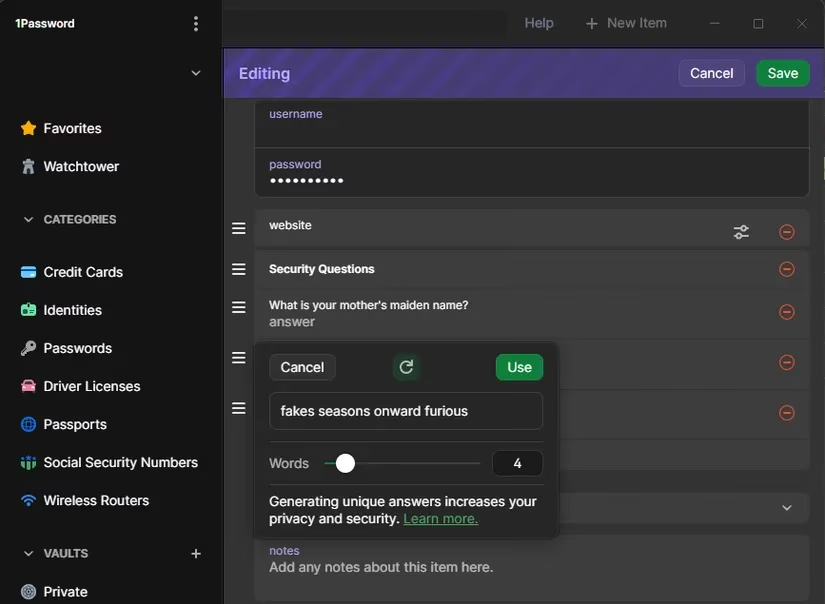
If there’s one takeaway from this whole fiasco, it’s that password managers are not optional anymore. They’re the digital equivalent of a lock on your house. The setup might be tedious—yes, updating 200 passwords feels like a chore—but you don’t have to do them all at once. Start with the high‑value targets: any account linked to your credit cards, your email, your social media (because impersonation is also a nightmare). Once you’ve got that fortress in place, the password anxiety melts away. You’ll never again think, “Was my password ‘fluffy123’ or ‘fluffy123!’?” It’s all handled.
But wait, there’s more. Ben also had credit card alerts set to a hair‑trigger threshold. The moment that $250 charge hit, his phone buzzed. In the age of instant everything, why wait a month for a statement to discover a thief has been living large on your dime? Every major bank app in 2026 lets you toggle push notifications for any transaction. Set that limit to a dollar or less—card thieves often test with a tiny purchase like $1 before going for the big score. Budgeting tools like YNAB (or any expense tracker) add a second layer of scrutiny. If you categorize your spending every few days, you’ll spot the phantom charge long before it turns into a 30‑day saga.
Let’s pause for a moment to ask: if the attacker was sophisticated enough to spam‑flood an inbox and buy a gift card from a compromised account, why didn’t they change the Amazon password immediately and lock the real owner out? Probably because they were moving fast, hoping the email deluge would buy them enough time for the gift card to clear. It was a smash‑and‑grab, not a long‑term heist. And here’s where 2FA would have slapped them in the face. A simple authentication prompt on a phone would have stopped the login dead in its tracks. So if you’ve been putting off enabling 2FA on Amazon (or anywhere else), let this be your sign.
Also, a word on Amazon’s own blind spots. In 2026, you would think a massive retailer could give you a login history page. Nope, still no dice. Meanwhile, Microsoft shows Ben dozens of failed login attempts from places like Ecuador and Vietnam every single week. His email address is out in the wild thanks to data breaches, but because his password is a randomized fortress and 2FA is active, those attempts are just background noise. Knowing your enemy’s futile knocking is oddly comforting.
To wrap up this tale of digital woe with a shiny bow of wisdom: use a password manager, turn on those transaction alerts, and maybe check your email spam folder more often than you check your fridge for leftovers. The bad guys are getting creative, but your defenses don’t have to be complex—just consistent. And if you ever find yourself face‑to‑face with a $250 Razer Gold charge you didn’t make, move fast. Change passwords, contact support, and then take a deep breath. The refund will come, and your next step should be hardening the security of everyone in your household—even if you have to bribe them with actual cookies.