
The Paradox of Data Removal Services: Trading Privacy for a Promise
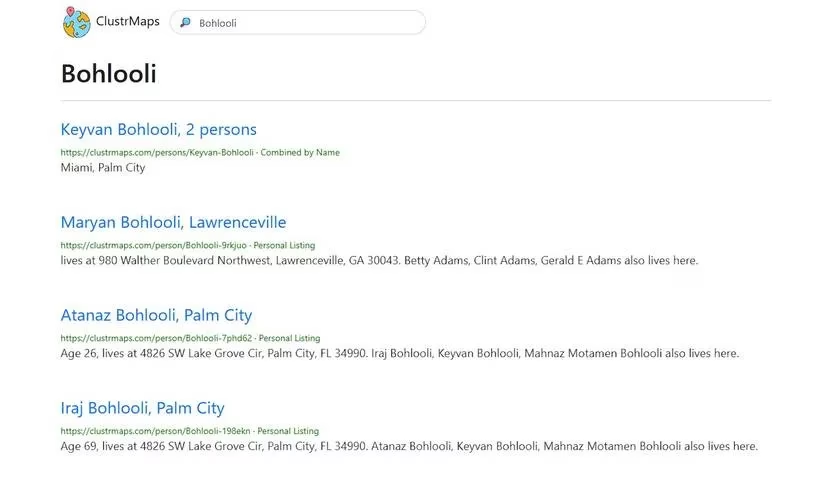
In the digital landscape of 2026, the quest for online privacy often leads concerned individuals to data removal services. These platforms, with names like Incogni and OneRep, market themselves as the solution to a pervasive problem: the unwanted publication of personal information on people-finder websites. These aggregator sites, such as ClustrMaps or TruePeopleSearch, compile surface-level data—names, addresses, phone numbers, and familial connections—from public records like voter rolls and property deeds. While this information lacks the depth of behavioral tracking, its public availability without consent represents a significant privacy intrusion for many. The core promise of removal services is to handle the tedious, manual opt-out processes required by hundreds of these sites. However, this promise is built upon a profound and inherent contradiction: to erase your data from the web, you must first surrender it, in its most verified and accurate form, to a new entity.

The Inherent Contradiction and Verification Process
The operational model of these services is fundamentally paradoxical. To initiate removal requests on a user's behalf, a service must first conclusively prove the user's identity to each people-finder site. This necessitates users providing a comprehensive dossier of their own sensitive information to the removal company. This typically includes:
-
Full legal name
-
Current and past addresses
-
Phone numbers
-
Email addresses
-
Sometimes, a copy of a government-issued ID
Users often must grant the service a limited power of attorney, authorizing it to act as their legal representative in removal matters. This verified data is then packaged and submitted to dozens, sometimes hundreds, of data brokers. In essence, to hide your information, you must first amplify its distribution through a new channel. The irony is stark: the databases maintained by data removal services become treasure troves of highly accurate personal data, precisely because users, motivated by privacy concerns, are incentivized to provide truthful information.
Effectiveness, Guarantees, and the Subscription Trap
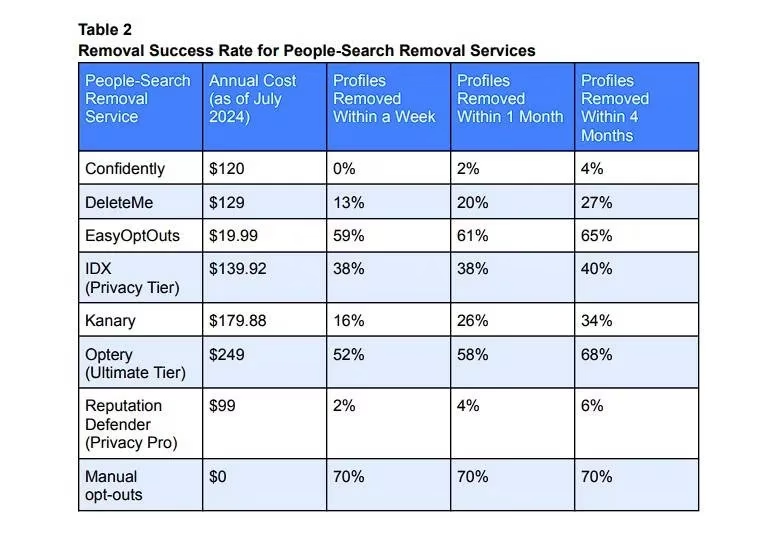
Despite their marketing, data removal services offer no absolute guarantees. Their effectiveness is highly variable, depending on factors like the number of sites listing an individual, the specifics of their profile, and the service's own diligence. A landmark study by Consumer Reports found that a manual, do-it-yourself approach to opt-outs was often more effective than using a paid service—and it cost nothing. The study highlighted that no service achieves 100% removal success.
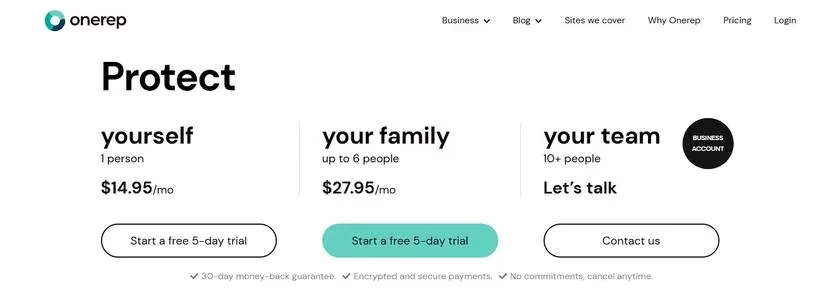
Furthermore, a critical limitation exists: even if a profile is deleted, there is no reliable audit trail to confirm the underlying data is purged from the broker's backend systems. The removal request itself can serve as verification that the original listing was accurate. Perhaps most concerning is the issue of re-listing. Data brokers frequently refresh their databases from public sources, meaning a deleted profile can reappear. This vulnerability is the foundation of the industry's standard business model: subscriptions. Services charge ongoing fees, promising to continuously monitor and resubmit removal requests for profiles that resurface, creating a perpetual cycle of payment for a problem that is never permanently solved.
Hidden Risks: Liability, Breaches, and Questionable Allegiances
Entrusting a consolidated profile of your most sensitive data to any company carries inherent risk. These services universally include stringent liability limitations in their terms of service, often written in conspicuous capital letters. These clauses typically state that the company bears no liability for damages arising from the use of their service, including data breaches, service failures, or any consequential harm. In plain language, if their database is hacked and your meticulously provided information is leaked, you have no legal recourse against them.
The risk of a breach is not theoretical. These companies become high-value targets precisely because they aggregate the data of privacy-conscious individuals. A leak would be particularly damaging for this user base.
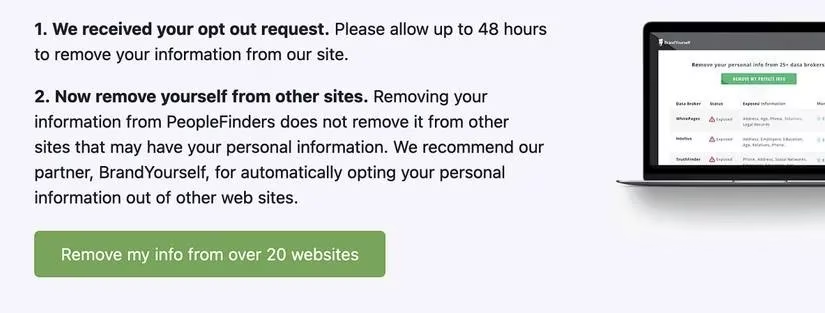
More troubling are findings of potential conflicts of interest within the industry. Investigative reports, including those from security journalist Brian Krebs, have revealed instances where the founders or operators of data removal services also own or operate people-finder websites. This creates a perverse incentive structure akin to creating a problem and selling the solution. One arm of a business profits from scraping and listing personal data, while the other charges a fee to have it removed. The Consumer Reports study also noted instances of people-finder sites advertising specific removal services on their own opt-out pages—a relationship that raises serious ethical questions about the true independence of these "privacy" tools.
Weighing the Alternatives: The Manual Opt-Out Path
Given the paradoxes, risks, and variable effectiveness, individuals in 2026 must carefully consider alternatives. The manual opt-out process, while undeniably labor-intensive, offers distinct advantages:
-
Greater Control: You manage the process directly, deciding exactly what information is sent to each site.
-
No New Data Repository: You avoid creating a new, centralized, and highly attractive target for your personal information.
-
Cost-Effective: It requires time and patience, but no financial subscription.
-
Potential for Greater Efficacy: As the Consumer Reports study indicated, a diligent manual approach can be more thorough.
The process involves identifying the major data brokers, navigating to their opt-out pages (often buried in privacy policies), completing their verification forms, and meticulously tracking submissions. It is a fragmented and ongoing task, but for many, the trade-off—exchanging time and effort for reduced risk and potentially better results—is preferable to the trade-off demanded by automated services.
Conclusion: A Calculated Compromise
Data removal services occupy a complex and often conflicted space in the digital privacy ecosystem. They can provide a valuable service for those unwilling or unable to undertake the manual opt-out grind, potentially reducing one's digital footprint across numerous people-search sites. However, this convenience comes at a significant price: the consolidation of your most accurate personal data into a new, vulnerable database, exposure to opaque business practices and potential conflicts of interest, and entry into a never-ending subscription cycle for a non-permanent solution. Ultimately, employing such a service is not a definitive privacy fix but a calculated compromise—a decision to trade one set of privacy risks for another, all while navigating an industry where the lines between problem and solution are sometimes dangerously blurred.