
My Journey to Secure Connectivity: Finding Safer Alternatives to Public Wi-Fi in 2026
As a professional gamer and digital nomad, my life in 2026 is a constant loop of airports, hotel lobbies, and bustling cafes. I remember a time when I’d casually connect to any ‘Free_Airport_WiFi’ without a second thought, chasing that elusive high ping for a quick match. But that was before I truly understood the digital shadows lurking on those open networks. The static-filled security camera feeds, the endless login portals, the nagging feeling that someone might be watching—it was a gamble with my data every single time. So, I embarked on a personal quest to find secure, reliable alternatives that wouldn't leave me vulnerable in the middle of a crucial ranked game or a sensitive client call. This is the story of my journey through the safest ways to stay connected on the go.
My Trusted Pocket Guardian: The Smartphone Hotspot
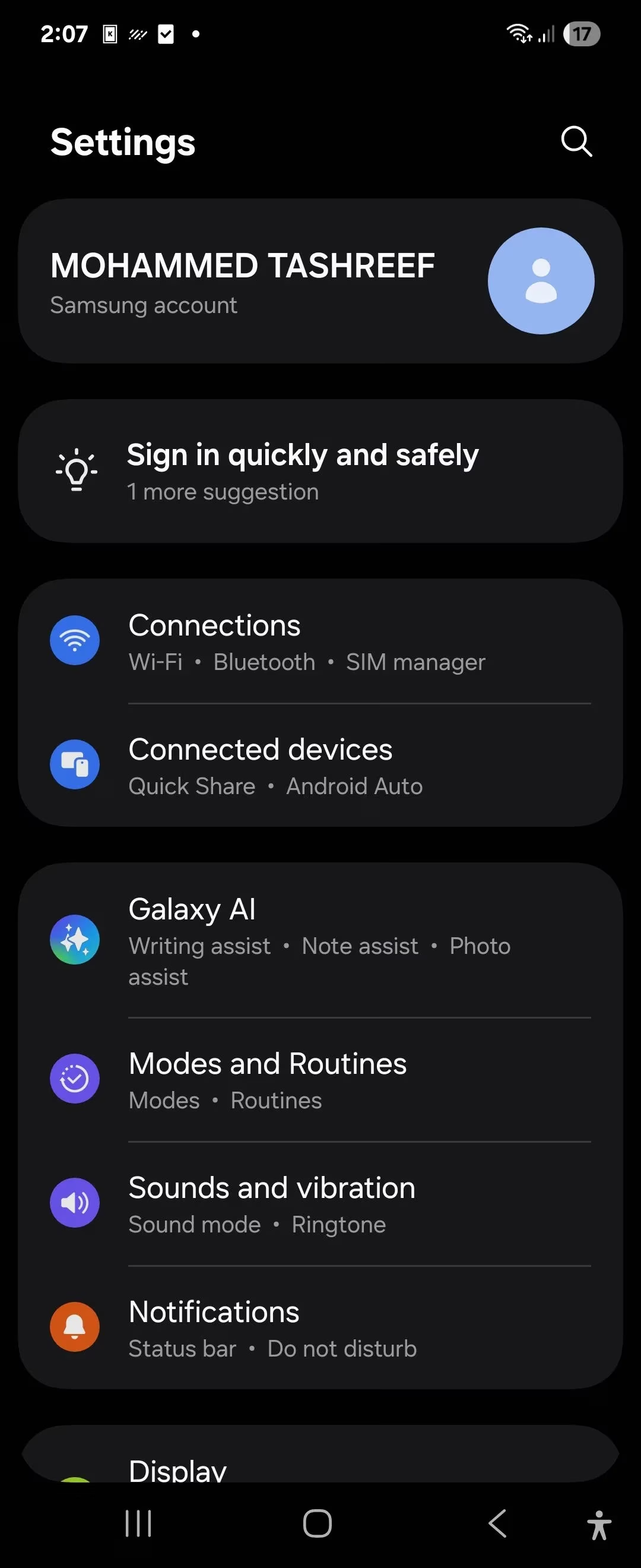
My first and most frequently used line of defense became my smartphone's mobile hotspot. It's my digital sanctuary. Unlike a public, communal network where data packets fly around for anyone to potentially intercept, my phone creates a private, encrypted bubble. I control the gate. Setting it up is a ritual I can do in my sleep. On my Android device, it's a quick dive into Settings > Connections > Mobile Hotspot & Tethering. For my friends on iOS, it's under Settings > Personal Hotspot. The golden rule? A fortress-worthy password. No ‘123456’ or ‘password’ here. Once it's humming, my gaming laptop connects to ‘Tashreef's Secure Nexus’ just like any other Wi-Fi, but with the profound peace of mind that this connection is mine alone.
Of course, this power comes with a cost. The battery drain is real, especially during an extended gaming session. My solution? A high-capacity portable power bank is now a permanent resident in my backpack. The other specter is data usage. Every game update, every stream, every patch note consumes my cellular data. To combat this on my Windows machine, I always set the connection as ‘metered,’ which reins in background data-hungry processes.
Leveling Up: The Dedicated Mobile Hotspot (MiFi)
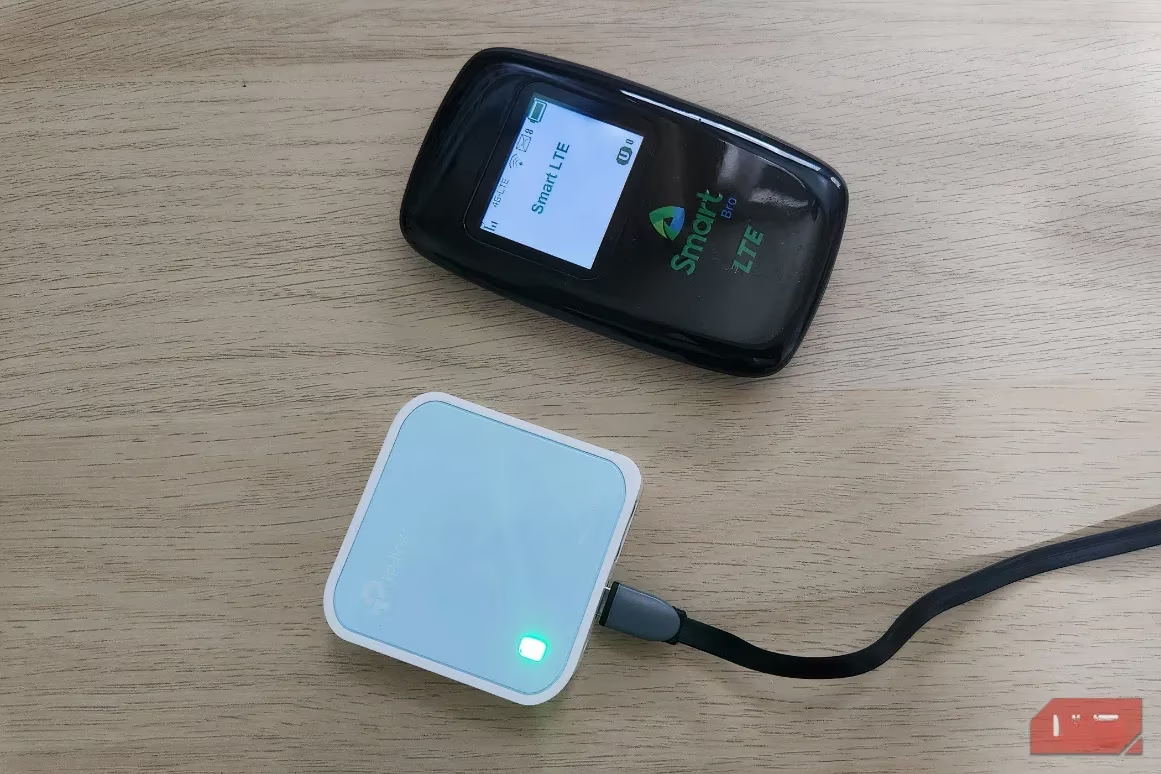
For those marathon travel days or tournament trips where connectivity is non-negotiable, I graduated to a dedicated mobile hotspot device, often called a MiFi. This little gadget is a game-changer. It’s a compact, purpose-built network hub that can connect over 15 of my devices—laptop, tablet, console, smartwatch—all at once, and its battery often lasts longer than my own stamina. The performance is noticeably stronger and more consistent than my phone's hotspot, which is critical when every millisecond of latency counts.
The trade-off is carrying another device and managing a separate data plan for it. I invested in a powerful model, and while the upfront cost stung, the reliability and advanced network management features have been worth every penny for my profession.
The Hotel Room Hacker: Deploying a Travel Router
Hotel Wi-Fi is the final boss of public network insecurity. That's where my travel router comes in. I carry a model about the size of a deck of cards. Its superpower? It can be configured to run a VPN at the router level. Here’s my process:
-
I connect the travel router to the sketchy hotel Wi-Fi (just once, entering those tedious credentials).
-
The router, using my paid VPN subscription, encrypts all traffic passing through it.
-
It then broadcasts a new, private, and secure Wi-Fi network in my room.
Now, my phone, laptop, and any other gear simply connect to my router's clean network. They are blissfully unaware of the insecure hotel network beneath. It’s a single point of security that protects everything, which is far more elegant than installing a VPN on each individual device.
The Encrypted Tunnel: A VPN as Essential Armor
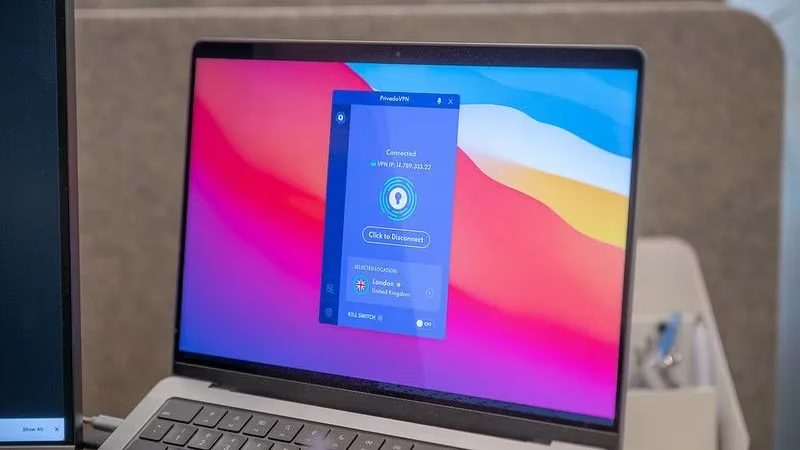
When none of my hardware solutions are viable and I'm forced to use a public network directly, my Virtual Private Network (VPN) is my digital cloak. It creates an encrypted tunnel for all my data, rendering it gibberish to any would-be snoopers on the same coffee shop network. This is crucial even if I were to accidentally connect to a malicious ‘Evil Twin’ hotspot set up by an attacker.
I learned early on to avoid free VPNs. The trade-offs—cripplingly slow speeds, data caps, intrusive ads, or worse, the logging of my own activity—simply aren't worth the false sense of security. For reliable, high-speed protection that doesn't throttle my gameplay, I subscribe to a reputable paid service. The cost is a small price for the integrity of my accounts and data.
Old-School Reliability: The Wired Ethernet Lifeline
Sometimes, the most secure path is a physical one. If I'm settled in a hotel room, a coworking space, or even a well-equipped airport lounge, I seek out the humble Ethernet port. A wired connection is a fortress wall compared to Wi-Fi's picket fence; it's immensely harder for data to be intercepted over a physical cable. The problem? Modern gaming laptops, prioritizing slim designs, often omit the Ethernet port. My fix is a tiny, inexpensive USB-to-Ethernet adapter that lives in my cable pouch. Plugging in gives me the lowest possible latency and rock-solid stability, a dream for any competitive gamer.
The Simple Cable Tether: USB Tethering
For a quick, stable link without setting up a wireless network, I use USB tethering. It’s brilliantly straightforward: I connect my phone to my laptop with its charging cable, enable USB tethering in my phone’s settings, and voilà—my laptop uses my phone's mobile data through the wire. The benefits are dual: the connection is more stable than wireless (no signal interference), and my phone charges simultaneously, eliminating battery anxiety. The obvious limitation is being physically leashed to my phone, but for a stationary work session, it's a perfect, low-profile solution.
My Last-Resort Public Wi-Fi Protocol
Despite all these tools, there are moments when public Wi-Fi is the only option. In those cases, I follow a strict digital hygiene protocol to minimize risk:
-
HTTPS is Non-Negotiable: I only browse sites with the padlock icon in the address bar.
-
Sensitive Activities are Banned: No banking, no shopping, no logging into primary email accounts.
-
Network Settings Lockdown: I disable file sharing and ensure my device's firewall is active before connecting.
-
Forget and Move On: I always tell my device to ‘Forget This Network’ after use, so it doesn't auto-reconnect later, potentially to a rogue clone.
My journey has taught me that in our hyper-connected world, security isn't a luxury; it's a fundamental part of the toolkit. Whether I'm clutching a smartphone hotspot like a lifeline, deploying my travel router in a hotel room, or plugging into a trusted Ethernet cable, each method is a conscious choice to protect my digital life. It allows me to focus on what matters—the game, the work, the connection—without the background noise of vulnerability. In 2026, staying safe online isn't just about strong passwords; it's about building your own secure network, wherever you are.