
Free VPNs, Chinese Ownership, and 70 Million Unlucky Downloads
The free VPN market has a brilliant pitch: one tap and all online traffic is hidden, the IP address is changed, and maybe a streaming service suddenly believes everyone lives in a much more exciting country. But beneath that shiny promise, a darker question lurks. Is the person operating the VPN reading every byte? According to a Tech Transparency Project investigation, plenty of free apps should make users sprint in the opposite direction.
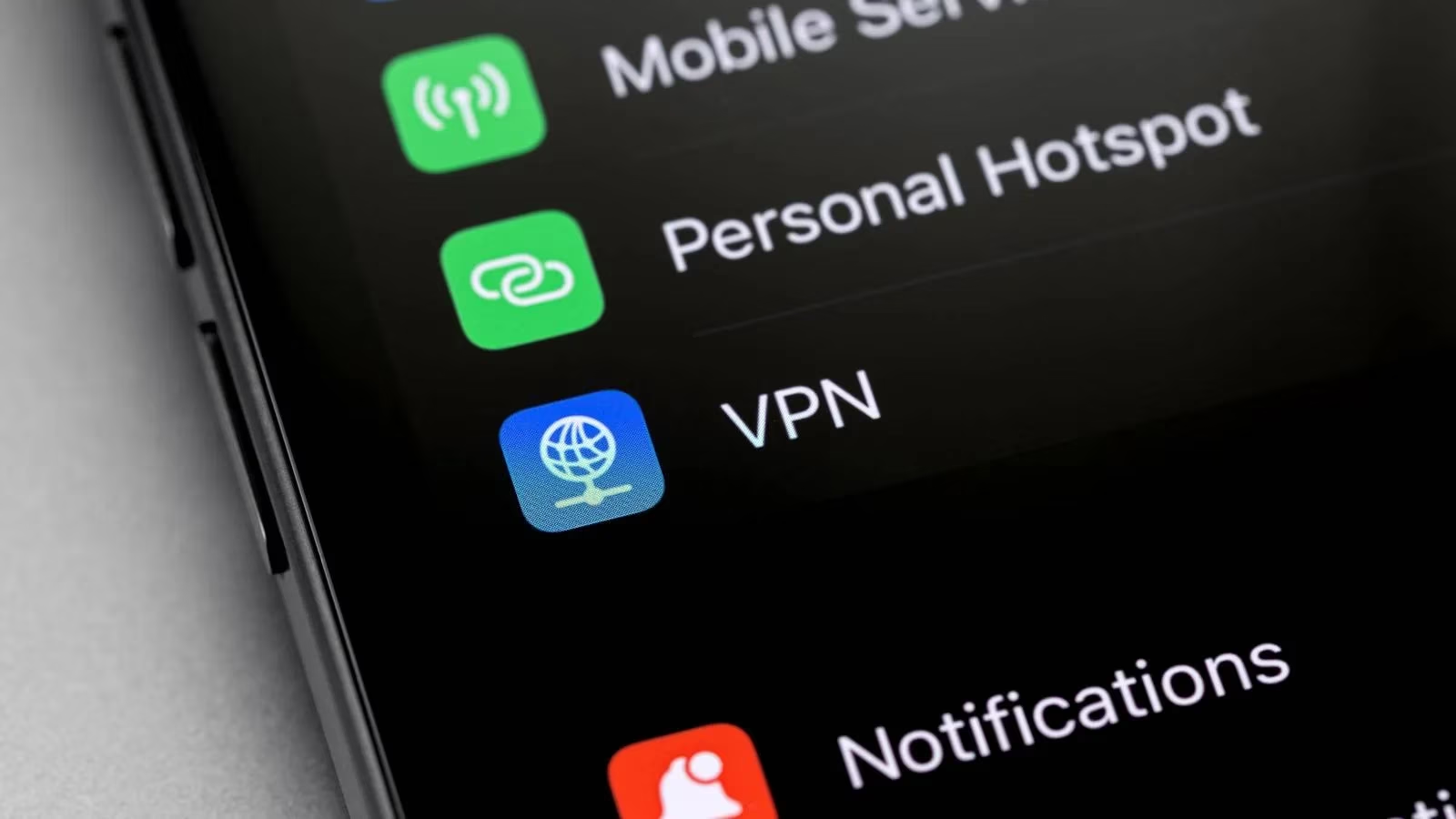
The investigation examined the top 100 free VPN apps on the Apple App Store and found 20 with undisclosed Chinese ownership. Those apps had been downloaded more than 70 million times combined. That is enough to make any privacy-conscious person pause. In 2026, this is not some stale tech rumor; it is a reminder that an official app store does not automatically equal a safe app store.
🚩 The Qihoo 360 Connection
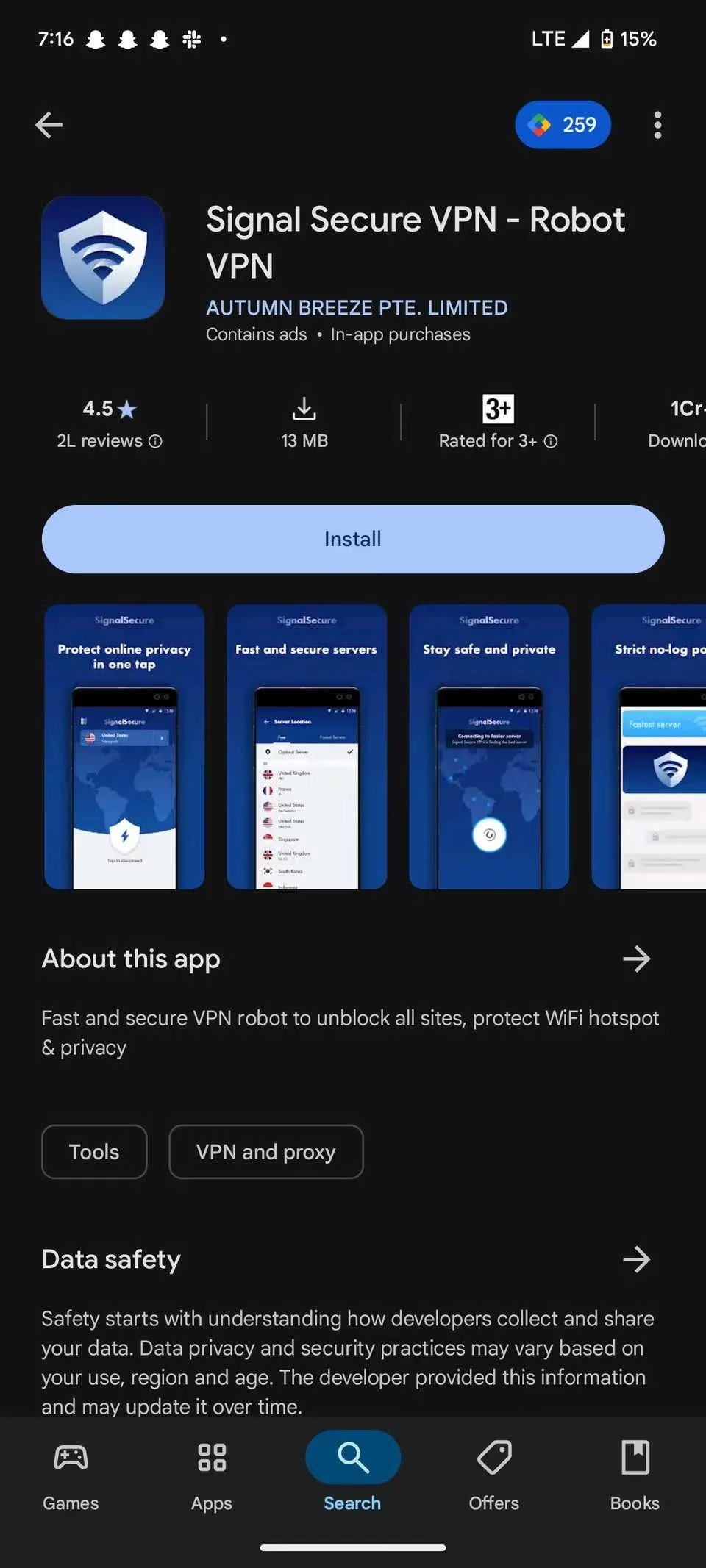
Among the 20 apps, five stand out for a reason that sounds like a spy-movie subtitle: Turbo VPN, VPN Proxy Master, Thunder VPN, Snap VPN, and Signal Secure VPN have been linked to Qihoo 360. Qihoo 360 is a Chinese company with suspected ties to the Chinese military, and the United States sanctioned it in June 2020, citing national security concerns. So why would anyone route their internet traffic through servers run by a company that American authorities explicitly placed on a national-security list?
The broader list from the report is not exactly reassuring either. It includes:
-
Alphaoo Net (removed from App Store)
-
Best V2ray (removed from App Store)
-
Best VPN Proxy AppVPN
-
HulaVPN
-
Incognito Net (removed from App Store)
-
LinkWorldVPN
-
Now VPN
-
Ostrich VPN
-
Pearl VPN
-
Speedy Quark VPN
-
SwiftLink VPN (removed from App Store)
-
VPN Bucks
-
VPN Proxy Master
-
VPN Proxy OvpnSpider
-
VPN Ⓟ (removed from App Store in 2024)
-
VPNIFY
-
WireVPN - Fast VPN & Proxy
-
Wirevpn - Secure & Fast VPN
-
X-VPN
📱 Google Play Is Not the Escape Hatch
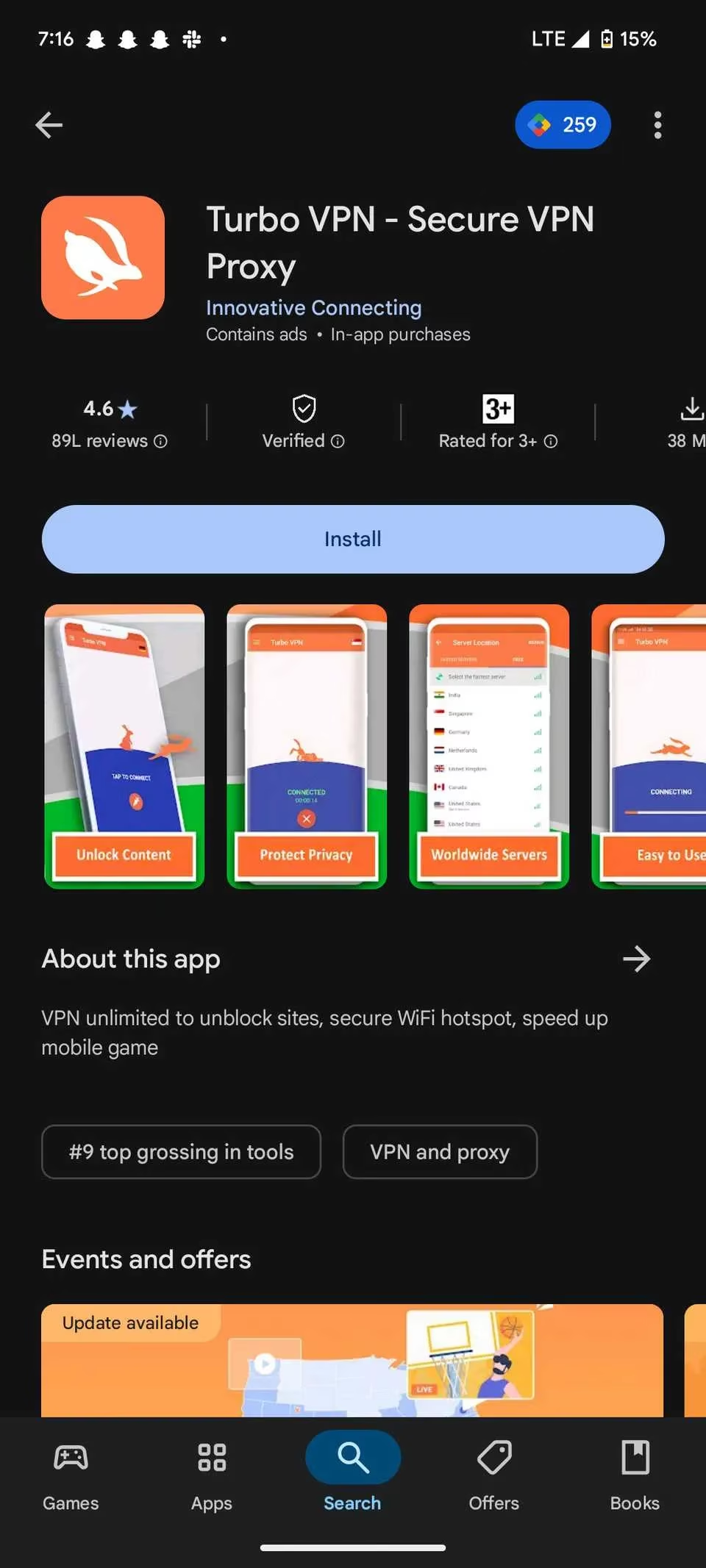
If someone assumes this is only an Apple problem, they are in for an unpleasant surprise. All five Qihoo 360-linked apps were found on Google Play as well, and several others were available there too. Many had four-star ratings or higher and millions of downloads, which is a perfect example of why crowd approval is not a security audit. Turbo VPN even carried a verified badge on the Play Store—ironically making a questionable app look more official, not more secure.
🔍 Why a Dodgy VPN Is Worse Than No VPN
VPNs occupy a position of extreme digital trust. A user hands over all internet traffic, lets the VPN encrypt it, and agrees to have it rerouted through the provider's servers. A trustworthy VPN means privacy. A shady VPN means someone could potentially monitor every site visited, every login entered, and every embarrassing late-night search typed into a browser. China's legal framework adds another layer of concern: companies there can be compelled to share user data with the government. That turns a free VPN into a possible surveillance funnel rather than a shield.
Could the app stores simply ban VPNs developed in certain countries? Not exactly. Apple does have guidelines that prohibit VPN services on the App Store from selling, using, or disclosing user data to third parties for any purpose. The problem is enforcement and disclosure. A developer that hides ownership can slip past automated checks until researchers connect the dots.
✅ What Privacy-Conscious Users Should Do Now
The safest move for anyone with one of these apps installed is to delete the account and the app itself, preferably in that order. A free app that has already collected data cannot uncollect it, but removing it stops future collection. After that, the obvious question is: which free VPNs are actually trustworthy? Several reputable providers offer free tiers without resorting to the fine-print hand-off of user traffic. Proton VPN, Surfshark, and NordVPN are frequently recommended alternatives. For the best protection, a paid plan remains the way forward, because a VPN that makes money from subscriptions has less incentive to monetize its users' browsing habits in darker ways.
The lesson for 2026 is simple. Before tapping Connect on any free VPN, ask one question: who is really on the other end of the tunnel?
According to coverage from The Verge, trust in consumer tech often breaks down at the exact moment “convenience” tools—like free VPNs—become mainstream defaults, and the real risk is that users treat app-store placement, star ratings, or verified badges as security guarantees. In the context of free VPNs with opaque ownership, the practical takeaway is to evaluate who controls the infrastructure, what the business model is, and whether independent reporting has flagged conflicts that could turn a privacy tool into a data-collection pipeline.