
F-Secure ID Protection in 2026: Escaping the Dark Web’s Grip
For many internet users, the dark web remains a shadowy abstraction—until a notification from a breached service lands in their inbox. Talk about a wake‑up call. Suddenly, the idea that your email, passwords, or even your social security number might be floating around hacker forums isn’t just a news headline; it’s personal. That moment of panic has pushed thousands of people to explore dark web monitoring, and one service that continues to stand out in 2026 is F‑Secure’s ID Protection.
Dark web monitoring is exactly what it sounds like: an automated search across hidden parts of the internet—stolen data dumps, illicit marketplaces, password‑sharing forums—to see if your private information has surfaced. The goal is simple: find out if you’ve been compromised before someone else exploits that data. Email addresses, phone numbers, credit cards, and passport details are among the most sought‑after bits of identity. In 2025 alone, a record 4.1 billion records were leaked globally, and 2026 is already tracking similar numbers. Against that backdrop, having a digital watchdog feels less like a luxury and more like a necessity.
Enter F‑Secure’s Identity Protection. Known for its no‑nonsense cybersecurity tools, the Finnish company has steadily refined its ID Protection suite. For $65 a year, subscribers get more than just breach alerts—they receive continuous dark web monitoring, a built‑in password manager, a VPN, and, crucially, dedicated professional support if their identity is ever stolen. The pricing hasn’t budged since the service’s launch, which is refreshing in an era when everything else seems to climb.
Getting started is refreshingly human. “I just typed in my email and, boom, the dashboard lit up,” one long‑term user told us. After signing up, you select the ID Monitoring tab, accept the terms, and add items to monitor—typically an email address. A confirmation message lands in your inbox, and once verified, F‑Secure immediately scours known breach databases and dark web forums. There’s no waiting around; results appear almost instantly.
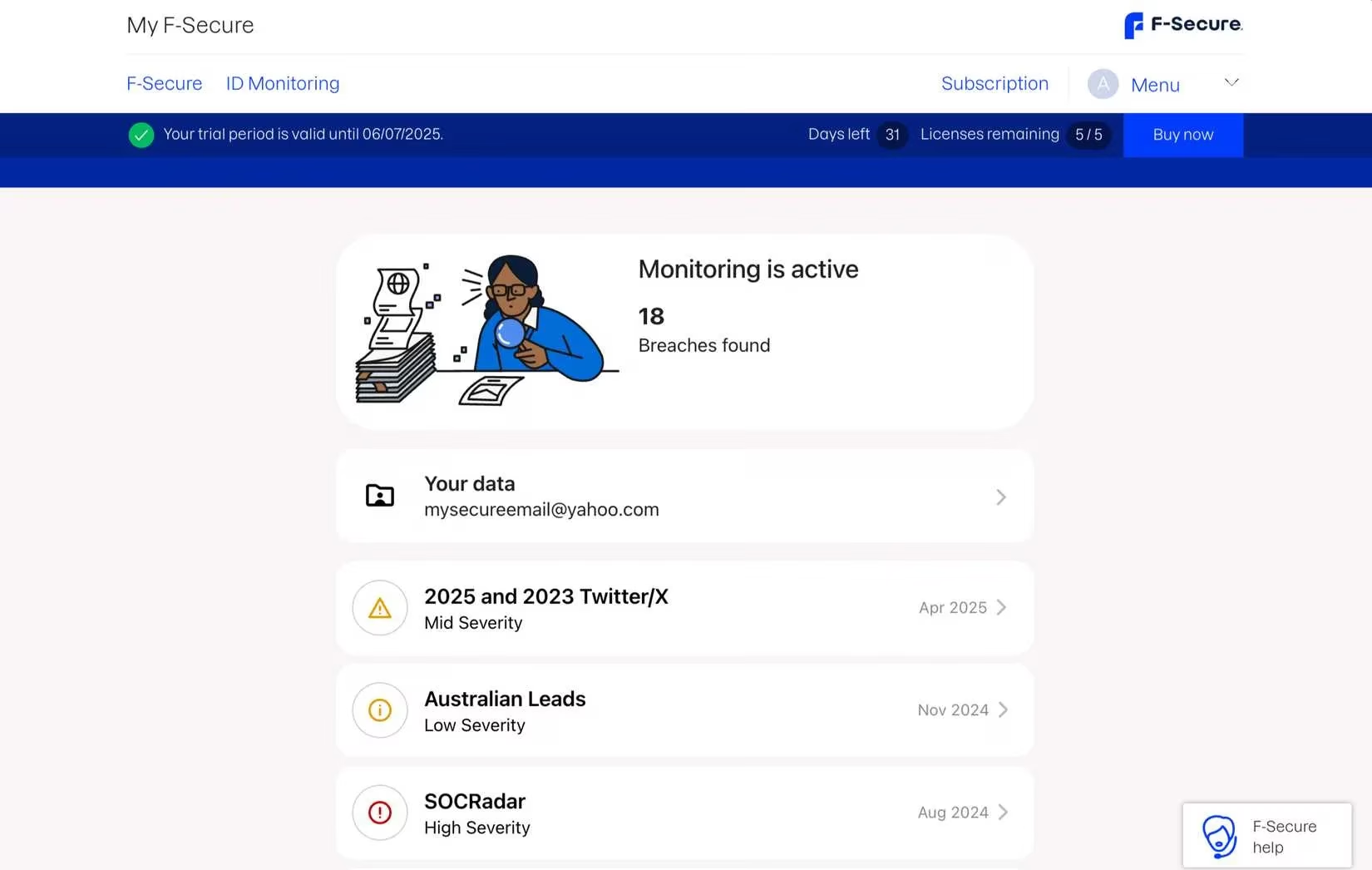
The interface is clean but just alarming enough. A large counter displays the total number of breaches tied to your data, followed by a breakdown of each incident: the breached service, the date the data was discovered, and a color‑coded severity icon. A high‑severity label—which means passwords, credit card numbers, or passport info were exposed—immediately grabs your attention. Investigations in early 2026 often reveal a mix of old and new leaks. For instance, one user’s X (formerly Twitter) email and city appeared in an April 2025 scrape, while older breaches from 2022 still left passwords visible in dark corners of the web. “Seeing your password right there on the screen is... well, let’s just say it gets your heart going,” the user remarked with a nervous laugh.
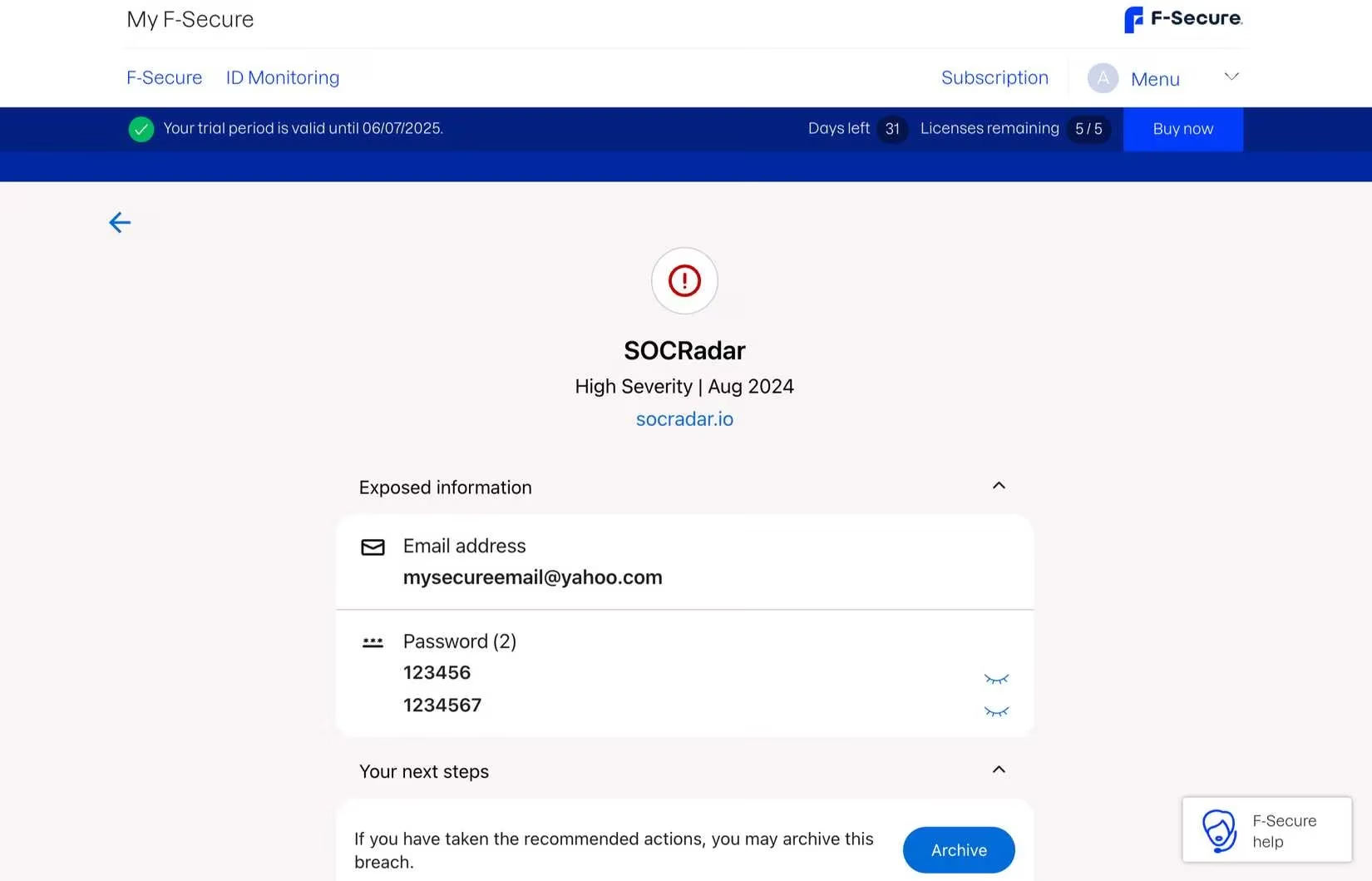
F‑Secure doesn’t leave you staring at a panic attack. Next to each finding is a simple “Action” guide that walks you through the steps you need to take. The recommended response is predictable but essential: change the passwords on affected accounts immediately, use the service’s built‑in password generator to create strong, unique replacements, and switch on two‑factor authentication everywhere. For those who have been living on the edge with a single password across dozens of sites (no judgment—we’ve all been there), this is the push they need. The password manager inside F‑Secure ID Protection makes the transition easier by syncing across devices and auto‑filling credentials, so you don’t have to remember 200 different strings of gibberish.
But what makes a paid service like this worth the annual fee when free tools like Have I Been Pwned already shout at you about breaches? The answer lies in the extras and the ongoing vigilance. Free tools are fantastic for one‑off searches, but they don’t continuously comb the dark web for new appearances of your data. They also don’t provide a unified dashboard that tracks the history of your leaks, assess risk severity in a digestible way, or bundle a VPN and a password vault. And then there’s the financial safety net: F‑Secure’s ID Protection includes up to $1 million in coverage for eligible losses and fees related to identity theft, something no free service can match. For someone who already runs an online business or handles sensitive client data, that guarantee alone can justify the cost.

Of course, no monitoring tool can actually prevent your data from being leaked in the first place. That’s the bitter truth. A monitoring service is a mirror—it shows you what’s already out there, giving you a head start on damage control. For the average person who uses strong, unique passwords, enables two‑factor authentication, and regularly reviews account activity, a combination of free breach notification sites and healthy digital habits may be enough. But if your risk profile is higher—perhaps you’re a freelancer whose email gets passed around openly, or you’ve already been a victim of identity fraud—the proactive alerts and comprehensive toolkit of a service like F‑Secure ID Protection become a form of cyber insurance you can actually interact with.
Reflecting on nearly two years of real‑world use, the monitoring service has evolved. In 2026, the alerts are faster, the breach coverage is wider, and the integration with password management feels more seamless than ever. Could it stop a determined hacker? No, but it can make the aftermath drastically less painful. You still have to do the heavy lifting—resetting passwords, calling your bank—but at least someone is shining a flashlight into the dark before you stumble.