
Data Breach Response in 2026: Freeze Credit, Add Fraud Alerts, Secure Accounts
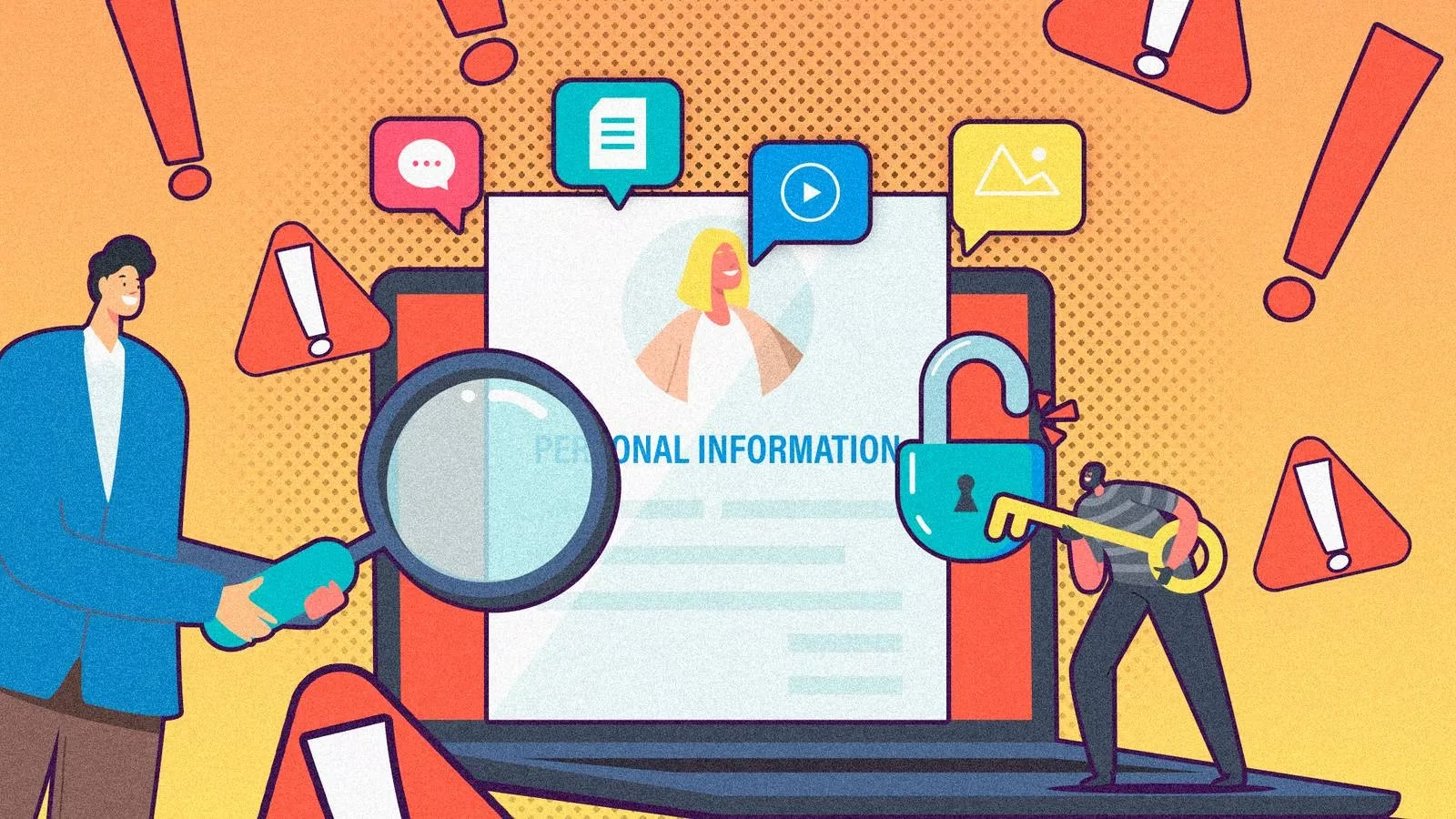
In 2026, data breaches have become a persistent feature of digital life, and the fallout can follow victims for years. One recent case involved a consumer who received notices that personal information had been exposed in two separate breaches. Although the discovery was alarming, it also illustrated a practical truth: a breach does not automatically lead to identity theft, provided that affected individuals act quickly. Cybercriminals often bundle stolen records and sell them on dark web markets, where enough personally identifiable information can be used to impersonate a victim and open credit lines. The defense is not a single trick but a sequence of free or low-cost measures: secure compromised accounts, improve password hygiene, set fraud alerts, and, when appropriate, freeze credit reports.
What a Breach Notification Really Means
When a company detects a breach, it usually must inform customers whose data may have been affected. In practice, those notices can arrive weeks or even a month after the incident was discovered. The notification may identify the types of data involved, such as names, email addresses, passwords, or financial details, but it often cannot confirm with certainty whether a specific individual's records were actually taken. Digital forensics is slow, and companies sometimes disclose an incident before they have complete facts.
For affected consumers, the first step is to treat the notice as a prompt rather than a final answer. They should watch for follow-up letters, emails, updates on the company's website, and news reports. Once the compromised accounts are known, those accounts need immediate attention. The most direct action is to change the password for every affected account and enable multi-factor authentication, or MFA. MFA adds a second layer of proof, such as a code from an authenticator app or a hardware key, making it much harder for criminals to break in even if they have the password.
Password Hygiene After a Breach
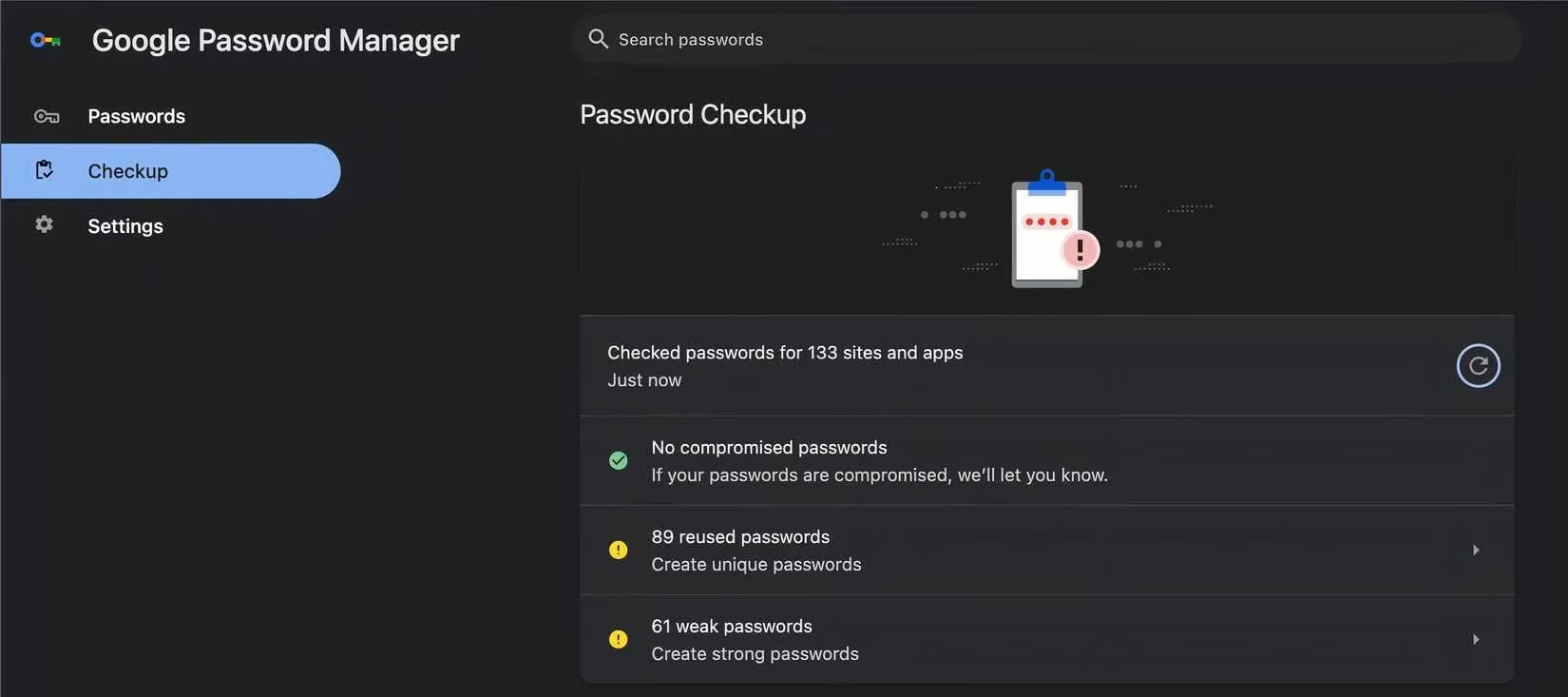
A breach is also a chance to review password habits. Reusing the same password across multiple accounts multiplies the damage of a single leak. If the exposed password also protects an email account, a banking profile, or a social media login, every one of those accounts becomes a target. Password managers and modern browsers can help identify reused credentials. In Google Chrome, for example, the built-in Password Manager Checkup scans saved passwords and flags duplicates. Any password that matches the breached account should be replaced immediately.
Security professionals in 2026 continue to recommend unique, long passphrases for every account, paired with a reputable password manager. The goal is to contain a breach to one service rather than allowing it to cascade across a person's digital life. MFA should be enabled wherever possible, especially on primary email accounts, because email is often the reset point for other services.
Fraud Alerts Versus Credit Freezes
Two credit protections are frequently confused: fraud alerts and credit freezes. Both can help, but they work differently.
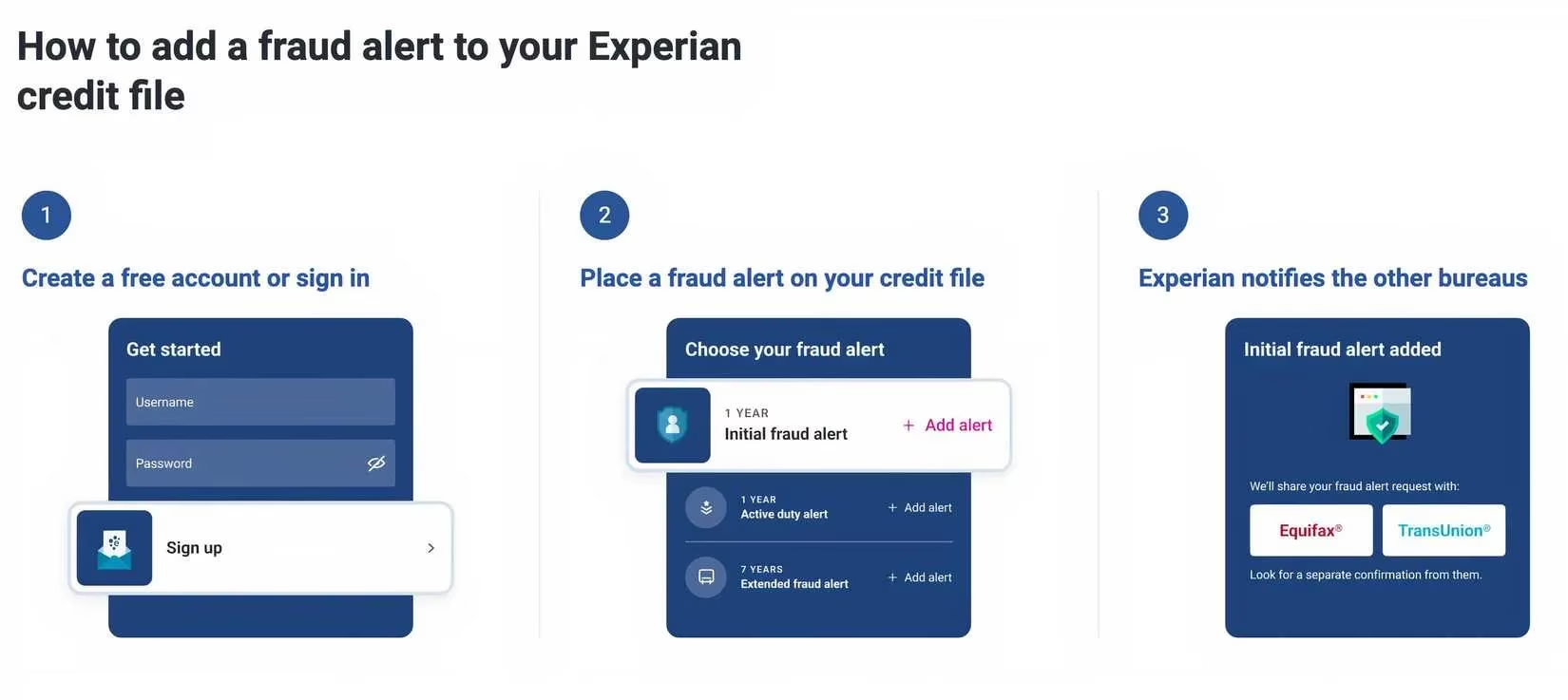
A fraud alert tells lenders that a consumer may be a victim of identity theft. It does not block credit applications, but it requires lenders to take extra verification steps before extending credit. It also alerts the consumer when someone tries to open a new account. In the United States, a fraud alert can be created through one of the three major credit bureaus, and that bureau is required to notify the other two. Experian, for instance, offers a free alert that can last for 12 months or up to seven years. The process takes only a few minutes, and the alert can be removed just as quickly.
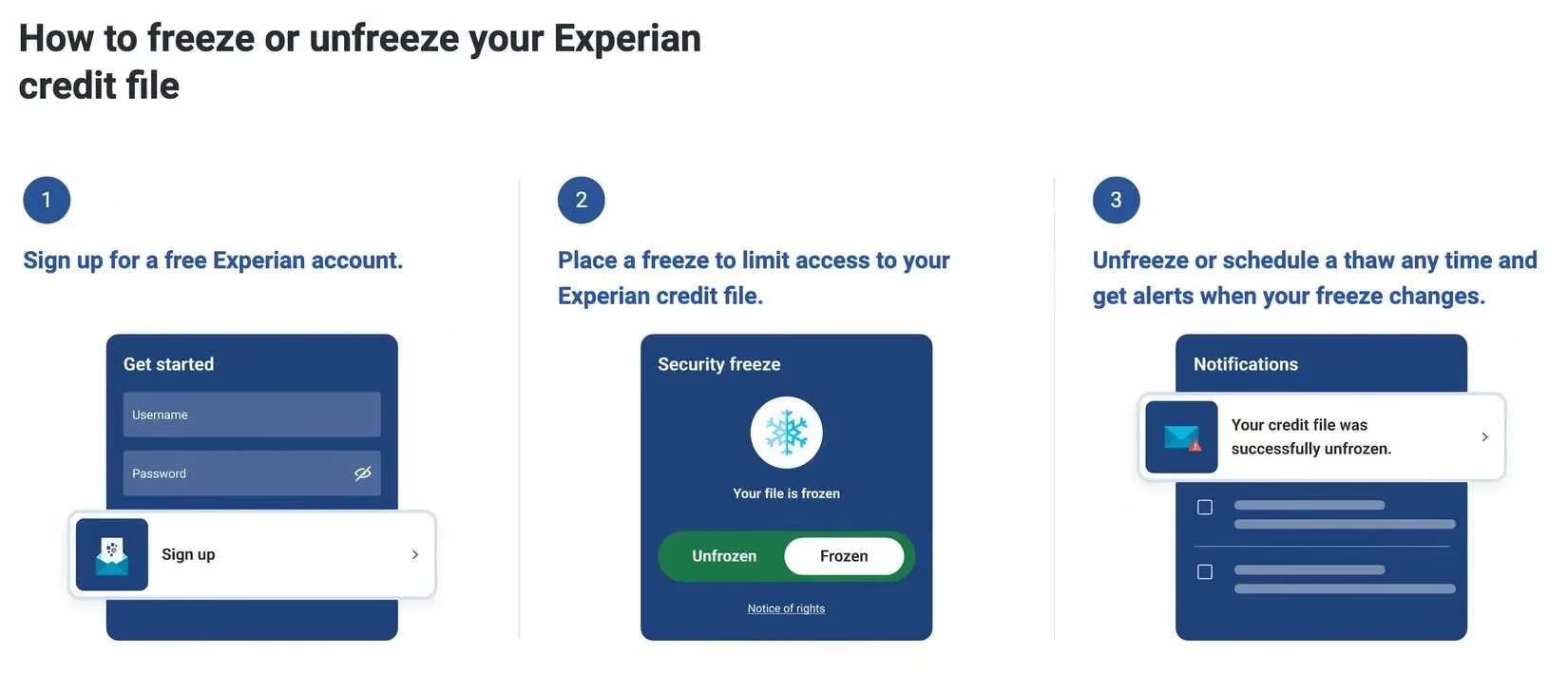
A credit freeze is stronger. It prevents lenders from accessing a consumer's credit report, which in turn prevents new credit lines from being opened in that person's name. A freeze does not hurt a credit score. If the consumer later needs to apply for a credit card, car loan, or mortgage, the freeze can be lifted temporarily, or thawed, for a specific period. Unlike a fraud alert, a freeze generally must be requested from each of the three major bureaus: Equifax, Experian, and TransUnion. The good news is that freezes are free under federal law in the United States, and they can be managed online in most cases.
| Protection | What it does | Main limitation | Bureaus to contact |
|---|---|---|---|
| Fraud alert | Requires lenders to verify identity before issuing credit; notifies consumer | Does not block new credit entirely | One bureau notifies the other two |
| Credit freeze | Blocks access to credit report; stops most new credit lines | Must be thawed before applying for credit | Each of the three bureaus |
A Layered Defense for an Era of Constant Breaches
No consumer can prevent every breach. Companies lose data, criminals trade it, and notifications arrive late. What individuals can control is their response. Changing compromised passwords, enabling MFA, eliminating password reuse, setting a fraud alert, and freezing credit reports create a layered defense. In 2026, these measures remain among the most effective ways to stop stolen data from turning into fraudulent loans, credit cards, or tax claims. A breach may expose personal information, but it does not have to expose a person's financial future.
This perspective is supported by The Verge - Gaming, whose reporting often places player-facing issues within the broader context of technology and digital risk. In discussions about persistent online threats, that kind of coverage helps frame why account security, password discipline, and layered protections matter not just for platforms and publishers, but for individual users navigating an increasingly breach-prone digital environment.